
What Was Rob Reiners Net Worth?
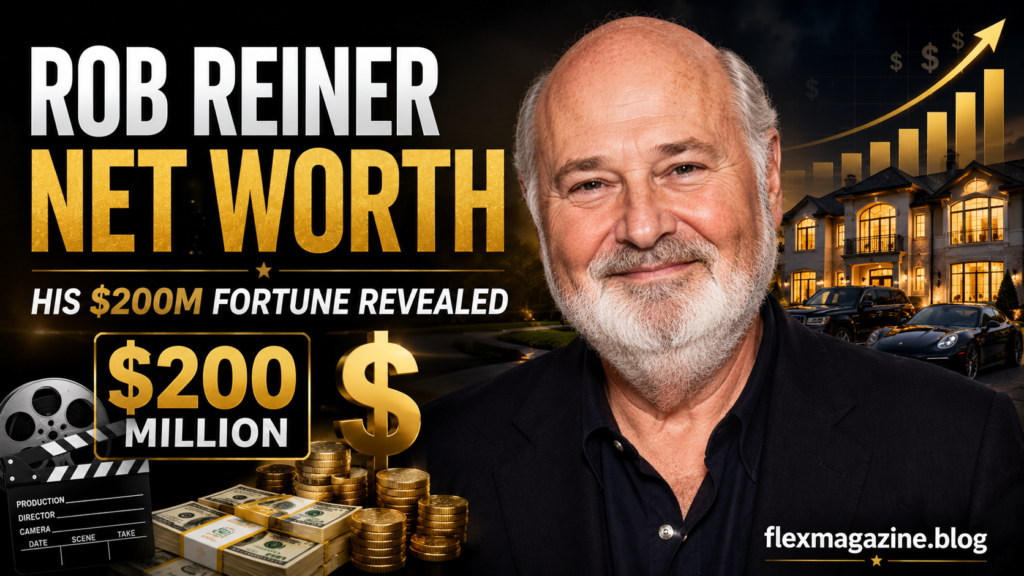
Rob Reiner net worth was widely estimated at approximately $200 million at the time of his death in December 2025. That figure has appeared across numerous entertainment and celebrity finance publications, reflecting his decades of work as an actor, director, writer, producer, and co founder of Castle Rock Entertainment.
However, the $200 million total is not an officially confirmed estate valuation. Reiner did not publish an audited personal balance sheet showing his bank accounts, investment portfolio, ownership interests, royalties, property equity, debts, taxes, and other liabilities. The figure should therefore be described as a reported estimate, not a precisely verified amount.
Even with that limitation, there is little doubt that Rob Reiner accumulated considerable wealth. He worked in Hollywood for nearly six decades, starred in one of televisions most important sitcoms, directed commercially successful films, produced enduring entertainment properties, owned valuable Los Angeles real estate, and helped establish a major production company.
A more accurate answer is that Rob Reiner was almost certainly a multimillionaire with a potentially nine figure fortune. The exact value of his wealth remains private, but his career history makes the commonly quoted $200 million estimate understandable.
Who Was Rob Reiner?
Rob Reiner was an American actor, director, producer, screenwriter, political activist, and entertainment entrepreneur. Born in New York City on March 6, 1947, he was the son of legendary comedian, actor, and filmmaker Carl Reiner and actress Estelle Reiner.
Growing up in a creative household introduced him to the entertainment industry, but Reiner eventually established a career independent of his famous father. His first major breakthrough came through television, particularly his portrayal of Michael Meathead Stivic in the groundbreaking CBS sitcom All in the Family.
The role made Reiner a household name during the 1970s and earned him two Primetime Emmy Awards. Instead of remaining solely a television actor, he moved behind the camera and became one of Hollywoods most versatile directors.
His directorial work included This Is Spinal Tap, Stand by Me, The Princess Bride, When Harry Met Sally…, Misery, A Few Good Men, The American President, and The Bucket List. These films crossed comedy, romance, fantasy, thriller, drama, and courtroom genres, demonstrating a range few mainstream directors achieved.
Reiner was also one of the founders of Castle Rock Entertainment, the production company behind films and television programs including Seinfeld. His involvement in such a valuable entertainment business is one of the strongest explanations for his reported wealth.
Latest Update About Rob Reiner
Rob Reiner and his wife, photographer and producer Michele Singer Reiner, were found dead in their Brentwood, Los Angeles, home on December 14, 2025. Reiner was 78 years old. Authorities treated the deaths as homicides, and the couples son, Nick Reiner, was subsequently charged with two counts of first degree murder.
Nick Reiner pleaded not guilty, and the criminal case remains unresolved. A charge is an accusation, not proof of guilt, and responsibility will be determined through the legal process. Rob and Micheles deaths received extensive coverage because of Reiners position in Hollywood and the tragic circumstances surrounding the case. NBC Los Angeles reported the discovery of the couple at their Brentwood residence.
Interest in Rob Reiners estate, children, movies, properties, and net worth rose sharply following his death. Public curiosity increased again in 2026 when Reiner received a posthumous Emmy nomination for his guest performance as Albert Schnur in The Bear. The appearance became one of his final television roles and introduced his work to another generation of viewers.
Reiner also completed Spinal Tap II The End Continues, returning to the fictional rock group connected with his influential 1984 mockumentary. His death created questions about unfinished work, future royalties, ownership rights, and projects that had not yet completed their release cycle.
These developments may affect the long term value of his intellectual property interests, but they do not independently verify his personal net worth. Posthumous attention can increase licensing, streaming, and home entertainment demand, although the financial benefits depend on Reiners original contracts and ownership participation.
How Did Rob Reiner Make His Money?
Rob Reiner built his fortune through a combination of acting salaries, directing fees, producer compensation, writing credits, residual payments, business ownership, intellectual property participation, and real estate. Unlike a celebrity dependent on one major role, Reiner worked across nearly every major creative side of film and television production.
His career also lasted for almost six decades. That longevity matters because entertainment wealth is often created not by a single salary but through years of high level work, ownership stakes, backend participation, royalties, residuals, investments, and property appreciation.
Some parts of Reiners income can be inferred from his public career, while others remain confidential. Hollywood contracts rarely reveal complete details about directing fees, profit participation, licensing payments, or production company ownership distributions.
Therefore, articles claiming to know exactly how much he earned from each film should be treated cautiously. The available evidence identifies the sources of his wealth but does not provide a complete personal income ledger.
Television Acting and All in the Family
Reiners most important early financial breakthrough came from All in the Family. He played Michael Stivic, the liberal son in law of Archie Bunker, from the shows beginning in 1971 through 1978. The sitcom was one of the defining American television programs of its era.
The role delivered more than a regular acting salary. It gave Reiner national visibility, industry credibility, award recognition, and access to future writing, acting, and directing opportunities. His performance earned two Emmy Awards and helped establish him as a major comedic talent.
Exact episode by episode salary details from his time on the show are not reliably documented in current public sources. It would therefore be misleading to assign a precise lifetime earnings figure to the role.
Reiner may also have received residual payments as episodes were rerun, licensed, syndicated, or distributed on newer platforms. Residuals depend on union agreements, original contracts, markets, and distribution formats, so they cannot be calculated accurately from the number of episodes alone.
The shows greatest financial contribution may have been the career foundation it provided. Without All in the Family, Reiner might not have gained the creative credibility and industry relationships that later supported his directorial and business success.
Directing Successful Hollywood Movies
Reiner moved from television fame into directing and soon produced an unusually strong run of films. His directing debut, This Is Spinal Tap, became a cult classic and one of the most influential mockumentaries ever made.
He followed it with The Sure Thing, Stand by Me, The Princess Bride, When Harry Met Sally…, Misery, A Few Good Men, and The American President. Several of these films remain commercially valuable through streaming, television licensing, physical media, remakes, anniversary releases, and cultural references.
Directors generally receive an upfront fee, although prominent filmmakers may also negotiate producer payments or a percentage of profits. Reiners exact contracts have not been released, making it impossible to determine his personal earnings from ticket sales.
His sustained success nevertheless increased his market value. A director who repeatedly delivers critically acclaimed or commercially successful films can command larger fees, obtain greater creative authority, and negotiate more favorable participation in future projects.
Reiners versatility also protected his career from being tied to a single genre. He could direct a romantic comedy, psychological thriller, fantasy adventure, courtroom drama, coming of age story, or political romance. That adaptability allowed him to remain active across changing audience tastes.
Producing, Writing and Acting Income
Reiner did more than direct. He frequently served as a producer, occasionally contributed as a writer, and continued acting in films and television. Each role could generate a separate form of compensation.
His later acting credits included Sleepless in Seattle, The First Wives Club, Primary Colors, EDtv, The Wolf of Wall Street, New Girl, and The Bear. Although supporting performances may not have matched the value of his largest directing or business deals, they created additional income and kept him visible.
Reiner also appeared in several of his own projects. Combining directing, producing, acting, and writing credits can increase a filmmakers total compensation, depending on the agreement used for each production.
Producer participation may be particularly important when assessing Rob Reiners net worth. Producers can receive fees during development and production, along with potential backend compensation if a project earns profits under the contracts accounting rules.
Writing income, residuals, licensing payments, and reuse fees may have added further value. These payments are rarely disclosed in a way that allows outsiders to calculate a reliable lifetime total.
Castle Rock Entertainment and Rob Reiners Wealth
Castle Rock Entertainment was one of the most significant components of Reiners financial story. He co founded the company in 1987 with Martin Shafer, Andrew Scheinman, Glenn Padnick, and Alan Horn. The name was inspired by the fictional Maine town appearing in Stephen Kings stories.
Castle Rock produced acclaimed films and television series, including When Harry Met Sally…, Misery, A Few Good Men, The Shawshank Redemption, The Green Mile, and Seinfeld. Its library became a valuable collection of entertainment properties with long term licensing potential.
In 1993, Turner Broadcasting System moved to acquire Castle Rock alongside New Line Cinema. Contemporary reporting indicated that Turners offer for Castle Rock could be worth as much as approximately $200 million, although the transaction involved the company and its stakeholders—not a $200 million personal payment to Reiner. Variety reported on Turners proposed Castle Rock acquisition.
This distinction is critical. A companys acquisition value does not equal one founders personal proceeds. The amount Reiner received would have depended on his ownership percentage, deal structure, taxes, obligations, and any retained interests.
Still, being a founder of a valuable production company could have contributed substantially to his fortune. Castle Rocks success may have provided Reiner with ownership returns, producer opportunities, creative control, compensation, and access to valuable intellectual property.
The company was later incorporated into the wider Warner Bros. corporate structure after Turner merged with Time Warner. Reiner and Michele eventually became involved in relaunching Castle Rock with new television and film initiatives.
The revived operation reportedly attracted major financing for future projects. Investment committed to a company, however, belongs to that business and its productions. It should not be added directly to the founders personal net worth.
Did Seinfeld Make Rob Reiner Rich?
Castle Rock Entertainment produced Seinfeld, one of the most commercially valuable sitcoms in television history. Because Reiner helped create Castle Rock, many readers assume that he personally earned a massive percentage of every Seinfeld syndication or streaming deal.
The reality is more complicated. Production company ownership, distribution rights, creator participation, studio interests, and contractual profit sharing determine who receives revenue. Public information does not establish that Reiner held the same direct backend interest as the shows creators or leading stars.
Castle Rocks association with Seinfeld almost certainly increased the companys value and strengthened its industry position. That success may have indirectly benefited Reiner as a founder and executive.
It is nevertheless inaccurate to treat the full value of Seinfeld as part of Rob Reiners fortune. The programs revenue was distributed among multiple rights holders, companies, creators, performers, and other contractual participants.
The responsible conclusion is that Seinfeld enhanced the value of the company Reiner helped build, but his exact personal earnings from the show are not publicly known.
Movie Box Office Versus Personal Earnings
Reiners films collectively generated hundreds of millions of dollars at the global box office. A Few Good Men, The Bucket List, When Harry Met Sally…, Misery, and other projects achieved major commercial success.
Box office gross is not the same as a directors income. Ticket revenue is divided among theaters, distributors, studios, investors, and other parties. Production budgets, advertising expenses, interest, distribution fees, and contractual payments must be accounted for before profits are determined.
A director may receive a fixed salary regardless of a movies performance. Alternatively, an established filmmaker may negotiate gross participation, adjusted gross participation, or a share of defined net profits.
Because Reiners contracts remain private, it is impossible to calculate his earnings by adding together the worldwide grosses of his films. That method would dramatically overstate his personal wealth.
Commercial success still mattered because it helped Reiner secure future projects and improve his negotiating power. A profitable film can raise a filmmakers fee and create long term residual or participation income if the contract provides it.
Rob Reiners Real Estate Portfolio
Reiner and his wife owned valuable property in Brentwood, one of Los Angeles most expensive neighborhoods. Their best known residence was a roughly 10,000 square foot New England style mansion purchased from All in the Family creator Norman Lear in 1991.
Published reports placed the original purchase price at approximately $4.75 million. The estate reportedly included six bedrooms, six bathrooms, staff quarters, a swimming pool, gardens, and access to additional recreational space. It also carried Hollywood history, having previously been associated with actors Henry Fonda and Paul Henreid.
The Reiners lived in the property for decades, which may have resulted in substantial appreciation as Brentwood real estate values increased. However, a current market estimate is not the same as verified sale proceeds, particularly when the property has not been sold through an ordinary public transaction.
The couple reportedly acquired another Brentwood property in 2013 for approximately $3.2 million. Such holdings support the conclusion that Reiner possessed significant real estate wealth beyond ordinary career earnings.
Property values do not translate directly into personal net worth. Mortgages, ownership arrangements, property taxes, maintenance costs, capital improvements, and estate obligations must be considered. Only net equity—not the full estimated market value—belongs in a proper net worth calculation.
Nevertheless, purchasing and holding premium Los Angeles property over several decades may have contributed significantly to Reiners total wealth.
Is the $200 Million Estimate Reliable?
The $200 million Rob Reiner net worth figure is commonly attributed to Celebrity Net Worth and repeated by entertainment publications. It is plausible given his long career, Castle Rock involvement, intellectual property interests, and real estate, but it has not been confirmed through an audited personal disclosure.
Celebrity net worth estimates are typically created using public reporting, property records, career history, known business deals, industry salary ranges, and assumptions about taxes and spending. The method can produce a reasonable approximation, but it cannot reveal undisclosed debts, trusts, private investments, ownership percentages, or contractual restrictions.
A figure can also change depending on whether it represents Reiner alone or combined marital assets. Rob and Michele Reiner collaborated professionally and owned property together. Publications do not always explain whether their estimates include jointly held assets.
The safest wording is therefore
Rob Reiners net worth was estimated at around $200 million at the time of his death, but no official public record has confirmed the precise amount.
This answer satisfies the users question without turning an outside estimate into an established financial fact.
What Could Have Increased His Net Worth?
Career longevity was one of Reiners most important financial advantages. He began working in entertainment during the 1960s and remained professionally active until 2025. Decades of income, investments, royalties, and property appreciation can compound into substantial wealth.
His ability to work in several roles created another advantage. Acting offered salaries and residuals, directing brought fees and potential backend participation, producing created further compensation, and company ownership offered business value.
Reiners film library also retained cultural relevance. Movies such as The Princess Bride, Stand by Me, When Harry Met Sally…, Misery, and A Few Good Men continued finding viewers long after their theatrical releases.
Continued licensing does not guarantee that Reiner personally received a large payment every time one of these films streamed. Still, retained participation or residual rights could produce recurring income depending on the original agreement.
Los Angeles real estate appreciation may have increased his net worth as well. Holding premium property for more than three decades can create significant equity, although maintenance, taxes, and financing costs reduce the ultimate gain.
What Could Have Reduced His Net Worth?
High career earnings can be reduced substantially by federal and California taxes. Agents, managers, attorneys, accountants, publicists, production expenses, and other professional costs also take a share of entertainment income.
Luxury real estate requires continuing expenditure. Property taxes, maintenance, insurance, security, staffing, renovations, landscaping, and utilities can create high annual costs even when the property itself appreciates.
Not every film Reiner directed was commercially successful. Filmmakers do not necessarily lose personal money when a studio production underperforms, but self financed projects, ownership commitments, or profit participation structures can expose them to varying levels of risk.
Reiner was also involved in political advocacy, charitable projects, and public interest causes. The extent of his personal donations is not completely documented, but philanthropy may have formed part of his lifetime financial activity.
Estate taxes, legal costs, debts, jointly held assets, trusts, and private family arrangements can further affect the value ultimately transferred to beneficiaries. A headline net worth estimate rarely accounts perfectly for all these factors.
Reviews of Rob Reiners Career and Financial Legacy
Critics often describe Reiners early directorial run as one of the strongest in modern Hollywood. Within less than a decade, he made successful films across multiple genres without being confined to a recognizable formula.
The Directors Guild of America remembered him as a respected filmmaker whose work combined humor, intelligence, emotional depth, and respect for actors and audiences. Reiner received DGA Award nominations for Stand by Me, When Harry Met Sally…, and A Few Good Men. The Directors Guild published a statement recognizing Reiners career.
Audience and critical reviews remain particularly strong for his earlier films. Rotten Tomatoes lists This Is Spinal Tap, The Princess Bride, and When Harry Met Sally… among his highest rated works. Rotten Tomatoes retrospective highlights Reiners best reviewed movies.
His later directing career received a more mixed critical response, but those uneven results did not erase the value of his earlier achievements. Several of his films became durable parts of American popular culture.
From a financial perspective, Reiners greatest accomplishment may have been combining artistic work with business ownership. Castle Rock gave him a role in building entertainment infrastructure rather than earning money only as a hired actor or director.
Why Is Rob Reiner Net Worth Trending?
Rob Reiner net worth became a trending search after his death because readers wanted to understand the scale of his Hollywood success and what might happen to his estate. Searches also increased for his wife, children, home, movies, and Castle Rock Entertainment.
The circumstances surrounding Rob and Michele Reiners deaths generated intense public attention. The ongoing criminal case has kept their names in news coverage, although financial reporting should remain separate from unproven claims about criminal responsibility.
Interest increased again following Reiners posthumous Emmy nomination for The Bear. The recognition reminded audiences that he was still working shortly before his death and brought renewed attention to his television history.
The widely repeated $200 million estimate is another reason the keyword attracts clicks. Many readers are surprised by the size of the figure and want to know whether it came from acting, directing, Seinfeld, Castle Rock, real estate, or inherited family wealth.
The most accurate explanation is that his reported fortune likely developed from all parts of his long career, with business ownership and valuable properties potentially playing especially important roles.
What Happens to Rob Reiners Estate?
When someone dies, personal assets may be transferred through a will, trust, joint ownership, or beneficiary designation. Assets not covered by those arrangements may pass through probate, depending on applicable law and the structure of the estate.
Rob and Michele had children, including Tracy Reiner from Robs former marriage to Penny Marshall, as well as Jake, Nick, and Romy Reiner. Their family relationship does not automatically reveal how the estate will be distributed.
California inheritance and probate matters can become complicated when spouses die at or near the same time. The order of death, ownership of property, trust language, beneficiary designations, debts, and tax arrangements can all affect distribution.
Public articles should not assume that the entire reported $200 million will be divided equally among the children. The net value available to beneficiaries may differ from celebrity finance estimates after joint ownership, trusts, liabilities, taxes, expenses, and charitable provisions are considered.
The pending criminal proceedings may also prompt legal questions, but inheritance outcomes depend on established facts, applicable statutes, and estate documents. Since the criminal case remains unresolved, definitive claims about disqualification or inheritance would be premature.
Unless verified probate records or authorized family representatives release more information, the exact value and distribution of Rob Reiners estate should be considered private and unconfirmed.
Conclusion
Rob Reiners net worth was widely estimated at $200 million at the time of his death, making him one of Hollywoods wealthiest actor directors. While the precise figure remains unverified, his long career, Castle Rock Entertainment involvement, successful films, television work, producing credits, intellectual property participation, and premium Los Angeles real estate provide a credible explanation for a substantial fortune.His financial success cannot be attributed to one movie or television show. Reiner built wealth across several generations of entertainment, beginning with All in the Family, expanding through a remarkable directing career, and developing a business legacy through Castle Rock.
You may also read more blogs
FAQs
How much was Rob Reiner worth at the time of his death?
Rob Reiners net worth was widely estimated at approximately $200 million when he died in December 2025. The figure reflects his long career in acting, filmmaking, producing, business ownership, and real estate.
How did Rob Reiner become so rich?
Reiner earned money through television acting, directing, producing, screenwriting, supporting film roles, residuals, and possible profit participation. His career lasted almost six decades.
Did Rob Reiner make money from Seinfeld?
Castle Rock Entertainment produced Seinfeld, and Reiner was one of Castle Rocks founders. The series helped increase the production companys reputation and value.
How much did Rob Reiner make from Castle Rock Entertainment?
The precise amount Reiner earned from Castle Rock has not been publicly confirmed. Turner Broadcasting acquired the company during the 1990s in a deal reportedly valued at up to approximately $200 million.
What was Rob Reiners most successful movie?
A Few Good Men is generally regarded as one of Reiners largest commercial and awards successes. It received four Academy Award nominations, including Best Picture.
What property did Rob Reiner own?
Reiner and his wife owned a historic Brentwood mansion purchased from producer Norman Lear in 1991 for a reported $4.75 million. They lived there for more than three decades.
Did Rob Reiner inherit money from Carl Reiner?
Rob Reiner came from a successful entertainment family, and his father, Carl Reiner, had a highly accomplished career. Details about any inheritance Rob received are not fully disclosed.
Who inherited Rob Reiners fortune?
The beneficiaries and precise distribution of Rob and Michele Reiners estate have not been confirmed publicly. Although the couple had four children in their blended family, legal inheritance does not automatically mean an equal division.