

Peanut butter is one of the most popular foods in the world, found in sandwiches, desserts, smoothies, and countless recipes. But who invented peanut butter? The answer is more complicated than many people think. While many people believe that George Washington Carver invented peanut butter, historical records show that he did not create the famous spread. Instead, peanut butter developed over centuries through the work of ancient civilizations, inventors, scientists, and food manufacturers.
The modern version of peanut butter can be linked to several important figures, including Canadian chemist Marcellus Gilmore Edson, American physician John Harvey Kellogg, and inventor Ambrose Straub, who helped improve production methods. George Washington Carver played a major role in promoting peanuts and discovering hundreds of uses for the crop, but peanut butter already existed before his famous research
Understanding the history of peanut butter reveals a fascinating journey from ancient food traditions to a modern kitchen staple.
The Ancient Origins of Peanut Paste
Long before peanut butter became a commercial product, ancient civilizations were already grinding peanuts into a paste. Peanuts originated in South America and were cultivated thousands of years ago by Indigenous communities.
The Aztecs and Incas are often associated with early peanut paste preparations. They roasted peanuts and crushed them into a thick mixture that was used as food. Although this early paste was not exactly the same as todays smooth or crunchy peanut butter, it was an important early step in the history of peanut based spreads.
Peanuts later spread around the world through exploration and trade. Spanish explorers introduced peanuts to Europe after encountering them in the Americas, while Portuguese traders helped spread peanut cultivation to Africa. Eventually, peanuts became an important agricultural crop in many regions.
However, the modern peanut butter found in supermarkets required new processing methods, machinery, and food science.
Marcellus Gilmore Edson The First Peanut Butter Patent
When discussing who invented modern peanut butter, one of the most important names is Marcellus Gilmore Edson, a Canadian chemist and pharmacist.
In 1884, Edson received a U.S. patent for a method of creating peanut paste from roasted peanuts. His process involved milling roasted peanuts between heated surfaces until they became a smooth, semi fluid substance with a texture similar to butter.
Edsons creation was not exactly the peanut butter people spread on toast today. He originally developed the peanut paste as a product that could be used in candy and other food applications. However, his invention was an important milestone because it demonstrated that peanuts could be transformed into a stable, spreadable food.
Many historians consider Edsons patent one of the earliest examples of modern peanut butter production.
John Harvey Kelloggs Role in Peanut Butter History
Another major figure connected with peanut butters development is Dr. John Harvey Kellogg, the famous creator of Kelloggs cereal.
In the 1890s, Kellogg worked at the Battle Creek Sanitarium in Michigan, where he promoted healthier eating habits. He believed plant based foods could provide valuable nutrition and developed peanut based foods for patients who had difficulty chewing solid foods.
In 1895, Kellogg patented a process involving peanut products and later promoted peanut butter as a nutritious food. His version was made differently from modern peanut butter because it involved cooking peanuts before processing them.
Kellogg helped introduce peanut butter to a wider audience, especially among health conscious consumers. Because of his influence and commercial success, many people have credited him with inventing peanut butter.
However, Edsons patent came more than a decade earlier, which means Kellogg was not the first person to create a peanut based spread.
Did George Washington Carver Invent Peanut Butter?
One of the biggest myths about peanut butter is that George Washington Carver invented it. While Carver was a brilliant agricultural scientist and made enormous contributions to peanut farming, he did not invent peanut butter.
Carver became famous for researching peanuts and developing hundreds of possible uses for the crop. His work helped farmers understand the economic value of peanuts, especially in the southern United States, where farmers needed alternatives to cotton farming.
In 1916, Carver published a booklet called How to Grow the Peanut and 105 Ways of Preparing It for Human Consumption. The publication included peanut recipes and helped increase public awareness of peanuts. However, peanut butter production methods already existed before Carvers research became widely known
Carvers connection with peanuts is so strong that many people mistakenly assume he invented peanut butter. His real contribution was promoting peanuts as a valuable agricultural crop and discovering many creative uses for them.
The Development of Commercial Peanut Butter
After early inventions and experiments, peanut butter gradually became a commercial food product in the United States.
During the late 1800s and early 1900s, companies began producing peanut butter for consumers. Food manufacturers improved grinding techniques, developed better equipment, and created products with longer shelf lives.
In 1903, Dr. Ambrose Straub patented a peanut butter making machine that helped manufacturers produce peanut butter more efficiently. This development made large scale production easier and helped peanut butter become more widely available
Peanut butter gained additional popularity after appearing at the 1904 St. Louis Worlds Fair. The event introduced many Americans to new foods and helped increase interest in peanut based products.
Over time, peanut butter changed from a specialty health food into an affordable household product.
Who Invented Modern Creamy Peanut Butter?
The peanut butter most people recognize today smooth, creamy, and stable without oil separating—came later.
In the early 20th century, inventor Joseph Rosefield developed improved processing methods that created smoother peanut butter and helped prevent oil separation. His innovations contributed to the creation of popular brands and transformed peanut butter into a mass market product.
Modern peanut butter production involves roasting peanuts, removing their skins, grinding them into a paste, and adding ingredients such as salt, sugar, or stabilizers depending on the recipe.
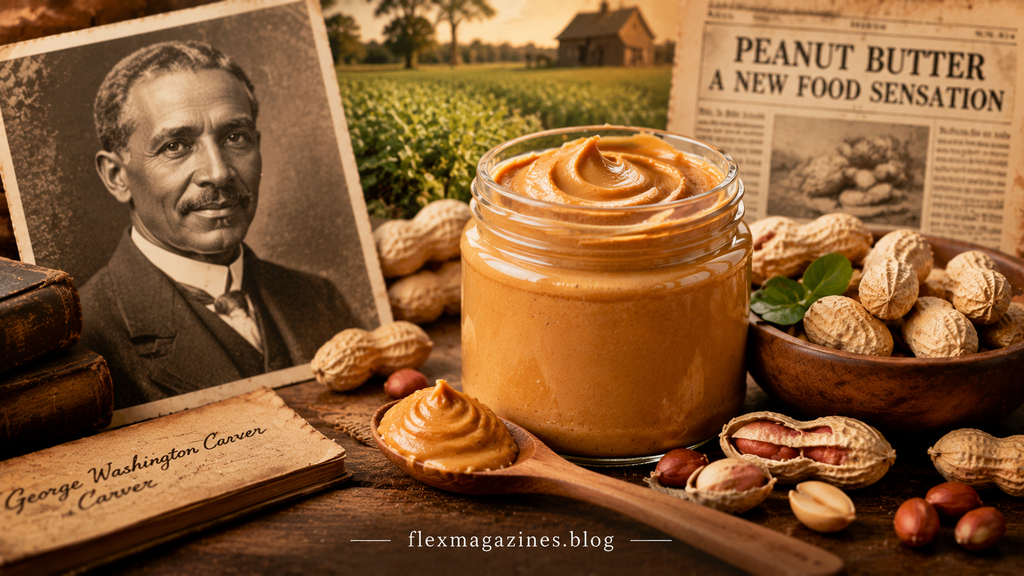
Today, consumers can choose from many varieties, including creamy, crunchy, natural, organic, flavored, and reduced sugar versions.
Why Is George Washington Carver Associated With Peanut Butter?
The connection between George Washington Carver and peanut butter continues because of his extraordinary work with peanuts.
Carver discovered hundreds of potential uses for peanuts, including products such as cosmetics, industrial materials, and food recipes. His research helped change public attitudes toward peanuts and encouraged farmers to grow more of the crop.
Because he became known as The Peanut Man, many simplified stories incorrectly connected him with peanut butters invention. However, his actual achievements were broader and focused on agricultural science rather than creating the spread itself.
Carver remains one of the most influential figures in peanut history, even though he was not the inventor of peanut butter.
How Peanut Butter Became an American Staple
During the early 20th century, peanut butter became increasingly popular in American households. It was affordable, nutritious, and easy to store.
The product became especially common during periods when Americans searched for inexpensive protein sources. Peanut butter sandwiches became a classic meal for children, families, and workers because they were simple, filling, and affordable.
Over the decades, peanut butter expanded beyond sandwiches. It became an ingredient in cookies, sauces, energy bars, desserts, and many international recipes.
Today, peanut butter is enjoyed worldwide and remains one of the most recognizable peanut products.
Peanut Butter Invention Timeline
The history of peanut butter includes several important moments
Ancient civilizations Indigenous peoples in South America created early peanut pastes by grinding peanuts.
1884 Marcellus Gilmore Edson patented a method for making peanut paste from roasted peanuts.
1895 John Harvey Kellogg developed and promoted peanut based food products.
1903 Ambrose Straub patented equipment for producing peanut butter commercially
1916 George Washington Carver published research highlighting many uses of peanuts
1920s onward Improved manufacturing methods helped peanut butter become a common household product.
Conclusion
The story of peanut butter is not connected to just one inventor. Instead, it is the result of centuries of food traditions, scientific discoveries, and manufacturing improvements. Ancient civilizations created early peanut pastes, Marcellus Gilmore Edson developed one of the first modern peanut paste processes, John Harvey Kellogg helped popularize peanut based foods, and later inventors improved production methods.Although George Washington Carver did not invent peanut butter, his work played an important role in making peanuts a valuable crop and increasing their popularity. The peanut butter found in kitchens today represents generations of innovation that transformed a simple peanut paste into one of the worlds most beloved foods.
You may also read more blogs
best places to hike in colorado
FAQs
Who actually invented peanut butter?
There is no single inventor of peanut butter. Ancient civilizations created early peanut pastes, while Marcellus Gilmore Edson received one of the earliest patents for a peanut paste process in 1884. Later inventors improved production and made peanut butter commercially successful.
Did George Washington Carver invent peanut butter?
No, George Washington Carver did not invent peanut butter. He became famous for researching peanuts and developing many uses for the crop, but peanut butter existed before his work became well known.
When was peanut butter invented?
The history of peanut butter goes back centuries because ancient civilizations made peanut pastes. The first modern patent for a peanut paste product was filed in 1884 by Marcellus Gilmore Edson.
Why is George Washington Carver famous for peanuts?
George Washington Carver is famous because he developed hundreds of uses for peanuts and helped farmers understand the importance of crop rotation and alternative crops.
Who invented creamy peanut butter?
Joseph Rosefield is credited with improving peanut butter processing methods that created smoother, more stable peanut butter similar to modern versions.
Was peanut butter invented in America?
Modern commercial peanut butter developed largely in North America, especially through inventions and patents in Canada and the United States. However, early peanut pastes existed among Indigenous civilizations in South America.
What was peanut butter originally used for?
Early peanut butter like products were developed as nutritious foods and ingredients for candy or health related diets. Over time, they became everyday food products.
Why do people think George Washington Carver invented peanut butter?
Many people associate Carver with peanut butter because of his famous peanut research and hundreds of peanut related inventions. His nickname, The Peanut Man, also contributed to this misunderstanding.