
What Is the Justin Bieber Coachella Performance?
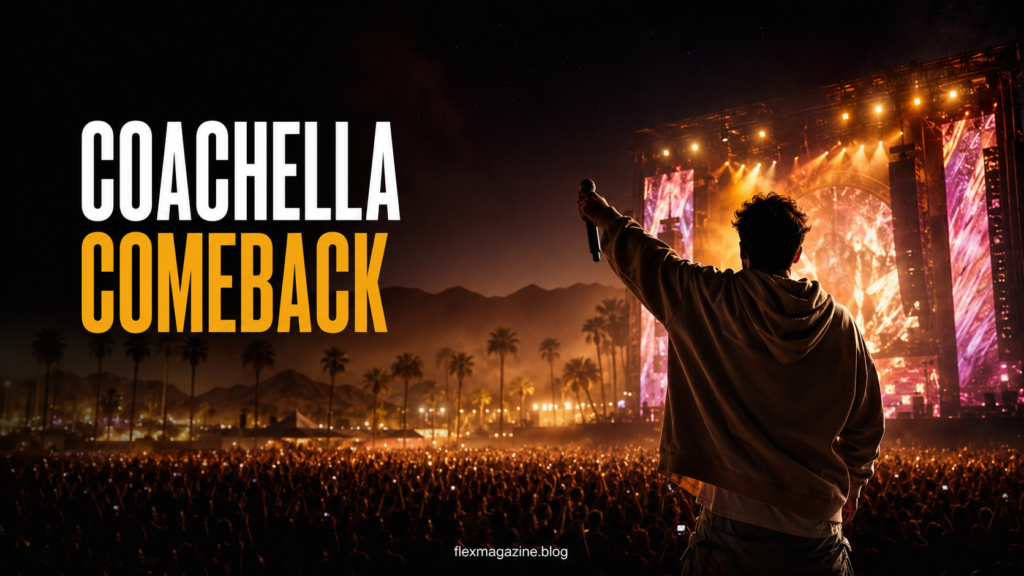
The Justin Bieber Coachella performance refers to the Canadian pop stars first official headlining shows at the Coachella Valley Music and Arts Festival in 2026. He performed on the main Coachella Stage during both festival weekends in Indio, California, transforming one of the worlds most closely watched music events into a major comeback platform.
Although Bieber had appeared at Coachella several times as a surprise guest, he had never previously presented a complete headlining concert at the festival. His 2026 appearances therefore carried more weight than an ordinary festival booking. They represented his return to a massive stage after several years without a traditional world tour.
The performances were built largely around Swag and Swag II, the two projects that introduced a looser, more personal phase of Biebers music. Instead of designing a predictable greatest hits concert, he presented a reflective show that combined new material, acoustic performances, collaborations, old music videos and carefully selected songs from his teenage years.
That decision produced one of the festivals most discussed sets. Some viewers regarded it as intimate, vulnerable and creatively daring. Others believed a headlining Coachella performance required more energy, choreography and direct engagement with the crowd. The disagreement became a central reason why Justin Bieber Coachella continued trending after the festival ended.
Who Is Justin Bieber?
Justin Bieber is a Canadian singer and songwriter who became internationally famous after videos of his performances were discovered on YouTube. His debut era produced songs such as One Time, One Less Lonely Girl and Baby, turning him into one of the defining teen pop stars of his generation.
His career later expanded beyond teen pop through albums including Purpose, Changes and Justice. Songs such as Sorry, Love Yourself, What Do You Mean? and Peaches helped him build an adult audience while maintaining the enormous fan community established during his early career.
Biebers connection with YouTube is particularly important when interpreting his Coachella show. The platform was not simply a screen he happened to use during the performance. It was where his career began, where millions of fans first encountered him and where much of his public childhood remains permanently accessible.
That history gave the shows most unusual segment a deeper meaning. When Bieber watched and sang alongside videos of his younger self, he appeared to be revisiting the public archive of his life. What looked casual or confusing to some viewers felt autobiographical and emotionally deliberate to others.
Why the Justin Bieber Coachella Moment Mattered
The 2026 shows marked Biebers first major full length live performances in several years. His Justice World Tour had been interrupted in 2022 after he experienced health complications associated with Ramsay Hunt syndrome, a condition that affected movement on one side of his face.
Although he made occasional guest appearances afterward, fans had not seen him carry a festival scale concert of this length and visibility. Coachella therefore became a test of his readiness to return, as well as an opportunity to introduce the artistic direction of his newer music.
The booking also completed a long progression. Bieber had moved from appearing unexpectedly during other artists sets to occupying the top position on the lineup. That transition reflected both his longevity and his unusual journey from teenage internet discovery to established global performer.
Most importantly, Bieber did not treat the occasion as an audition for his former pop star identity. He avoided recreating a highly choreographed Purpose or Believe tour show. Instead, he appeared determined to present the person and musician he had become, even when that approach challenged conventional expectations.
Latest Update on Justin Bieber at Coachella
The latest major update is that Biebers complete performances from both Coachella weekends have been made available on his official YouTube channel. YouTube confirmed in July 2026 that viewers could revisit the two full headlining sets on demand, offering fans more than temporary clips or unofficial audience recordings. YouTubes official announcement describes both shows as permanently available.
The release is especially valuable because festival livestreams are normally difficult to access once their original viewing window closes. Fans who missed the live broadcast can now compare the two weekends, observe the setlist changes and reconsider moments that initially circulated without context.
A live recording titled SWAG Live From Coachella was also released, allowing listeners to experience the performance separately from the video. The official release extends the lifespan of the event and turns Biebers festival appearance into a documented chapter of his discography rather than a short lived livestream.
The renewed availability also contributed to another wave of online discussion. Viewers who initially encountered only the laptop sequence or a controversial social media clip could finally see how those moments fitted into a much longer concert containing acoustic songs, live vocals, new material and multiple guest appearances.
Justin Biebers History at Coachella
Biebers relationship with Coachella began years before he became a headliner. In 2014, he joined Chance the Rapper to perform Confident. The surprise appearance demonstrated how easily Bieber could generate attention at the festival even when his name was not at the top of the lineup.
In 2019, Ariana Grande invited him onstage during her headlining set. Bieber performed Sorry and told the crowd that the appearance was largely unplanned. It became a memorable moment because he had stepped back from regular touring and had not been expected to perform.
He returned in 2022 as Daniel Caesars guest for Peaches. The collaboration suited the songs relaxed R&B character and gave festival viewers a brief look at Bieber shortly before his health challenges changed his touring plans.
In 2024, he appeared with Tems and Wizkid for Essence, reinforcing his connection with contemporary R&B and Afrobeats. These earlier appearances created anticipation around one persistent question when would Justin Bieber finally headline Coachella himself?
The 2026 booking provided the answer. Rather than arriving for one song during another performers concert, Bieber was responsible for an entire prime time set across two weekends. It was a significantly greater creative and physical commitment than any of his earlier festival appearances.
His history also helped explain the number of collaborations incorporated into the 2026 shows. Coachella had long been a place where Bieber entered other musicians creative worlds. As a headliner, he reversed that relationship by inviting established artists and collaborators into his own set.
Inside the First Weekend Performance
Justin Bieber opened the first weekend with material from his Swag era, including All I Can Take, Speed Demon, First Place, Go Baby and Butterflies. The opening immediately signaled that the concert would prioritize his current identity rather than begin with a familiar blockbuster single.
His presentation was intentionally restrained. Instead of relying on constant choreography, rapid costume changes and enormous theatrical props, Bieber spent much of the show singing in a relatively relaxed environment. The production placed attention on his voice, mood, band and the relationship between his current music and personal history.
The first weekend set reportedly included more than 30 songs or partial songs. Several tracks were performed as medleys, acoustic interpretations or brief nostalgic excerpts rather than complete arena style renditions. This allowed Bieber to cover a wide portion of his catalogue without turning the show into a conventional singles collection.
The result often felt closer to a public rehearsal, listening session or personal retrospective than a polished pop spectacle. That quality attracted criticism, but it also distinguished the performance from the carefully programmed sets typically associated with major festival headliners.
The Meaning Behind the YouTube Segment
The most debated part of the first weekend occurred when Bieber used a laptop and played material from YouTube. He watched old clips, revisited music connected to his early career and sang along with recordings of his younger self.
For viewers expecting an uninterrupted live concert, the sequence felt puzzling. Some critics described it as disengaged or under rehearsed because Bieber appeared focused on a computer rather than the enormous audience gathered in front of him.
There was, however, another way to understand the scene. Bieber was discovered through YouTube, grew up in public through online videos and became one of the first global pop stars whose rise was inseparable from the platform. Opening that archive on the largest stage of his comeback created a conversation between the adult performer and the child preserved online.
Songs such as Baby, Never Say Never and That Should Be Me carry more than nostalgic value in that context. They represent a period when Biebers voice, face, relationships and adolescence became global entertainment. Singing with those videos could be interpreted as an attempt to reclaim or reconcile with that history.
The segment was risky because its meaning was not clearly explained to the audience. Yet that ambiguity helped it spread. A traditional medley might have pleased the crowd and disappeared from the news cycle, while Biebers laptop sequence encouraged arguments about performance, celebrity, memory and authenticity.
Surprise Guests and Collaborations
Guest performers played a major role across the two Justin Bieber Coachella shows. During the first weekend, The Kid LAROI joined Bieber for Stay, one of their biggest collaborative hits. The appearance supplied a more familiar burst of pop energy within a show dominated by Biebers recent work.
Dijon appeared for Devotion, while Tems joined Bieber for I Think Youre Special. These choices reflected the R&B influenced, collaborative atmosphere associated with his newer music rather than functioning only as celebrity cameos.
The second weekend expanded the guest list. SZA performed material connected with their Snooze collaboration, while Sexyy Red appeared for Sweet Spot. Big Sean joined Bieber during a medley that included their shared musical history, and other collaborators helped broaden the shows tonal range.
Billie Eilishs appearance became one of the most widely shared moments. She participated in a revival of One Less Lonely Girl, a signature element of Biebers earlier tours. Eilish has spoken publicly about being a devoted Bieber fan during her childhood, which gave the moment unusual emotional resonance.
The guests were not simply added to create headlines. Many represented different phases of Biebers career early pop stardom, mainstream collaborations, contemporary R&B and the more experimental Swag period. Together, they made the concerts feel like a map of his musical relationships.
Their appearances also helped balance Biebers understated performance style. Whenever the show became especially introspective, a collaborator introduced a new voice, rhythm or point of connection for the audience.
Billie Eilish and the One Less Lonely Girl Moment
One Less Lonely Girl holds a special place in Biebers concert history. During his early tours, a fan was traditionally invited onstage and serenaded during the song. The sequence became one of the most recognizable rituals of the original Bieber phenomenon.
Recreating it with Billie Eilish allowed the moment to operate on several levels. Eilish was not only an internationally successful artist she was also someone who had once experienced Bieber as a young fan. Her presence connected the audience member she used to be with the performer she later became.
The moment quickly circulated across fan accounts and entertainment publications because it offered warmth and nostalgia within an otherwise divisive show. It was easy to understand visually, even for people who had not watched the full performance.
It also illustrated the scale of Biebers cultural influence. Artists who grew up listening to him now stand beside him as peers and global headliners. Few moments at Coachella communicated that generational transition as clearly.
Justin Bieber Coachella Setlist Overview
The setlist drew heavily from Swag and Swag II. Early songs included All I Can Take, Speed Demon, First Place, Go Baby, Butterflies, Walking Away, All the Way, 405, Too Long, Petting Zoo and I Do.
Acoustic selections included Things You Do, Glory Voice Memo, Zuma House, Dotted Line and Everything Hallelujah. These quieter performances emphasized Biebers vocals and songwriting while creating a more intimate middle section.
Collaborative highlights included Stay with The Kid LAROI, Devotion with Dijon and I Think Youre Special with Tems. Across the second weekend, guests such as SZA, Sexyy Red, Big Sean and Billie Eilish added further variation.
Older material appeared through medleys, videos and rearranged segments. Songs associated with Biebers early years included Baby, One Time, One Less Lonely Girl, U Smile, Beauty and a Beat, Never Say Never and That Should Be Me.
Daisies served as an important closing statement, giving the show a brighter and more conventionally climactic ending. Fireworks and larger visual elements helped shift the atmosphere from reflection toward celebration.
The exact sequence and song selection differed between weekends. That distinction matters for fans searching for the complete Justin Bieber Coachella setlist, because the second concert was not simply an identical recreation of the first.
How the Second Weekend Changed the Show
Coachella artists frequently adjust their performances after observing the audience response to the first weekend. Biebers second show retained the core Swag concept but introduced additional guests, nostalgic selections and moments of direct excitement.
These changes made the second weekend feel more expansive. The first performance emphasized introspection and experimentation, while the follow up provided more of the communal energy expected from a headline festival set.
Billie Eilish, SZA, Big Sean and other guests helped turn the second weekend into a star filled event. Their participation also generated distinct viral moments, ensuring that discussion did not depend entirely on the controversial laptop segment.
The two shows therefore work best as companion pieces. Weekend One introduced the artistic thesis a grown performer confronting his digital past. Weekend Two retained that personal foundation while offering a broader celebration of his collaborations, influence and catalogue.
Reviews of Justin Biebers Coachella Performance
Reviews of the Justin Bieber Coachella comeback were sharply divided. Supporters praised the raw vocals, emotional tone and refusal to deliver a predictable greatest hits package. They argued that the loose staging felt honest and aligned with the understated sound of his recent work.
Some fans also appreciated that Bieber appeared comfortable rather than trapped inside the choreography and expectations of his teenage career. To them, the lack of excessive production was an artistic choice that placed the person ahead of the pop star machinery.
Critical reactions focused on pacing, energy and audience engagement. Entertainment Weekly characterized the first weekend as a subdued performance and questioned the amount of time Bieber spent interacting with his laptop. Other reviewers felt that a festival crowd deserved more complete live versions of his biggest songs.
The strongest criticism often came from short clips. When removed from the wider show, a video of Bieber scrolling or singing over an old recording could appear careless. The full set offered more context, although it did not eliminate legitimate questions about whether the concept translated effectively to such a large venue.
A fair review must acknowledge both positions. The performance contained thoughtful symbolism, impressive vocal moments and historically significant collaborations. It also contained sequences that lacked momentum and may have been difficult for a festival audience to interpret in real time.
That tension is precisely what made the event culturally interesting. Bieber did not provide universal satisfaction, but he created a performance people continued analyzing months later—a result that many technically flawless festival sets never achieve.
Why Is Justin Bieber Coachella Trending?
The topic initially trended because Biebers appearance was a major live comeback. Fans wanted to see whether he could sustain a complete headlining show after health problems and years away from large scale touring.
The laptop and YouTube sequence then intensified the conversation. Clips spread rapidly because they looked unlike normal Coachella headliner footage. Viewers debated whether Bieber was creating performance art, processing his childhood, improvising or simply failing to connect with the crowd.
Surprise guests created additional waves of attention. The Kid LAROI, Tems, SZA, Big Sean and Sexyy Red attracted their own audiences, while Billie Eilishs emotional One Less Lonely Girl moment appealed to both nostalgia driven Bieber fans and a younger generation.
The official release of the full performances generated another surge in searches. Once the concerts became available on demand, people began looking for streaming links, complete setlists and explanations of moments they had previously encountered only through social media.
Hailey Biebers Presence at Coachella
Hailey Bieber attended the festival and was seen supporting her husband from the audience. Her presence drew attention because fans often interpret Justins newer music through the couples marriage, family life and public relationship.
Go Baby, for example, has been associated with Hailey and contains a reference to her Rhode beauty brand. Performing the song during such an important comeback made the personal dimension of Biebers current work especially visible.
Haileys role should not be exaggerated into unsupported narratives. Online discussions frequently turn ordinary expressions, photographs or short videos into speculation about celebrity relationships. A responsible account should focus on what was publicly observable she attended, supported the show and was connected with some of its most personal material.
Her presence nevertheless added emotional context. The Justin Bieber presented at Coachella was not the isolated teenage figure preserved in the old YouTube videos. He appeared as an adult musician, husband and father revisiting that history from a very different stage of life.
Production, Fashion and Visual Direction
Biebers clothing reinforced the informal character of the show. Hoodies, shorts and relaxed styling replaced elaborate costumes, making him look closer to an artist working in a studio than a pop star executing a tightly controlled stadium production.
That simplicity divided viewers in much the same way as the music. Some interpreted it as confidence and authenticity, while others believed a major Coachella headliner should present a stronger visual transformation.
The production relied on screens, cameras, live musicians, guest transitions and fireworks rather than nonstop theatrical spectacle. Close up imagery helped capture Biebers expressions and made parts of the concert feel unusually personal despite the size of the venue.
The laptop became the shows most important prop. It served as a portal into Biebers history, a source of music and an object that deliberately disrupted the visual language of a polished festival performance.
Viewership and the Performances Online Impact
Reports following the festival described Biebers set as a record setting Coachella broadcast, with claims of approximately 147 million global YouTube views circulating in music media. The scale of online interest demonstrates that the event reached far beyond people physically present in Indio.
As with any viewership claim, the exact measurement should be understood in relation to platform methodology and reporting periods. Views may include livestream audiences, replays, clips or other forms of engagement, depending on how a figure is calculated.
What is not in doubt is the strength of the digital response. The concerts generated reaction videos, reviews, fan edits, setlist discussions and repeated debate across entertainment platforms.
That outcome was fitting for an artist discovered online. Biebers Coachella performance began on a physical stage, but much of its cultural life developed through YouTube and social media—the same digital environment in which his career originally took shape.
What Coachella Means for Justin Biebers Future
Coachella demonstrated that demand for a major Justin Bieber performance remains extremely high. It also showed that he is interested in performing on terms that may differ from the highly choreographed expectations attached to his earlier career.
The show does not automatically confirm a new world tour. Festival appearances, one off broadcasts and full touring schedules require different levels of planning and physical commitment. Fans should wait for an official announcement before assuming that additional dates are guaranteed.
Artistically, however, the performance suggested a clear direction. Bieber appears more interested in intimacy, collaboration and personal storytelling than in recreating an earlier version of himself.
The strongest path forward may involve combining that authenticity with more clearly structured pacing. Coachella proved that his unconventional ideas can generate intense interest, but it also showed the importance of communicating those ideas to a vast live audience.
Conclusion
The Justin Bieber Coachella performances were more than a return to the stage. They brought together the singers internet beginnings, teenage fame, adult music, personal struggles and present day collaborations in one deliberately unconventional show. Not every creative decision worked equally well for every viewer. The pacing was divisive, the laptop sequence was difficult to interpret without context, and some fans understandably wanted more complete versions of the hits. Yet the performances also contained emotional vocals, memorable guests and a powerful confrontation between Bieber and the younger version of himself preserved online.
You may also read more blogs
FAQs
Did Justin Bieber headline Coachella?
Yes. Justin Bieber officially headlined Coachella in 2026 and performed full sets during both festival weekends on the main stage.
What songs did Justin Bieber sing at Coachella?
Bieber performed numerous songs from Swag and Swag II, including All I Can Take, Speed Demon, First Place, Go Baby, Butterflies and Daisies.
Who joined Justin Bieber during his Coachella set?
Guests across the two weekends included The Kid LAROI, Tems, Dijon, SZA, Sexyy Red, Big Sean and Billie Eilish, among others.
Why did Justin Bieber use a laptop during Coachella?
Bieber used the laptop to access YouTube videos and recordings connected to his earlier career. He sang with footage of his younger self and revisited songs that helped establish his global fame.
Where can fans watch Justin Biebers full Coachella performance?
The full performances from both weekends are available through Justin Biebers official YouTube presence, according to YouTubes July 2026 announcement.
Was Hailey Bieber at Coachella?
Yes, Hailey Bieber was seen supporting Justin from the festival audience. Her attendance received significant attention from fans and entertainment media.
Why were reviews of the performance mixed?
Supporters admired Biebers live voice, vulnerability, guest list and unconventional approach. They believed the relaxed presentation allowed him to perform without imitating his younger self.
Will Justin Bieber tour after Coachella?
Coachella confirmed that Bieber can still command an enormous live and online audience, but it did not by itself confirm a full tour.