
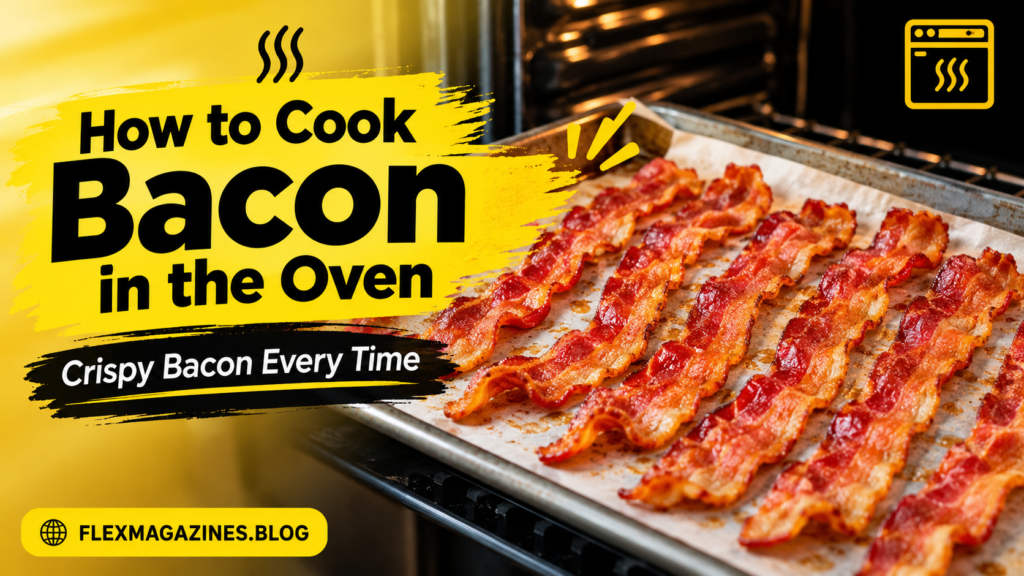

How to Cook Bacon in the Oven, If you want crispy, evenly cooked bacon without standing over a skillet, the oven is one of the easiest methods to use.
For a dependable starting point, arrange bacon in a single layer on a rimmed baking sheet and bake it in a 400°F oven until it reaches your preferred level of crispness. The exact cooking time depends on the thickness of the bacon and how crisp you like it, so start checking toward the end of the expected cooking window.
The biggest advantage is convenience. Instead of cooking several batches in a skillet, you can spread the bacon across a baking sheet and let the oven do most of the work.
You can cook bacon directly on a lined baking sheet or use an oven safe rack when you want more separation between the bacon and rendered fat. Both approaches work the choice mainly affects texture, cleanup, and how you want to handle the bacon grease.
Why Cook Bacon in the Oven?
A skillet is a familiar way to cook bacon, but it isnt always the easiest option when youre preparing breakfast for several people.
Oven baked bacon has several practical advantages
- More cooking space A large sheet pan can hold more bacon than a typical skillet.
- Less active cooking You dont need to constantly flip and monitor every slice.
- More consistent cooking Bacon cooks in one layer under relatively even oven heat.
- Less stovetop mess A rimmed baking sheet helps contain rendered fat and splatter.
- Easy batch cooking You can prepare enough bacon for a family breakfast, brunch, burgers, sandwiches, or meal prep.
- Convenient cleanup A lined pan can significantly reduce the amount of scrubbing.
Theres also an important texture benefit. Bacon gradually renders its fat while it cooks, allowing the slices to brown and crisp.
For people who dislike bacon that is burnt in some spots and undercooked in others, the oven can be an especially useful method.
What Temperature Is Best for Oven Baked Bacon?
400°F is a practical temperature for cooking bacon in the oven.
It provides enough heat to render the fat and brown the meat without requiring an extremely high oven temperature.
However, theres no single temperature that produces the exact same result for everyone.
Your choice can depend on
- Bacon thickness
- Desired crispness
- Whether the bacon starts in a cold or preheated oven
- Whether youre using a rack
- Your particular oven
- How crowded the pan is
A useful starting point is
400°F + single layer of bacon + rimmed sheet pan + check near the end of cooking.
Dont rely on the clock alone. Bacon can move from perfectly crisp to overdone quickly, especially toward the end.
What You Need to Cook Bacon in the Oven
The ingredient list is wonderfully short.
Ingredients
- Bacon
Thats it.
Equipment
Youll need
- Rimmed baking sheet
- Parchment paper, aluminum foil, or a silicone baking mat
- Oven mitts
- Tongs or a fork
- Paper towels or a suitable draining surface
A rimmed baking sheet is important because bacon releases fat as it cooks. A flat cookie sheet without raised edges can allow grease to run off the sides.
If youre cooking a large amount of bacon, use more than one sheet rather than piling slices on top of each other.
Should You Use Parchment Paper, Foil, or a Rack?
The pan setup is one of the most common questions about oven bacon.
There are three basic options.
Parchment Paper
Parchment is convenient for cleanup and helps prevent bacon from sticking to the pan.
Its a good choice when you want to lift the cooked bacon away from the pan easily.
Make sure the parchment youre using is rated for the temperature of your oven and follow the manufacturers instructions.
Aluminum Foil
Foil is another convenient liner.
After the bacon cools and the fat is handled appropriately, you can discard the foil and reduce cleanup.
Foil can also be useful when you want to carefully collect rendered bacon grease rather than washing a greasy baking sheet.
Wire Rack
An oven safe wire rack can elevate the bacon above the baking sheet.
This changes the cooking environment because the bacon isnt sitting directly in the rendered fat.
Some people prefer this approach for a particular texture, while others find that bacon cooked directly on the pan becomes more flavorful and evenly browned.
Theres no requirement to use a rack.
For a simple beginner method, bacon directly on a lined rimmed sheet pan works very well.
How to Cook Bacon in the Oven Step by Step
Heres a straightforward method you can use for most standard bacon.
Prepare the Oven
Heat the oven to 400°F.
Whether you prefer starting bacon in a cold oven or putting it into a preheated oven can vary by recipe and technique. A preheated oven makes timing somewhat easier to estimate because you begin cooking at a known temperature.
Line a Rimmed Baking Sheet
Cover a rimmed baking sheet with parchment paper, foil, or another suitable liner.
Make sure the bacon can lie flat.
Arrange the Bacon
Place the bacon strips in a single layer.
Its okay if the strips are close together, but avoid stacking or overlapping them heavily.
Bacon will shrink as the fat renders, so a little space is useful.
Bake
Place the pan in the oven.
At 400°F, begin checking the bacon toward the end of the expected cooking period.
For many standard slices, this often falls somewhere around 15 20 minutes, but thickness and preferred doneness can change the actual time substantially.
Check for Your Preferred Doneness
Look at the color and texture.
If you like bacon thats chewy in the center with browned edges, remove it earlier.
For very crisp bacon, allow more time—but watch it carefully.
Remember that bacon can continue to firm up slightly as it cools.
Drain
Use tongs to transfer the cooked bacon to a paper towel lined plate or another appropriate draining surface.
Allow excess fat to drain before serving.
Handle the Hot Grease Carefully
The rendered fat will be extremely hot.
Dont immediately pour hot grease into a plastic container or down a sink drain.
If you want to save the fat, allow it to cool appropriately and strain it into a suitable heat resistant container according to safe kitchen practices.
How Long Does Bacon Take in the Oven?
Cooking time varies considerably.
As a general starting point at 400°F
| Bacon type | Approximate cooking range* |
| Regular cut bacon | 15 20 minutes |
| Thick cut bacon | 18 25+ minutes |
| Very crisp bacon | May require additional time |
| Softerchewier bacon | May finish earlier |
*These are practical starting ranges, not guarantees. Oven performance, bacon thickness, pan type, starting temperature, and personal preference can all change cooking time.
The best method is to begin checking before the bacon reaches your expected finish time.
If youre cooking bacon for the first time in a particular oven, treat the first batch as a test.
Once you know how quickly your oven cooks it, future batches become much easier to predict.
Do You Need to Flip Bacon in the Oven?
Usually, you dont need to flip bacon when cooking it in the oven.
The heat from the oven cooks the bacon from above and around the pan while the bacon renders its own fat.
Some recipes call for flipping, especially when using particular pan configurations, but its not an essential step for the basic sheet pan method.
Avoid opening the oven repeatedly just to turn the slices.
Every time you open the door, heat escapes and cooking conditions change.
How Do You Know When Bacon Is Done?
The easiest way to judge bacon is by appearance and texture, not just time.
Look for
- Even browning
- Crisp edges
- Rendered fat
- A texture that matches your preference
If the bacon looks lightly browned and still flexible, it will generally be less crisp.
If it is deeply browned and feels firm, it will be crispier.
Dont wait until bacon looks extremely dry in the oven if you want a little chew. It can become significantly firmer as it cools.
For Crispy Bacon
Cook until the fat has rendered and the slices are visibly browned and firm.
For Chewy Crispy Bacon
Remove the bacon when the edges are browned but the center still has some flexibility.
The ideal bacon is ultimately personal.
How to Make Bacon Extra Crispy in the Oven
If maximum crispness is your goal, a few techniques can help.
Use a Single Layer
Crowded bacon can cook less evenly.
Arrange the slices in one layer without significant overlapping.
Give It Enough Time
Crispness comes from moisture loss and rendering.
If the bacon isnt crisp enough, it may simply need additional cooking time.
Use a Rack if You Prefer Less Contact With Grease
A rack can keep the bacon elevated above the rendered fat.
However, dont assume a rack is automatically better. Some cooks prefer direct pan bacon because the rendered fat helps with browning and flavor.
Drain After Cooking
Transfer the bacon to a paper towel lined plate after removing it from the oven.
As it cools and drains, it becomes firmer and crispier.
How to Cook Thick Cut Bacon in the Oven
Thick cut bacon requires more time than thin or standard cut bacon.
The same basic method applies
- Heat the oven to 400°F.
- Line a rimmed baking sheet.
- Arrange bacon in a single layer.
- Bake.
- Start checking as the bacon approaches the expected finish time.
- Continue until it reaches your preferred texture.
- Drain and allow it to cool briefly.
Thick cut bacon can remain relatively tender inside even after the exterior becomes browned.
If you prefer it very crisp, give it additional time while watching carefully to avoid burning.
Can You Cook Bacon in the Oven Without a Rack?
Yes.
A wire rack isnt necessary.
For a simple method, place bacon directly on parchment or foil lined rimmed baking sheet.
The rendered fat collects beneath the bacon.
This setup is particularly convenient when you want minimal equipment and straightforward cleanup.
A rack is mainly a preference based on texture and grease management.
Should You Start Bacon in a Cold Oven?
Youll find recipes recommending both cold oven and preheated oven methods.
Starting bacon in a cold oven can give the fat additional time to render gradually as the oven heats.
Starting in a preheated oven makes the cooking environment more predictable and makes timing easier to standardize.
If youre following a specific recipe, use its method.
For a repeatable general approach, 400°F in a preheated oven is a practical starting point.
Whatever method you use, learn your oven rather than treating the cooking time as an absolute rule.
How to Prevent Bacon From Smoking
Bacon contains a significant amount of fat, and extremely hot rendered grease can smoke.
If you notice excessive smoke
- Check your oven temperature.
- Make sure the pan isnt excessively greasy from previous cooking.
- Avoid unnecessarily high heat.
- Use a rimmed baking sheet.
- Keep the oven clean.
- Remove accumulated grease safely once it has cooled.
If bacon begins producing significant smoke, dont ignore it.
Turn off the oven if necessary and follow your appliances safety procedures.
Never leave cooking food unattended for extended periods.
How to Reduce Bacon Splatter
One reason people like oven bacon is that it can reduce the mess associated with skillet frying.
The baking sheet helps contain much of the rendered fat.
A few additional practices can help
- Use a rimmed pan.
- Avoid overcrowding.
- Handle the pan carefully.
- Dont move the pan aggressively while the grease is hot.
- Use appropriate oven mitts.
- Let the bacon cool slightly before transferring it.
Even in the oven, bacon fat is hot enough to cause burns.
Treat the pan and grease accordingly.
What to Do With Bacon Grease
Rendered bacon fat can be useful in cooking.
Once appropriately cooled, it can be saved for recipes where its flavor makes sense.
Possible uses include
- Sautéing vegetables
- Seasoning potatoes
- Adding flavor to beans
- Cooking eggs
- Making savory sauces
- Flavoring certain baked or skillet dishes
If you save bacon grease, use a clean, suitable container and store it appropriately.
Dont pour grease down your kitchen drain. It can contribute to plumbing problems as it cools and solidifies.
How to Store Cooked Bacon
If youve made more bacon than you need immediately, dont leave it sitting at room temperature for an extended period.
Cool leftovers promptly and refrigerate them in a suitable airtight container.
For longer storage, freezing is another option.
Separating individual slices or small portions before freezing can make reheating easier.
Always follow standard food safety practices for cooked meat and use your judgment about the condition and age of refrigerated leftovers.
How to Reheat Oven Baked Bacon
The best reheating method depends on how much bacon youre warming.
Oven
The oven works well when youre reheating a larger batch.
Arrange the bacon in a single layer on a baking sheet and warm it until heated through.
Microwave
For a quick serving, microwave reheating is convenient.
Place bacon on a microwave safe plate lined with paper towel and heat in short intervals.
Avoid overheating because bacon can become tough and excessively dry.
Skillet
A skillet can quickly warm a few slices.
Use moderate heat and watch carefully because previously cooked bacon can brown quickly.
Can You Cook Bacon Ahead of Time?
Absolutely.
Cooking bacon in advance can be useful when youre preparing
- Weekend breakfasts
- Brunch
- Breakfast sandwiches
- Burgers
- Salads
- Baked potatoes
- Meal prep breakfasts
- Holiday breakfasts
For entertaining, batch cooking is particularly useful because you can prepare the bacon before guests arrive and reheat it when needed.
The key is proper refrigeration and reheating.
Common Oven Bacon Mistakes
Overlapping the Slices
Overlapping creates uneven cooking.
Keep the bacon in one layer.
Using a Flat Baking Sheet
A rimmed sheet is safer because it helps contain hot rendered fat.
Cooking Only by the Clock
A recipe may say 18 minutes, but your bacon may need 15 or 23.
Thickness and oven differences matter.
Forgetting About Carryover Firmness
Bacon becomes firmer as it cools.
If you cook it until it looks extremely crisp in the oven, it may become harder than expected after resting.
Using Excessively High Heat
Higher isnt always better.
Very high temperatures can increase the chance of burning and smoking before the bacon reaches your preferred texture.
Handling Hot Grease Carelessly
Bacon fat can cause severe burns.
Use oven mitts and appropriate containers, and dont rush when disposing of or saving grease.
Crowding the Pan
A crowded pan can make it harder for the bacon to cook evenly.
Use two pans if necessary.
Oven Bacon vs. Skillet Bacon
Which method should you choose?
| Factor | Oven | Skillet |
| Batch size | Excellent | Limited |
| Hands on work | Low | Higher |
| Splatter | Generally easier to contain | More noticeable |
| Cleanup | Easy with liner | Can require more scrubbing |
| Speed for a few slices | Moderate | Often quick |
| Large breakfast | Excellent | Less convenient |
| Texture control | Very good | Very good |
| Best for meal prep | Excellent | Less convenient |
For two or three slices, a skillet may still be convenient.
For a family breakfast or brunch, the oven has a major advantage you can cook a lot of bacon at once.
How to Cook Bacon for Different Recipes
The ideal bacon texture can depend on how youre serving it.
Breakfast Plate
A crisp or medium crisp slice works well.
Breakfast Sandwich
You may want bacon thats crisp enough to provide texture but not so brittle that it breaks apart with every bite.
Burgers
Medium crisp bacon can provide a balance between crunch and chew.
Salads
Extra crisp bacon can be easier to chop or crumble.
Baked Recipes
If bacon will continue cooking in another dish, consider stopping the initial cooking earlier.
You dont necessarily want to fully crisp bacon if it will spend another 20 or 30 minutes in a casserole, quiche, or other hot recipe.
Food Safety Tips for Bacon
Bacon is a meat product, so food safety matters.
Keep raw bacon refrigerated until youre ready to cook it.
Prevent cross contamination by washing hands and cleaning surfaces that have contacted raw meat.
Use clean utensils and plates for cooked bacon rather than placing cooked food onto a surface that held raw bacon.
If youre preparing bacon for a large gathering, pay particular attention to keeping cooked food at safe temperatures and refrigerating leftovers promptly.
When in doubt, follow current USDA food safety guidance for handling and storing meat.
Conclusion
Learning how to cook bacon in the oven is simple once you understand the basic formula use a rimmed baking sheet, arrange the bacon in a single layer, cook at a moderate temperature such as 400°F, and judge doneness by appearance and texture rather than the clock alone.For many standard slices, around 15 20 minutes is a useful starting range, while thick cut bacon may need additional time.The oven method is especially useful when youre cooking for several people because you can prepare a large batch with less hands on attention than skillet frying.Use parchment or foil when convenient, consider a rack based on your preferred texture, and handle the hot bacon grease carefully.Most importantly, dont be afraid to adjust the timing to your preferences. Some people want bacon thats lightly crisp with a chewy center others want it deeply browned and crunchy.Once you find the timing your oven and favorite bacon need, oven baked bacon becomes one of the easiest ways to make a reliable breakfast side, sandwich topping, salad ingredient, or burger addition.
You may also read more blogs
FAQs
What temperature should you cook bacon in the oven?
400°F is a practical starting temperature for oven baked bacon. Cook the slices in a single layer on a rimmed baking sheet and begin checking near the end of the expected cooking time.
How long does bacon take in the oven at 400°F?
Many standard bacon slices take roughly 15 20 minutes at 400°F, while thick cut bacon may require longer. Actual time depends on thickness, oven performance, pan setup, and how crispy you want the bacon.
Do you have to flip bacon in the oven?
No. Flipping generally isnt necessary for the basic oven method. Arrange the bacon in one layer and let it cook until it reaches your desired texture.
Should bacon go on a rack or directly on the pan?
Either method can work. A rack keeps bacon elevated above rendered fat, while direct pan cooking is simpler and can produce excellent browning. For an easy beginner method, use a lined rimmed baking sheet without a rack.
Can you cook bacon in the oven without parchment paper?
Yes. You can use aluminum foil or place the bacon directly on a suitable rimmed baking sheet. A liner is mainly helpful for cleanup.
Can you cook thick cut bacon in the oven?
Yes. Thick cut bacon cooks very well in the oven, but it generally takes longer than regular cut bacon. Start checking toward the end of the expected cooking period and continue until you reach your preferred crispness.
How do you make oven bacon extra crispy?
Use a single layer, cook until sufficiently browned, and drain the bacon after cooking. A wire rack can also be used if you prefer keeping the slices elevated above the rendered fat.
Can you cook bacon ahead of time?
Yes. Cooked bacon can be refrigerated and reheated later, making oven cooking especially useful for meal preparation and large breakfasts. Store leftovers safely and reheat them thoroughly.