
Car seats collect much more than visible dirt.
Over time, upholstery can accumulate dust, crumbs, spilled drinks, body oils, sweat, pet hair, food residue, and stains. Because car seats are frequently touched and exposed to changing temperatures, keeping them clean can make the entire interior feel fresher and more comfortable.
The good news is that you usually dont need expensive equipment to clean car seats effectively.
The most important rule is to identify the upholstery material before applying any cleaner. Cloth, leather, vinyl, synthetic leather, and specialty materials can react differently to moisture and cleaning products.
For most everyday messes, the basic process is simple
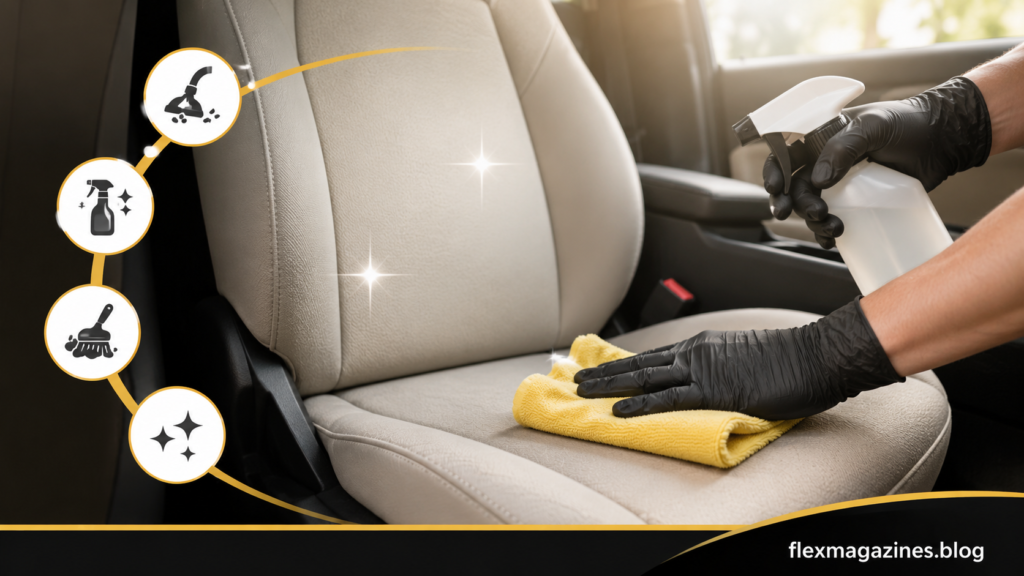
Vacuum → test the cleaner → clean gently → remove residue → dry thoroughly.
Using too much water or an overly aggressive cleaner can create more problems than the original stain, so patience is more important than scrubbing harder.
Identify Your Car Seat Material First
Before learning how to clean car seats, determine what youre actually cleaning.
Different materials require different approaches.
| Seat Material | General Cleaning Approach | Main Concern |
| Cloth fabric | Vacuum and use a suitable upholstery cleaner | Excess moisture |
| Leather | Vacuum, wipe, then use leather safe cleaner | Drying and discoloration |
| Vinyl | Mild cleaner and damp microfiber cloth | Harsh chemicals |
| Synthetic leather | Gentle, material compatible cleaner | Surface damage |
| Suede Alcantara style material | Manufacturer approved method | Permanent staining or texture damage |
| Heated ventilated seats | Gentle surface cleaning | Moisture entering electrical components |
If youre unsure what material your vehicle uses, check the owners manual or manufacturers care instructions.
This is particularly important for newer vehicles because seat materials can include synthetic leather, coated surfaces, perforated upholstery, suede like inserts, or integrated electronic components.
What Youll Need to Clean Car Seats
You dont need a professional detailing setup for routine cleaning.
A basic kit can include
- Vacuum cleaner with a soft brush attachment
- Several clean microfiber towels
- Soft interior detailing brush
- Bucket
- Warm water
- Mild upholstery cleaner or manufacturer approved interior cleaner
- Leather cleaner for genuine leather
- Leather conditioner when appropriate
- Soft toothbrush for seams and tight areas
- Dry towels
- Soft bristled brush for fabric upholstery
For stubborn stains, a specialized automotive upholstery product may be useful.
Avoid mixing cleaning chemicals. Combining products can produce unwanted chemical reactions or leave difficult to remove residues.
Always Test a Cleaner First
Before cleaning a large visible area, test the product in a small, inconspicuous location.
Apply a small amount according to the product directions and check whether it causes
- Color transfer
- Discoloration
- Texture changes
- Sticky residue
- Excessive fading
- Surface damage
If the test area reacts badly, dont continue using the product.
How to Clean Cloth Car Seats
Cloth seats are common and can usually be cleaned effectively with basic upholstery cleaning techniques.
The biggest mistake is soaking the fabric.
Too much moisture can penetrate deeper into the seat and make drying difficult. A damp, controlled cleaning process is generally preferable to saturating the upholstery.
Start by Removing Loose Debris
Move the front seats forward and backward to access hidden areas.
Vacuum
- Seat cushions
- Seat backs
- Seams
- Gaps between cushions
- Around seat rails
- Under the seats
- Areas around the seat belt buckles
Use a soft brush attachment where possible to reduce the risk of damaging the fabric.
For crumbs stuck in seams, gently loosen them with a soft detailing brush before vacuuming.
Treat Stains Before Cleaning the Whole Seat
Dont immediately spray the entire seat because you see one coffee stain.
First identify the affected area and determine what caused the stain.
Different stains may require different approaches.
For a fresh liquid spill
- Blot the area with a clean towel.
- Avoid rubbing aggressively.
- Remove as much liquid as possible.
- Apply an appropriate upholstery cleaner.
- Gently agitate the area.
- Remove remaining cleaner and residue.
- Allow the seat to dry completely.
Blotting is particularly useful for fresh spills because vigorous rubbing can push liquid deeper into the fabric.
Clean the Entire Seating Surface
After spot treatment, clean the larger seating area rather than creating an obvious clean patch.
Apply the upholstery cleaner according to its instructions.
Work in manageable sections.
Use a soft brush or microfiber towel to gently work the product into the fabric.
Dont aggressively scrub.
Once youve cleaned the area, use a clean, slightly damp microfiber towel to remove excess product if appropriate for the cleaner youre using.
Then allow the seat to dry thoroughly.
How to Remove Common Stains From Cloth Car Seats
Coffee Stains
Coffee should be treated as soon as possible.
Blot fresh liquid first. Then use a suitable upholstery cleaner according to its directions.
Avoid flooding the seat in an attempt to dilute the stain.
If the coffee contained milk or cream, thorough cleaning becomes even more important because organic residue can contribute to lingering odors.
Food Stains
Remove solid food particles before applying liquid cleaner.
A soft brush can help loosen dried residue.
Once the debris has been removed, treat the remaining stain with an appropriate upholstery product.
Grease and Oil
Greasy stains can be more difficult because ordinary water based cleaning may not remove oily residue effectively.
Use an automotive upholstery product designed for the type of stain and fabric.
Dont aggressively scrub because you can spread the stain beyond the original area.
Ink
Ink can be particularly difficult to remove.
Avoid experimenting with strong solvents without checking whether they are safe for the specific upholstery. Some solvents can damage dyes, coatings, or synthetic fibers.
For a significant ink stain, a professional automotive detailer may be safer than repeated home experimentation.
Pet Hair
Vacuuming alone may not remove embedded pet hair.
Try
- A rubber pet hair removal tool
- Soft upholstery brush
- Rubber glove designed for hair removal
- Vacuum with an upholstery attachment
Work gently to avoid damaging the fabric.
How to Clean Leather Car Seats
Leather requires a different approach.
The goal is to remove dirt and oils without unnecessarily stripping or damaging the surface.
Start by checking whether the seats are genuine leather, coated leather, synthetic leather, or another material.
Step by Step Leather Cleaning
Vacuum first.
Remove crumbs and loose debris from seams and around the seat.
Wipe the surface.
Use a clean microfiber cloth to remove loose dust and surface dirt.
Apply a leather safe cleaner.
Follow the products instructions. Dont assume that a household cleaner is suitable for automotive leather.
Work in small sections.
Gently clean the surface without aggressive scrubbing.
Remove residue.
Use a clean microfiber cloth as directed by the product.
Allow the surface to dry naturally.
Avoid excessive heat.
Condition only when appropriate.
A suitable leather conditioner may help maintain the finish of some leather surfaces, but not every automotive leather or coated surface requires the same treatment. Follow the vehicle or product manufacturers guidance.
Dont Saturate Leather Seats
Leather can be damaged by excessive moisture.
This is especially important around
- Perforations
- Seams
- Seat controls
- Heating elements
- Ventilation openings
- Electronic components
Use controlled amounts of product rather than soaking the seat.
How to Clean Vinyl and Synthetic Leather Seats
Many modern vehicles use synthetic leather materials such as vinyl or other coated surfaces.
These can often be easier to wipe clean than porous fabric, but that doesnt mean every household cleaner is safe.
Use a cleaner specifically compatible with the material.
A basic process is
- Vacuum loose dirt.
- Wipe the seat with a microfiber towel.
- Apply a suitable interior cleaner.
- Gently clean the surface.
- Remove residue with a clean cloth.
- Dry the surface.
Pay special attention to textured areas and seams where dirt can accumulate.
Avoid harsh abrasives that could alter the surface finish.
How to Clean Perforated Car Seats
Perforated seats have tiny holes in the material, often used for ventilation or design.
These require extra care.
Dont flood the surface with cleaner.
Instead
- Vacuum carefully.
- Use a small amount of appropriate cleaner.
- Apply the product to a microfiber towel when the product instructions allow it.
- Gently clean around the perforations.
- Remove excess moisture.
- Allow the seat to dry thoroughly.
If liquid is pushed into the perforations, it may reach areas that are difficult to dry or may contain seat electronics.
How to Clean Heated and Ventilated Car Seats
Heated and ventilated seats deserve additional caution because of their integrated components.
Avoid excessive water or liquid cleaner.
Dont spray large amounts directly onto the seat unless the vehicle manufacturer specifically says that doing so is safe.
Instead, use a controlled amount of an appropriate cleaner on the cloth or cleaning tool when permitted by the product instructions.
Keep moisture away from switches, controls, connectors, and openings.
If youre unsure about the construction of the seat, consult the owners manual.
How to Remove Odors From Car Seats
A clean looking seat can still smell unpleasant.
Odors can come from
- Spilled drinks
- Food
- Sweat
- Pet accidents
- Smoke
- Mold or mildew
- Damp upholstery
- Hidden debris
The first step is identifying the source.
Simply spraying air freshener over an odor doesnt actually clean the material.
For Food and Drink Odors
Clean the affected area thoroughly and remove residue.
If liquid has penetrated deep into fabric, surface cleaning may not completely resolve the odor.
For Pet Odors
Remove hair and solid debris first.
Then clean the affected upholstery with a product suitable for the material.
Pet urine can be especially difficult because it can penetrate below the surface. Repeated surface cleaning may not completely remove the source if contamination has reached the padding.
Professional extraction may be necessary for severe cases.
For Smoke Odor
Smoke can affect multiple parts of the interior, not just the seats.
If the smell persists after cleaning the seats, other surfaces may need attention, including
- Carpeting
- Headliner
- Door panels
- Dashboard surfaces
- Air vents
- Floor mats
Avoid masking the smell with excessive fragrance.
How to Clean Child Car Seats
Cleaning a child safety seat requires more caution than cleaning ordinary vehicle upholstery.
The restraint manufacturers instructions should take priority.
Do not assume you can use the same cleaning chemicals or washing methods that you would use on the vehicles seats.
Important considerations include
- Check the child seat manufacturers manual.
- Follow its instructions for removing the cover.
- Use only approved cleaning methods.
- Dont alter straps or harness components.
- Dont use harsh chemicals on safety components.
- Reinstall everything exactly as instructed.
For a child car seat, cleanliness matters, but preserving the integrity of the restraint system matters even more.
How to Clean Between Car Seats and Tight Spaces
Some of the dirtiest parts of a vehicle are areas you cant easily see.
Food crumbs and debris can accumulate between
- Seat cushions
- Center consoles
- Seat rails
- Door side gaps
- Seat belt buckles
Move the seats through their normal adjustment range and vacuum carefully.
A narrow vacuum attachment can help.
Use a detailing brush to loosen stubborn debris, but dont force tools into electrical components or mechanisms.
How to Clean Car Seat Seams
Seams collect dust, crumbs, hair, and dirt.
For fabric seats
- Vacuum the seam.
- Use a soft brush to loosen trapped debris.
- Vacuum again.
- Apply a small amount of suitable cleaner.
- Gently agitate.
- Remove excess moisture.
- Let the area dry.
For leather or synthetic leather, use a material compatible cleaner and avoid aggressive brushing.
How to Dry Car Seats Properly
Drying is one of the most important parts of the process.
A seat that looks clean but remains damp can develop unpleasant odors and may become difficult to restore.
After cleaning
- Remove excess moisture with clean towels.
- Open the vehicle doors or windows when conditions allow.
- Park in a safe, well ventilated location.
- Allow the upholstery to dry naturally.
- Avoid unnecessary heat exposure.
- Dont sit on a heavily damp seat until it has dried.
If the seat remains damp for an unusually long time, more moisture may have been used than necessary.
This is one reason professional detailers often use controlled extraction equipment when deep cleaning fabric upholstery.
What Not to Use on Car Seats
Some household cleaning methods can damage automotive upholstery.
Be cautious with
Bleach
Bleach can discolor fabrics and damage surfaces. It should not be treated as a general purpose car seat cleaner.
Strong Solvents
Products containing aggressive solvents may affect dyes, coatings, adhesives, or synthetic materials.
Abrasive Scrubbing
Hard brushes and excessive pressure can roughen fabric or damage leather finishes.
Excessive Water
More water does not necessarily mean cleaner seats. It can make drying harder and push contamination deeper.
Household Disinfectants Without Checking Compatibility
A product intended for hard household surfaces may not be appropriate for automotive upholstery.
Always read the product label and vehicle manufacturers instructions.
Common Mistakes When Cleaning Car Seats
Using Too Much Product
Excess cleaner can leave residue.
Cleaning Without Vacuuming
If loose dirt isnt removed first, it can turn into muddy residue during wet cleaning.
Ignoring the Material
A product thats safe for cloth may not be safe for leather.
Scrubbing Too Hard
Aggressive cleaning can damage upholstery.
Closing the Car Immediately
Poor ventilation can slow drying.
Cleaning Only the Visible Stain
A single clean spot can look worse than a uniformly cleaned section.
Mixing Cleaning Products
Different chemicals shouldnt be mixed unless the manufacturer specifically instructs you to do so.
How Often Should You Clean Car Seats?
Theres no universal schedule because driving habits and vehicle use vary.
A practical maintenance routine is
Weekly Remove crumbs and loose debris.
Every few weeks Vacuum the seats and floor thoroughly.
As needed Treat spills and stains promptly.
Every few months Perform a more comprehensive interior cleaning.
Professionally when necessary Consider professional detailing for deep stains, persistent odors, severe contamination, or upholstery that has become difficult to restore.
Vehicles used by children, pets, smokers, or people who frequently eat inside may require more frequent cleaning.
DIY Cleaning vs. Professional Detailing
For everyday dirt, DIY cleaning is usually practical.
Professional detailing becomes more attractive when
- Seats have deep stains.
- Odors persist after cleaning.
- Fabric has absorbed significant liquid.
- There is extensive pet contamination.
- You want extraction cleaning.
- The upholstery is delicate or unusual.
- You are preparing a vehicle for sale.
- You are unsure which products are safe.
Professional detailers have specialized equipment and experience, but the quality of service varies. Ask what cleaning methods and products they intend to use before allowing them to work on specialty upholstery.
How to Keep Car Seats Cleaner for Longer
Prevention reduces the amount of deep cleaning youll eventually need.
Consider these simple habits
- Avoid eating messy foods inside the vehicle.
- Clean spills immediately.
- Use appropriate seat covers when practical.
- Vacuum regularly.
- Keep pets properly secured.
- Clean childrens areas frequently.
- Shake out floor mats regularly.
- Keep trash out of the vehicle.
- Dont allow wet items to sit on upholstery.
- Address odors at their source.
A five minute cleanup after a spill is usually easier than trying to remove a stain weeks later.
A Simple Car Seat Cleaning Routine
If you want a straightforward process to follow, use this sequence
Before Cleaning
Park somewhere safe and well ventilated.
Remove personal belongings and trash.
Check the upholstery material.
Read the vehicle owners manual if you have concerns about special seat features.
During Cleaning
Vacuum thoroughly.
Test the cleaning product.
Work in small sections.
Use minimal necessary moisture.
Gently agitate dirt.
Remove cleaner residue.
After Cleaning
Inspect the seat under good lighting.
Repeat spot treatment only if necessary.
Dry thoroughly.
Check seams and tight areas.
Return the seat to normal use only after it is sufficiently dry.
Conclusion
Learning how to clean car seats doesnt require complicated equipment or professional level detailing skills.The most effective approach is to start with the upholstery material, remove loose dirt with a vacuum, choose a compatible cleaner, test it first, work gently, control moisture, and allow the seat to dry completely.For cloth seats, avoid soaking the fabric. For leather, use products designed for leather surfaces. For vinyl and synthetic leather, choose a compatible interior cleaner and avoid abrasive methods. Heated, ventilated, perforated, and specialty seats deserve additional caution because moisture can reach components beneath the surface.Most importantly, clean spills quickly and maintain the interior regularly. Small maintenance jobs are much easier than restoring years of accumulated dirt, stains, and odors.With the right method and a little patience, you can keep your car seats cleaner, fresher, and more comfortable without unnecessarily risking damage to the upholstery.
You may also read more blogs
FAQs
What is the best way to clean car seats?
The best method depends on the upholstery. For cloth, vacuum first and use an appropriate upholstery cleaner with controlled moisture. For leather, use a leather safe cleaner and microfiber cloth. Always test a product before treating a large visible area.
Can I use dish soap to clean car seats?
It is better not to assume that dish soap is appropriate for automotive upholstery. Some household soaps can leave residue or affect certain materials. A cleaner specifically designed for the vehicles upholstery is generally a safer choice.
How do I clean cloth car seats without making them wet?
Use controlled amounts of upholstery cleaner rather than saturating the seat. Work in small sections, remove excess product with appropriate towels, and allow plenty of ventilation for drying.
How do I remove a bad smell from car seats?
Use controlled amounts of upholstery cleaner rather than saturating the seat. Work in small sections, remove excess product with appropriate towels, and allow plenty of ventilation for drying.
Can I use a steam cleaner on car seats?
Steam can be unsuitable for certain automotive materials or components. Before using steam, check the vehicle and upholstery manufacturers recommendations. Heated, ventilated, perforated, leather, and specialty seats require particular caution.
How do I clean leather car seats without damaging them?
Vacuum loose debris, use a cleaner specifically intended for automotive leather, work gently in small sections, and remove residue according to the product directions. Avoid excessive water, harsh chemicals, and aggressive scrubbing.
How long does it take for car seats to dry after cleaning?
Drying time depends on how much moisture was used, the upholstery material, temperature, humidity, and ventilation. Controlled cleaning with minimal moisture generally dries faster than soaking the seats.
Should I clean a car seat myself or hire a professional?
DIY cleaning works well for routine dirt and minor stains. Professional detailing may be worthwhile for deep stains, persistent odors, heavy contamination, delicate materials, or deep extraction cleaning.