
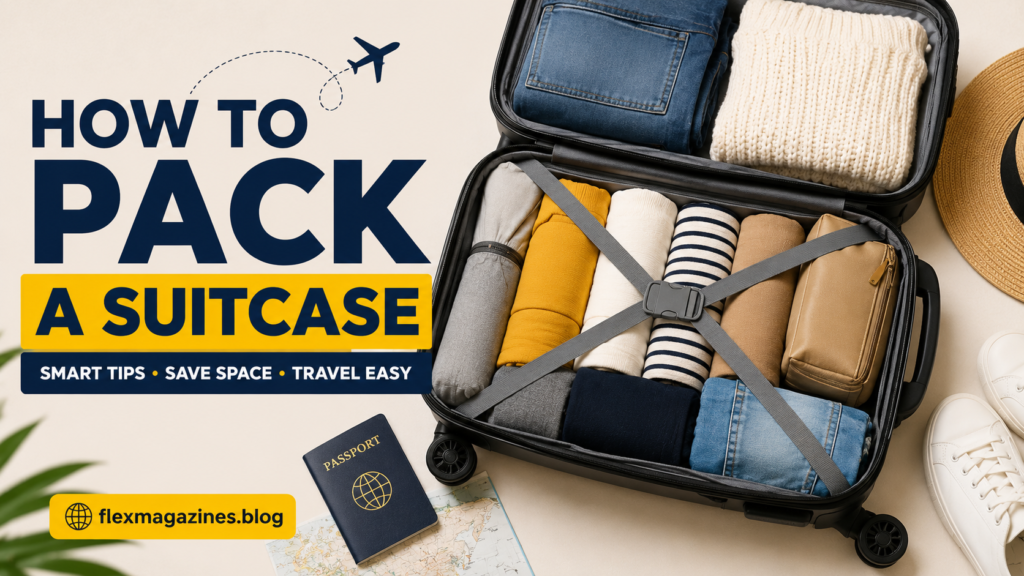

Learning how to pack a suitcase properly can make travel much easier. Instead of forcing everything into your luggage at the last minute, a simple packing system can help you fit what you need, keep clothes organized, protect fragile items, and avoid arriving at your destination with a suitcase full of wrinkles.
The best approach is to plan first, pack by category, use every available space, and leave unnecessary items behind. Rolling some clothes, folding structured garments, using packing cubes, placing shoes strategically, and keeping important items accessible can make a surprisingly big difference.
Before packing, check your airlines current baggage allowance, size restrictions, and prohibited item rules. If youre flying from or within the United States, TSA recommends starting with an empty bag and checking the prohibited items list. For carry on luggage, liquids, gels, and aerosols generally need to follow the TSA 3 1 1 rule containers of 3.4 ounces (100 mL) or less, placed in one quart size clear bag, with one bag per passenger.
Whether youre packing for a weekend getaway, business trip, family vacation, or longer international journey, the following method will help you pack a suitcase efficiently without overpacking.
What Is the Best Way to Pack a Suitcase?
The most efficient suitcase packing method is to organize your belongings before putting them into your luggage.
A reliable order is
- Check your baggage allowance.
- Make a realistic packing list.
- Choose outfits rather than individual items.
- Separate clothes, shoes, toiletries, and electronics.
- Roll suitable casual clothing.
- Fold structured or wrinkle prone garments.
- Use packing cubes if helpful.
- Put shoes around the edges or in shoe bags.
- Place heavier items toward the bottom or wheel side of a rolling suitcase.
- Keep essentials and valuables in your carry on.
- Leave some space for items you may acquire during the trip.
- Weigh the suitcase before leaving.
The goal isnt to fill every inch of luggage.
The goal is to take everything you actually need while keeping the suitcase manageable.
Start With a Packing List
One of the easiest ways to overpack is to start putting random items into your suitcase without deciding what youll actually use.
Instead, create a list based on
- Trip length
- Destination
- Weather
- Planned activities
- Dress requirements
- Laundry availability
- Transportation
- Baggage allowance
Think about your daily schedule.
For example, a three day city trip might require
- 3 tops
- 1–2 pairs of pants
- 1 nicer outfit
- Underwear
- Socks
- Sleepwear
- Comfortable shoes
- Toiletries
- Phone charger
- Jacket or sweater if needed
You probably dont need seven complete outfits for a three day trip.
Plan Outfits, Not Just Clothes
A useful packing trick is to create combinations before putting anything in the suitcase.
Ask
Can I wear this item with at least two other things Im bringing?
If the answer is no, consider leaving it home unless you specifically need it.
Neutral colors and versatile clothing can make this easier.
A pair of pants that works with three shirts is generally more useful than three separate outfits that only work individually.
Check the Weather Before You Pack
Weather can completely change what belongs in your suitcase.
Check the forecast shortly before departure, particularly if your trip is several days away.
Consider
- Temperature
- Rain
- Wind
- Humidity
- Snow
- Daytime vs. nighttime temperatures
Dont pack solely based on the season.
A summer destination can still have cool evenings, while a winter destination may have heated indoor spaces where heavy layers become uncomfortable.
Pack Layers Instead of Too Many Bulky Clothes
Layering is one of the most efficient ways to handle changing temperatures.
Instead of packing multiple heavy garments, consider
- T shirts
- Lightweight shirts
- Sweaters
- A versatile jacket
- Comfortable pants
Layers can be combined depending on the weather.
This approach saves luggage space while giving you more outfit flexibility.
Choose the Right Suitcase
Your suitcase should match your trip.
A small carry on may be ideal for a weekend, while a larger checked suitcase may make sense for an extended trip.
Consider
- Suitcase dimensions
- Weight
- Wheel quality
- Handle strength
- Interior compartments
- Zippers
- Expandability
- Durability
Dont automatically choose the largest suitcase available.
A huge suitcase can encourage overpacking, and a heavier empty suitcase leaves less of your airlines weight allowance available for belongings.
Hard Shell vs. Soft Sided Luggage
Both have advantages.
Hard shell luggage can provide a structured exterior and may offer useful protection for certain belongings.
Soft sided luggage can offer exterior pockets and sometimes more flexibility when youre trying to fit it into tight spaces.
The best choice depends on the type of travel you do.
How to Pack Clothes in a Suitcase
Clothing normally takes up most of the available space, so this is where a good packing technique matters most.
Start by separating clothing into categories
- Tops
- Pants
- Dresses
- Underwear
- Sleepwear
- Workout clothes
- Outerwear
Then decide which items should be rolled and which should be folded.
You dont have to use only one method.
A combination of rolling and folding is often the most practical approach.
Rolling Clothes vs. Folding Clothes
The rolling method is popular because it can make small clothing items easier to organize and place into gaps.
Roll These Items
Rolling often works well for
- T shirts
- Casual tops
- Pajamas
- Leggings
- Athletic clothes
- Shorts
- Underwear
- Socks
Lay the item flat, fold it if necessary, then roll it firmly without making the roll excessively tight.
Fold These Items
Traditional folding may be better for
- Blazers
- Dress shirts
- Structured trousers
- Formal dresses
- Heavy sweaters
- Delicate garments
These pieces may need more careful handling to reduce creases.
The Best Method Use Both
Theres no universal rule that every garment must be rolled.
A better strategy is
Roll casual clothes and fold structured garments.
This gives you organization without forcing every item into the same packing method.
Use Packing Cubes to Organize Your Suitcase
Packing cubes are optional, but they can make luggage much easier to manage.
Instead of putting every item directly into the suitcase, you can organize categories into separate cubes.
For example
Cube 1 Shirts and tops
Cube 2 Pants and bottoms
Cube 3 Underwear and socks
Cube 4 Workout or sleepwear
The biggest advantage isnt necessarily magically creating extra suitcase capacity.
The real benefit is organization.
You can remove one cube without turning the entire suitcase upside down.
Packing cubes can also make it easier to separate clean clothes from worn clothing during a trip.
Dont Overfill Packing Cubes
Theres a common misconception that compression and packing cubes mean you can keep adding clothes indefinitely.
You cant.
A compressed suitcase can become
- Extremely heavy
- Difficult to close
- Harder to organize
- More likely to exceed airline weight limits
Packing cubes should help you control your packing, not encourage you to bring more.
If a cube is difficult to close, thats usually a sign that you have packed too much.
How to Pack Shoes in a Suitcase
Shoes can take up considerable space, so limit the number you bring.
For many trips, a practical combination is
- One pair of comfortable walking shoes
- One additional pair for specific activities or occasions
Of course, longer or specialized trips may require more.
Use the Space Inside Shoes
Shoes are hollow, which means their interior space can be useful.
You can place small items inside clean shoes, such as
- Socks
- Belts
- Small accessories
Put shoes in shoe bags or another clean protective covering if possible.
This prevents the soles from touching clean clothing.
Where Should Shoes Go?
For a rolling suitcase, heavier shoes can often be placed near the wheel end or along the bottom portion of the suitcase.
Place lighter clothing around them.
This can help distribute weight and keep the suitcase balanced.
How to Pack Toiletries
Toiletries can create one of the biggest problems in luggage because bottles can leak.
Before packing, ask whether you actually need the full size version of every product.
Consider smaller travel containers for
- Shampoo
- Conditioner
- Lotion
- Face wash
- Body wash
- Other liquid products
Put liquids inside a leak resistant toiletry bag.
If a bottle has a history of leaking, consider adding an additional protective layer around it.
Carry On Liquids
For travelers going through TSA security in the United States, carry on liquids, gels and aerosols generally must follow the 3 1 1 rule
- Each container must be 3.4 ounces (100 mL) or less.
- Containers should fit in one clear, quart size, resealable bag.
- One bag is allowed per passenger.
TSA recommends keeping this liquid bag accessible because it may need to be removed for screening.
Rules can vary by country and airport, so international travelers should also check the relevant aviation security authority and airport before departure.
Pack Electronics Carefully
Electronics should be packed strategically because you may need them during the journey.
Common travel electronics include
- Phone
- Laptop
- Tablet
- Camera
- Headphones
- Chargers
- Power banks
- Adapters
- Cables
Keep important electronics protected and easy to access.
For U.S. airport security, TSA recommends placing larger electronics in an accessible location because they may need to be screened separately in standard screening lanes.
Keep Important Items in Your Carry On
Avoid placing irreplaceable or essential belongings in checked luggage when possible.
Examples include
- Passport
- Identification
- Wallet
- Prescription medications
- Important documents
- Essential electronics
- Valuable jewelry
- Items you cannot easily replace
A checked suitcase can be delayed or lost.
Your carry on should therefore contain the things you would genuinely need if your checked luggage did not arrive with you.
How to Pack Jewelry and Small Accessories
Small accessories are easy to lose inside a large suitcase.
Instead of scattering them throughout your luggage, keep them in one small pouch.
You can organize
- Watches
- Jewelry
- Hair accessories
- Belts
- Sunglasses
- Small personal items
Keep valuable items in your carry on rather than checked luggage.
For necklaces that tend to tangle, store them separately or use a simple organizer.
How to Prevent Clothes From Wrinkling
Wrinkles are one of the biggest complaints about suitcase packing.
No packing method can guarantee wrinkle free clothes, but you can reduce creasing.
Dont Overpack
A tightly compressed suitcase creates pressure and can increase wrinkles.
Fold Structured Clothing Carefully
Dress shirts, jackets and formal garments usually benefit from careful folding rather than aggressive rolling.
Place Heavier Items Strategically
Avoid putting heavy objects directly on delicate garments.
Use a Garment Bag When Appropriate
For formal clothing, a garment bag may be more practical than forcing everything into a small suitcase.
Pack Clothes When Theyre Dry
Never pack damp clothing if you can avoid it.
Moisture can lead to unpleasant odors and other problems during travel.
How to Pack a Suitcase Without Wasting Space
Efficient packing isnt about squeezing every possible item into your suitcase.
Its about using space intelligently.
Try these techniques
Fill Small Gaps
Small items can fit into gaps between larger clothing pieces.
Examples include
- Socks
- Underwear
- Belts
- Small accessories
Use Shoe Interiors
Place small soft items inside clean shoes.
Use Suitcase Compartments
Keep smaller items in built in compartments where possible.
Keep Similar Items Together
Organization reduces wasted space because you can find things without repeatedly unpacking and repacking.
Dont Pack Empty Space You Need Later
If youre traveling somewhere where you expect to shop, leave some room.
A suitcase that is completely full before departure can become a problem on the return journey.
A Simple Suitcase Layering System
A useful way to organize your suitcase is to think in layers.
For example
Bottom layer Shoes and heavier items
Middle layer Rolled clothing and packing cubes
Upper layer Folded clothing and lighter garments
Top layer Items you may need quickly
TSAs travel checklist also recommends packing items in layers, such as shoes, clothing and electronics, and keeping certain screening sensitive items accessible.
The exact arrangement can vary depending on the suitcase design and your travel needs.
How to Pack a Carry On Suitcase
A carry on requires more planning because space is limited and airline restrictions vary.
Before departure, verify
- Maximum dimensions
- Weight restrictions
- Number of bags allowed
- Personal item rules
- Liquids restrictions
- Electronics rules
- Restricted items
Airline requirements can differ, so dont assume that one airlines allowance applies to another.
What Should Go in Your Carry On?
A practical carry on may contain
- Passport or ID
- Boarding information
- Wallet
- Phone
- Chargers
- Essential medication
- Important documents
- Small toiletries
- Change of clothes
- Valuable electronics
- Basic travel essentials
If youre checking a suitcase, keep anything essential for the first day of your trip in your carry on.
That gives you a backup if your checked luggage is delayed.
How to Pack a Checked Suitcase
Checked luggage gives you more room, but that doesnt mean you should fill it without considering weight.
Start by checking your airlines
- Weight limit
- Size limit
- Number of checked bags
- Fees
- Special item restrictions
Place heavier items toward the appropriate lower section of the suitcase, particularly around the wheel area for many rolling cases.
Distribute weight instead of creating one extremely heavy section.
Before leaving, weigh the suitcase if possible.
A home luggage scale can prevent an unpleasant surprise at the airport.
How to Pack a Suitcase for a Weekend Trip
For a short trip, the biggest mistake is often packing too much.
A weekend packing list might include
- 2–3 tops
- 1–2 bottoms
- Underwear
- Socks
- Sleepwear
- One versatile outer layer
- Comfortable shoes
- Toiletries
- Electronics
- Any activity specific items
Choose pieces that can be mixed and matched.
If you can create several outfits from a small number of items, you dont need a separate outfit for every possible situation.
How to Pack a Suitcase for One Week
A seven day trip requires more planning.
You dont necessarily need seven completely separate outfits.
Instead, create a flexible capsule wardrobe.
For example
- 5–7 tops
- 2–3 bottoms
- 1 nicer outfit
- 1 sweater or jacket
- Underwear
- Socks
- Sleepwear
- Comfortable shoes
- Activity specific clothing
If laundry is available, you may be able to pack significantly less.
This is especially useful when traveling with only a carry on.
How to Pack for a Business Trip
Business travel requires special attention to wrinkle prone clothing.
Prioritize
- Dress shirts
- Trousers
- Blazer
- Professional shoes
- Belt
- Minimal accessories
- Laptop
- Chargers
- Business documents
Keep your most important work equipment in your carry on whenever practical.
Pack outfits around a consistent color palette.
For example, neutral trousers can work with several shirts, reducing the number of garments you need.
How to Pack for a Beach Vacation
Beach vacations can require fewer clothing items than you might expect.
Consider
- Swimsuits
- Lightweight shirts
- Shorts
- Sandals
- Sunglasses
- Hat
- Sunscreen
- Casual evening outfit
- Lightweight cover up
- Toiletries
Avoid bringing multiple bulky outfits if most of your time will be spent in casual clothing.
A lightweight bag for beach items can also be useful once you arrive.
How to Pack for Cold Weather
Cold weather clothing presents a different challenge because jackets, sweaters and boots consume significant luggage space.
Use layers where practical.
Instead of packing several bulky sweaters, consider
- Base layers
- Lightweight shirts
- One versatile sweater
- Warm jacket
- Appropriate pants
- Weather resistant shoes
If practical, wear your bulkiest jacket and shoes during travel instead of packing them.
However, comfort should still come first.
There is little value in wearing extremely heavy clothing on a long flight simply to save a small amount of luggage space.
How to Pack for International Travel
International travel requires additional planning.
Before leaving, confirm
- Passport validity
- Visa requirements
- Airline baggage limits
- Destination specific restrictions
- Airport security rules
- Electrical outlet requirements
- Medication requirements
- Travel documents
Keep your passport, identification, money and essential documents in your carry on.
For U.S. travelers, TSA recommends reviewing prohibited items for both carry on and checked baggage before packing.
Travelers should also check the official rules of their departure airport, airline and destination country because restrictions can differ.
What Not to Pack in Your Suitcase
Overpacking often happens because travelers focus on what they might need rather than what they are realistically going to use.
Consider leaving behind
- Too many shoes
- Excessive clothing
- Duplicate toiletries
- Items available at your destination
- Unnecessary gadgets
- Clothes you dont normally wear
- Excessive accessories
- Just in case items without a realistic use
Ask yourself
Would I actually buy or use this during the trip?
If not, you probably dont need it.
Common Suitcase Packing Mistakes
Packing at the Last Minute
Last minute packing encourages unnecessary items and forgotten essentials.
Start with a list earlier and pack gradually.
Taking Too Many Shoes
Shoes are bulky and heavy.
Choose versatile footwear whenever possible.
Ignoring the Weather
Packing based solely on the calendar can leave you uncomfortable.
Check the forecast before departure.
Forgetting Airline Restrictions
A suitcase that worked on your last trip may not meet another airlines requirements.
Check before every flight.
Packing Too Many Just in Case Items
Preparation is good.
Packing for every imaginable scenario isnt.
Putting Essentials in Checked Luggage
Keep important documents, medication and valuable electronics accessible in your carry on.
Filling the Suitcase Completely
Leave room if you expect to shop.
Not Weighing the Bag
A suitcase can look perfectly reasonable while still exceeding the airlines weight limit.
How to Make Your Suitcase Easier to Find
Organization becomes especially important during longer trips.
Instead of unpacking the entire suitcase every night, use a simple category system.
For example
Packing cube shirts
Packing cube underwear and socks
Packing cube pants
Small bag toiletries
Shoe bags footwear
Electronics pouch chargers and cables
This makes finding things faster and reduces the amount of time you spend reorganizing your luggage.
What to Do With Dirty Clothes
Bring a lightweight laundry bag or designate a separate section of your luggage for worn clothes.
Dont mix dirty clothing with clean clothing if you can avoid it.
At the end of a trip, this makes unpacking much easier.
You can simply take the laundry bag out and move it directly toward your washing area.
The 24 Hour Packing Check
A useful strategy is to finish most of your packing approximately a day before departure when possible.
Then perform a final check.
Ask
- Is my passport packed?
- Do I have my ID?
- Is my wallet ready?
- Is my phone charger packed?
- Do I have essential medication?
- Did I check the weather?
- Did I check my airline baggage allowance?
- Are my liquids compliant?
- Are my important electronics accessible?
- Is my suitcase within the weight limit?
- Do I have enough room for the return trip?
This final review can catch mistakes before youre at the airport.
A Complete Suitcase Packing Checklist
Clothing
- Shirts
- Pants or shorts
- Underwear
- Socks
- Sleepwear
- Jacket or sweater
- Activity specific clothing
- Formal outfit if needed
Shoes
- Everyday shoes
- Activity specific shoes
- Sandals or formal shoes if necessary
- Shoe bags
Toiletries
- Toothbrush
- Toothpaste
- Shampoo
- Conditioner
- Body wash
- Skincare
- Deodorant
- Hair products
- Personal care items
Electronics
- Phone
- Charger
- Laptop or tablet
- Headphones
- Camera
- Power adapter
- Appropriate cables
- Power bank if needed
Travel Documents
- Passport
- Identification
- Boarding information
- Hotel details
- Transportation information
- Travel insurance documents if applicable
- Required visas or permits
Final Checks
- Check weather
- Check airline baggage rules
- Check security restrictions
- Weigh suitcase
- Label luggage
- Keep valuables in carry on
- Leave space for souvenirs
The Best Packing Strategy in One Simple Formula
If you want a simple system to remember, use this
Plan → Reduce → Organize → Pack → Check
Plan
Understand your trip, weather, activities and baggage allowance.
Reduce
Remove things you probably wont use.
Organize
Separate clothing, shoes, toiletries and electronics.
Pack
Roll casual clothing, fold structured garments, use available spaces and distribute weight.
Check
Review your documents, security requirements, suitcase weight and essential items.
This method works for everything from a short weekend trip to a longer vacation.
Conclusion
Knowing how to pack a suitcase isnt about finding a secret trick that magically creates extra space. The most effective approach is to pack with a plan.Start by checking your destination, weather, activities and airline baggage requirements. Then create a realistic packing list and remove items you probably wont use. Choose versatile outfits instead of packing every possible combination.When youre ready to pack, use a combination of rolling and folding. Roll casual clothing such as T shirts and shorts, while folding structured garments that are more likely to wrinkle. Packing cubes can help keep categories organized, while shoe bags protect clothing from dirty soles.Keep toiletries contained and make sure carry on liquids comply with the relevant security requirements. For U.S. travelers, TSAs 3 1 1 rule remains an important consideration for liquids, gels and aerosols in carry on baggage.Most importantly, dont confuse a full suitcase with a well packed suitcase.The best suitcase is one that contains what you need, remains within the airlines limits, is easy to organize, and still leaves you enough flexibility to enjoy your trip.Plan what you need, pack intentionally, check your luggage before leaving, and travel lighter whenever possible.
You may also read more blogs
FAQs
Is it better to roll or fold clothes in a suitcase?
Both methods can work. Rolling is particularly convenient for casual clothing such as T shirts, shorts and athletic wear, while folding is generally better for structured or wrinkle prone garments. A combination of both is often the most practical solution.
How can I fit more clothes into my suitcase?
The best approach is not simply to squeeze in more clothes. Reduce unnecessary items, choose versatile outfits, roll suitable clothing, use packing cubes, fill small gaps intelligently and avoid bulky duplicates.
How do I pack a suitcase without wrinkles?
Avoid overpacking, fold structured garments carefully, separate heavy items from delicate clothes, and use a garment bag when appropriate for formal clothing. Some wrinkles may still occur during travel, so a small travel steamer can be useful where permitted and practical.
Should shoes go on the bottom of a suitcase?
For many rolling suitcases, heavier shoes can be placed toward the wheel end or lower section. Use shoe bags to protect clothing and fill the inside of clean shoes with small soft items to make use of their space.
How do I pack toiletries for a flight?
For U.S. TSA screening, carry on liquids, gels and aerosols generally need to follow the 3 1 1 rule containers of 3.4 ounces (100 mL) or less in one quart size clear bag, with one bag per passenger. Always verify current requirements before traveling.
What should I put in my carry on instead of my checked suitcase?
Keep essential documents, identification, medications, valuable items, important electronics and other belongings you cannot easily replace in your carry on. A change of clothes can also be useful if your checked luggage is delayed.
How early should I start packing for a trip?
For a normal trip, starting a few days in advance gives you time to check the weather, make a list, wash clothes and identify anything you still need. Try to have the majority of your packing finished before the final night.
How can I avoid overweight luggage?
Start by checking the airlines weight allowance. Remove unnecessary heavy items, choose lighter luggage where possible, distribute belongings between permitted bags and weigh your suitcase before leaving for the airport.