
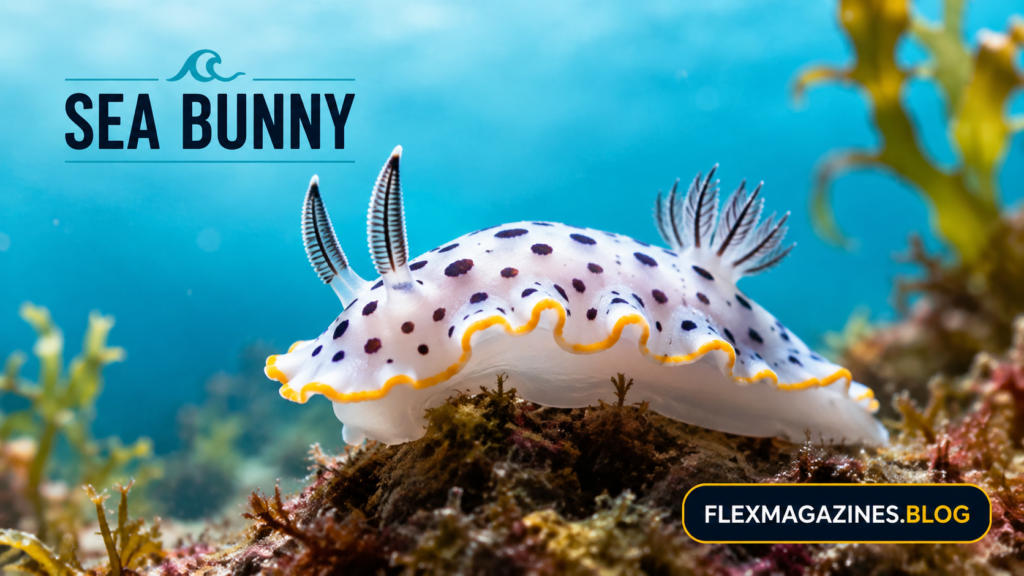

A sea bunny is a popular nickname for Jorunna parva, a small species of nudibranch, which is a shell less marine gastropod mollusk. Despite its cute nickname, the animal is not related to rabbits or land mammals. Its resemblance to a tiny bunny comes from the shape and placement of structures on its head, combined with its rounded body and fuzzy looking surface.
The accepted scientific name is Jorunna parva, according to the World Register of Marine Species. The species was originally described by Japanese malacologist Kikutarō Baba in 1938, and its original combination was Thordisa parva.
The Sea Bunny Is a Nudibranch
Nudibranchs are marine gastropods that are commonly called sea slugs. Unlike many familiar terrestrial snails and slugs, adult nudibranchs do not carry a conventional external shell. They are found in oceans around the world and are known for extraordinary colors, body shapes, and specialized structures.
The sea bunny belongs to the genus Jorunna and the family Discodorididae. Its scientific classification is important because many online posts use sea bunny loosely for cute looking sea slugs, even though the name most commonly refers specifically to Jorunna parva.
Why the Name Sea Bunny Became Popular
The nickname comes almost entirely from appearance. Two prominent structures on the animals head look surprisingly similar to rabbit ears when viewed from above. Its rounded body and compact size reinforce that impression.
The name is therefore a charming example of how common names can make wildlife more approachable. Sea bunny is easier to remember than Jorunna parva, but the scientific name remains important for accurately identifying the species.
Why Does a Sea Bunny Look Like a Rabbit?
The sea bunnys rabbit like appearance is created by several anatomical features working together. Most noticeable are the paired rhinophores on its head. These sensory organs project upward and can resemble tiny ears.
Its body also has a soft, rounded appearance, while the small projections covering its back can make the animal look furry. Importantly, the creature is not actually covered in mammalian fur. Its texture comes from specialized structures associated with its nudibranch anatomy.
The Ears Are Rhinophores
The structures that look like bunny ears are called rhinophores. They are sensory organs used by nudibranchs to detect chemical cues and other information in the surrounding seawater.
Rather than functioning like mammalian ears, rhinophores are more closely associated with the animals ability to sense its environment. Their unusual shape is one reason the sea bunny looks so expressive in photographs.
The Fuzzy Appearance Explained
The apparent fur on a sea bunny is another illusion created by its anatomy. The body has numerous small structures called tubercles, which give the surface a textured, velvety or fuzzy appearance.
These tubercles are not hairs. A sea bunny is a mollusk, not a mammal, so its body structure is fundamentally different from that of a rabbit. The fluffy appearance is one of the main reasons the species became so popular among people who had never previously seen a nudibranch.
Sea Bunny Appearance and Physical Features
The sea bunny is small, soft bodied, and highly distinctive. Its body can appear white, cream, yellowish, or brownish, and individuals can show variation in coloration and markings. The combination of a rounded body, prominent rhinophores, and textured tubercles creates its characteristic appearance.
Like other nudibranchs, the sea bunny does not have a conventional shell protecting its body. Instead, it relies on other biological strategies for survival, including camouflage, chemical defenses, and specialized body structures.
Body Shape and Color
Sea bunnies generally have a compact, oval body that can look almost plush when photographed at close range. The tubercles covering the body can make the surface look like short fur.
Color is not simply an aesthetic feature. In marine invertebrates, coloration can contribute to camouflage or warning signals, and it can also vary according to species, age, environment, and individual characteristics. A photograph of one sea bunny should therefore not be treated as a perfect visual template for every Jorunna parva.
How Small Is a Sea Bunny?
One of the reasons sea bunny photographs can be misleading is scale. Close up underwater photography can make a tiny nudibranch appear much larger than it really is.
Exact size can vary, but the species is generally a small sea slug, not an animal that approaches the size of a rabbit. Its miniature dimensions are part of its appeal the rabbit like appearance becomes even more surprising when viewers realize they are looking at a very small marine mollusk.
Where Do Sea Bunnies Live?
Jorunna parva is a marine species associated with the Indo Pacific region. The species was originally described from Japan, and documented records extend across parts of the western Pacific and Indian Ocean regions.
Modern biodiversity databases are particularly useful for distinguishing verified species records from social media claims. The World Register of Marine Species currently recognizes Jorunna parva as an accepted species and records documented occurrences in places including Japan and southern African waters.
Sea Bunny Habitat and Environment
Sea bunnies are marine animals associated with underwater environments where their food sources and suitable surfaces occur. Like many nudibranchs, they live on or close to the seafloor rather than swimming through open water like fish.
Their habitat is therefore closely connected with the communities of organisms growing on underwater surfaces. Sponges and other benthic organisms can provide both food and shelter, making the condition of the seafloor important to the animals survival.
Where Can Divers Find Them?
Sea bunnies are not animals that divers should expect to see on every reef or rocky shore. They are relatively small, and spotting a nudibranch often requires careful observation.
Macro photography and experienced underwater guides have helped make nudibranchs more visible to the public. A diver searching for sea slugs may notice them on rocks, reef surfaces, or other areas where their prey occurs.
What Does a Sea Bunny Eat?
The sea bunny is a carnivorous nudibranch, and its diet is closely associated with marine sponges. This is an important point because the cute appearance can make people imagine that the animal might eat algae or tiny plants like a rabbit.
Members of the genus Jorunna are known for feeding on sponges. Scientific literature on Jorunna nudibranchs describes the genus as carnivorous and reports feeding on different sponge species.
How Sea Bunnies Find Food
Sea bunnies use their sensory systems to navigate their environment and locate suitable food. The rhinophores on their heads play an important sensory role, allowing the animal to detect chemical information in seawater.
Once it encounters suitable prey, the nudibranch can feed using its specialized molluscan feeding apparatus. This is very different from the grazing behavior associated with many familiar land snails and slugs.
Why Sponge Eating Matters
Eating sponges can have another benefit beyond providing nutrition. Some nudibranchs can acquire or transform chemical compounds associated with their prey, potentially contributing to their own defensive chemistry.
Research on the related Jorunna funebris has found marine natural products associated with the nudibranch and its possible sponge prey. That research illustrates why nudibranchs are scientifically interesting their feeding relationships can be connected with unusual chemistry.
Sea Bunny Behavior and Movement
A sea bunny does not hop, swim like a fish, or move through the ocean in a rabbit like manner. It is a benthic crawler, moving across underwater surfaces using the muscular foot typical of gastropod mollusks.
Its movement can look slow and deliberate to a human observer. That is not necessarily a disadvantage. A tiny animal living on the seafloor does not need to move quickly like a pelagic predator or prey species.
How Sea Bunnies Move
The muscular foot helps the nudibranch glide over surfaces. Like other gastropods, it can produce mucus that helps reduce friction and support movement across the substrate.
The animals sensory structures also help it interact with its surroundings. Because it lives in a chemically complex marine environment, detecting food, potential threats, and environmental cues is more important than moving rapidly over long distances.
Are Sea Bunnies Social Animals?
There is no reason to assume that a sea bunny behaves like a social mammal simply because its appearance is cute. Nudibranchs generally do not form the large social groups associated with schooling fish, dolphins, or many terrestrial mammals.
Individuals may encounter each other because they occupy similar habitats or food rich areas. Such encounters are particularly important during reproduction, because nudibranchs need another individual for mating despite each animal possessing both reproductive sexes.
How Sea Bunnies Breathe
Sea bunnies are marine mollusks that exchange gases with seawater using specialized respiratory structures. In nudibranchs, these structures are often arranged in a visible cluster toward the rear portion of the body.
The sea bunnys respiratory structures contribute to its distinctive appearance, but they are not rabbit like features. They are specialized adaptations for extracting oxygen from the surrounding seawater.
The Gills on the Back
The feathery looking structures toward the back of many dorid nudibranchs form a gill plume. These structures increase the surface area available for gas exchange.
Because the gills are exposed rather than enclosed inside a shell, they can directly interact with moving seawater. This arrangement is one of the defining visual characteristics of many dorid nudibranchs.
Why the Gills Are Vulnerable
Exposed respiratory structures may appear delicate because they are delicate. The animal must balance effective gas exchange with protection from physical damage and predators.
The overall body design of a nudibranch is therefore a combination of specialized feeding, sensory, respiratory, reproductive, and defensive structures. The sea bunnys unusual appearance reflects its biology rather than being simply decorative.
How Sea Bunnies Reproduce
One of the most fascinating facts about nudibranchs is that individual animals are simultaneous hermaphrodites. This means each mature individual possesses both male and female reproductive systems.
That does not mean an individual normally reproduces entirely alone. Nudibranchs generally mate with another individual, allowing both partners to exchange reproductive material. This reproductive strategy is common among sea slugs and can be advantageous for animals that may encounter potential mates only occasionally.
Sea Bunny Mating
During mating, two individuals can exchange sperm. Each partner can subsequently use the received sperm to fertilize its eggs.
The reproductive biology of nudibranchs is particularly interesting because their body plans are adapted for a soft bodied lifestyle without the protective shell found in many other gastropods. Reproduction is therefore another example of how these animals have evolved specialized marine strategies.
Eggs and Early Development
After mating, nudibranchs lay eggs in the marine environment. The eggs are generally arranged in characteristic gelatinous structures that can be attached to a surface.
The larvae of many nudibranchs spend an early stage in the water column before eventually settling and transforming into juvenile animals. This life cycle means the species can have both benthic adult stages and a more mobile early developmental stage.
Are Sea Bunnies Dangerous?
No, sea bunnies are not considered dangerous to people. Their small size and soft bodies make them far more interesting to observe than threatening to humans.
However, the absence of danger to humans does not mean the animal lacks defenses. Nudibranchs have evolved sophisticated chemical and physical strategies to discourage predators, and these defenses are a major subject of marine biology research.
Sea Bunny Defense Mechanisms
Some nudibranchs obtain defensive chemicals from their food, particularly sponges and other organisms containing biologically active compounds. Others can produce or modify defensive substances themselves.
Research involving Jorunna species has documented unusual natural products associated with nudibranch tissues and their sponge prey. This is one reason scientists study sea slugs not only for ecology but also for marine chemical diversity.
Should You Touch a Sea Bunny?
Even when an animal is harmless to humans, touching it is generally a bad idea. A sea bunny is a delicate wild marine organism adapted to life underwater, not a pet designed for handling.
Divers and tide pool visitors should observe nudibranchs without picking them up, moving them, or exposing them to air unnecessarily. Responsible wildlife viewing helps protect the animal and preserves its natural environment.
Why Is the Sea Bunny So Popular?
The sea bunny became an internet sensation largely because photographs make it look like a tiny rabbit underwater. The combination of rabbit like ears, a fluffy looking body, and an extremely small size makes the creature almost unbelievable to people seeing it for the first time.
Social media has amplified that effect. A photograph can communicate the animals unusual appearance instantly, while the scientific explanation adds a second layer of fascination. People discover that the adorable creature is actually a specialized marine mollusk with a complex biology.
The Power of Cute Marine Animals
Cute animal imagery has a strong ability to attract attention, but the sea bunny is especially effective because its appearance challenges expectations. Most people expect sea slugs to look like simple, slimy creatures. Jorunna parva looks almost like a miniature plush animal.
That visual surprise encourages people to search for explanations. Questions such as Is the sea bunny real?, Where does the sea bunny live? and Can you keep a sea bunny as a pet? naturally follow after someone sees the animal online.
Why Marine Life Goes Viral
Marine invertebrates often receive less attention than dolphins, whales, turtles, and sharks, even though their diversity is extraordinary. Sea bunnies provide an accessible entry point into the world of nudibranchs and other lesser known marine animals.
A viral sea bunny image can therefore do more than generate amusement. It can encourage people to learn about marine ecosystems, sea slugs, biodiversity, ocean conservation, and the importance of protecting small organisms that are easy to overlook.
Sea Bunny Reviews and Online Reactions
There are no meaningful reviews of a wild sea bunny in the conventional sense. Instead, the term sea bunny reviews is best understood as online reactions to photographs, videos, and educational posts featuring the animal.
The overwhelming appeal comes from its appearance. People frequently describe sea bunnies as adorable, fluffy, tiny, or rabbit like. Those descriptions are understandable, but they should not replace the scientific identity of the animal.
Why People Think Sea Bunnies Are Cute
Humans are naturally responsive to certain physical characteristics associated with baby animals, including rounded shapes, small bodies, and large or prominent facial features. The sea bunny happens to display several of these visual characteristics.
Its rhinophores can resemble ears, while the rounded body and tubercles create a soft looking silhouette. The result is an animal that looks almost deliberately designed to be cute, despite the fact that its anatomy evolved for survival underwater.
Separating Viral Claims From Science
Viral posts can sometimes exaggerate sea bunny facts. Claims about exact size, lifespan, diet, toxicity, behavior, or habitat should therefore be checked against reputable biological sources.
Taxonomic databases are particularly useful because common names can be ambiguous. The World Register of Marine Species currently recognizes Jorunna parva as the accepted scientific name, providing a more reliable foundation than social media captions alone.
Is the Sea Bunny a Real Animal?
Yes, the sea bunny is absolutely real. It is not a fictional creature, AI generated animal, cartoon character, or internet invention. The nickname refers primarily to Jorunna parva, a scientifically documented nudibranch species.
Its scientific identity is supported by formal taxonomic records. The World Register of Marine Species lists Jorunna parva as an accepted species and traces its original description to 1938.
Sea Bunny vs. Rabbit
A rabbit is a terrestrial mammal with fur, lungs, a skeleton, and mammalian reproductive and physiological systems. A sea bunny is a marine gastropod mollusk with a completely different evolutionary history.
The resemblance is purely visual. The two animals are not closely related, and the sea bunnys ears are sensory rhinophores rather than mammalian ears.
Sea Bunny vs. Other Sea Slugs
The sea bunny belongs to the enormous and diverse world of nudibranchs. Many nudibranch species are brightly colored, strangely shaped, and specialized for particular diets or habitats.
What makes Jorunna parva particularly famous is its rabbit like appearance. Other nudibranchs may resemble flowers, leaves, dragons, or other objects, but the sea bunnys resemblance to a small rabbit is especially memorable.
Can You Keep a Sea Bunny as a Pet?
A sea bunny may look like the perfect unusual aquarium animal, but that does not mean it is suitable for home ownership. Keeping a specialized nudibranch successfully requires knowledge of marine chemistry, water quality, temperature, filtration, food availability, and species specific ecology.
The biggest challenge is diet. Because sea bunnies feed on specific marine organisms, simply placing one into a standard saltwater aquarium does not guarantee that it will have appropriate food.
Why Sea Bunny Care Is Difficult
A sea bunny is a specialized wild marine invertebrate rather than a conventional aquarium pet. Maintaining the right conditions requires much more than simply adding salt to water.
The animals food requirements are particularly important. If a specimen depends on particular sponge prey, a hobbyist may struggle to provide a continuous food source. Removing a wild animal from its ecosystem can also have consequences for both the animal and the habitat.
Why Observation Is Better Than Ownership
For most people, the best way to appreciate a sea bunny is through responsible underwater observation, photography, aquariums with professional marine care expertise, and educational resources.
A close up photograph can reveal the animals extraordinary anatomy without putting the individual at risk. In that sense, sea bunny photography is an excellent way to experience a fascinating species while leaving it in its natural environment.
Sea Bunny Conservation and Marine Ecosystems
Sea bunnies are part of complex marine communities rather than isolated curiosities. Their lives are connected with seafloor habitats, food organisms, predators, competitors, and broader ocean conditions.
Protecting marine biodiversity therefore means protecting the ecosystems that support small invertebrates as well as the large animals that receive more public attention. Healthy reefs, rocky habitats, sponge communities, and clean seawater all contribute to the survival of diverse marine organisms.
Why Small Marine Animals Matter
Small animals can play important ecological roles even when humans rarely notice them. Nudibranchs participate in food webs as predators and prey, and their relationships with sponges and other organisms can influence the distribution of energy and chemicals within benthic communities.
Their biological chemistry can also be scientifically valuable. Research on nudibranchs in the genus Jorunna has identified unusual compounds and investigated relationships between nudibranchs and their sponge prey.
Protecting Sea Bunny Habitat
Marine conservation is not only about protecting charismatic animals. It also involves maintaining water quality, reducing pollution, protecting habitats, and preventing destructive activities that damage the communities where small organisms live.
For divers and underwater photographers, responsible behavior matters as well. Avoiding contact with marine animals, not disturbing the seafloor, and following local conservation rules are simple ways to reduce human impact.
Why Sea Bunnies Matter to Marine Science
The sea bunny illustrates how much remains fascinating about marine invertebrates. Its body plan combines sensory organs, feeding adaptations, respiratory structures, reproductive biology, and defensive mechanisms in an animal that is small enough to fit into a close up photograph.
Species in the genus Jorunna are also scientifically interesting because nudibranchs can be associated with unusual secondary metabolites. Studies of related species have examined compounds obtained from the animals and their sponge prey, demonstrating the potential scientific value of marine chemical ecology.
A Window Into Marine Biodiversity
Learning about a sea bunny can lead to broader questions about ocean biodiversity. Why do some animals evolve unusual colors? How do sea slugs locate their food? How can a shell less mollusk defend itself? Why do some marine organisms contain chemically active compounds?
These questions show why the sea bunny is more than an internet curiosity. Its unusual appearance can be the starting point for understanding evolution, marine ecology, animal behavior, chemical defense, and ocean conservation.
What the Sea Bunny Teaches Us
Perhaps the most important lesson is that nature does not follow human expectations. A creature that looks like a tiny rabbit can actually be a highly specialized marine mollusk with an entirely different body plan and evolutionary history.
That contrast between appearance and biology is what makes Jorunna parva so compelling. The animal is cute enough to attract attention but scientifically interesting enough to reward deeper investigation.
Conclusion
The sea bunny is one of the oceans most charming examples of how strange and fascinating marine life can be. Although its name and appearance suggest a tiny rabbit, Jorunna parva is actually a specialized nudibranch a shell less marine gastropod with sensory rhinophores, a textured body, exposed respiratory structures, and a diet associated with marine sponges.Its popularity is easy to understand. The rabbit like ears, rounded body, and fuzzy looking surface make the animal look almost unreal. Yet behind that adorable appearance is a complex organism shaped by millions of years of marine evolution.The sea bunny is also a reminder that cute does not mean simple. Its feeding behavior, sensory systems, reproduction, chemical defenses, and relationship with marine sponges demonstrate how much biological complexity can exist in an animal only a few centimeters long.For anyone fascinated by the sea bunny, the best next step is to explore the wider world of nudibranchs. These sea slugs come in an extraordinary range of colors, shapes, and ecological adaptations, showing that the ocean contains forms of life that can seem almost impossible until science explains them.Most importantly, sea bunnies should be appreciated as wild marine animals rather than potential pets. Responsible observation, underwater photography, and marine conservation allow people to enjoy these remarkable creatures while protecting the ecosystems they depend on.The next time you see a photograph of a tiny rabbit underwater, remember what you are really looking at not a rabbit beneath the waves, but an extraordinary nudibranch that has evolved one of the most memorable appearances in the marine world.
You may also read more blogs
FAQs
Is a sea bunny a real animal?
Yes. The sea bunny is a real marine animal, most commonly referring to the nudibranch species Jorunna parva. It is a shell less gastropod mollusk, not a rabbit or mammal. The species is recognized in current marine taxonomic databases.
What is a sea bunny actually called?
The scientific name associated with the sea bunny is Jorunna parva. Sea bunny is an informal common name based on its appearance.
Why does the sea bunny look like a rabbit?
The sea bunny looks like a rabbit because its paired rhinophores resemble ears, while its rounded body and numerous tubercles create a soft, fuzzy appearance.
What does a sea bunny eat?
Sea bunnies are carnivorous nudibranchs associated with feeding on marine sponges. Members of the genus Jorunna are documented as sponge predators.
Where are sea bunnies found?
Jorunna parva is a marine species associated with the Indo Pacific region, with documented records extending from Japan into other parts of the region and beyond. Current taxonomic databases should be consulted for the most reliable distribution information.
Are sea bunnies poisonous or dangerous?
Sea bunnies are not considered dangerous to humans. They are tiny marine invertebrates and are not animals that pose a normal threat to swimmers or divers.
Can you keep a sea bunny as a pet?
Keeping a sea bunny as a pet is generally difficult because of its specialized marine habitat and diet. A suitable aquarium would need appropriate water conditions and a reliable food source.
Why is the sea bunny famous?
The sea bunny became famous because its tiny body looks remarkably similar to a rabbit. Its rhinophores resemble ears, while the tubercles on its back make it appear furry.