
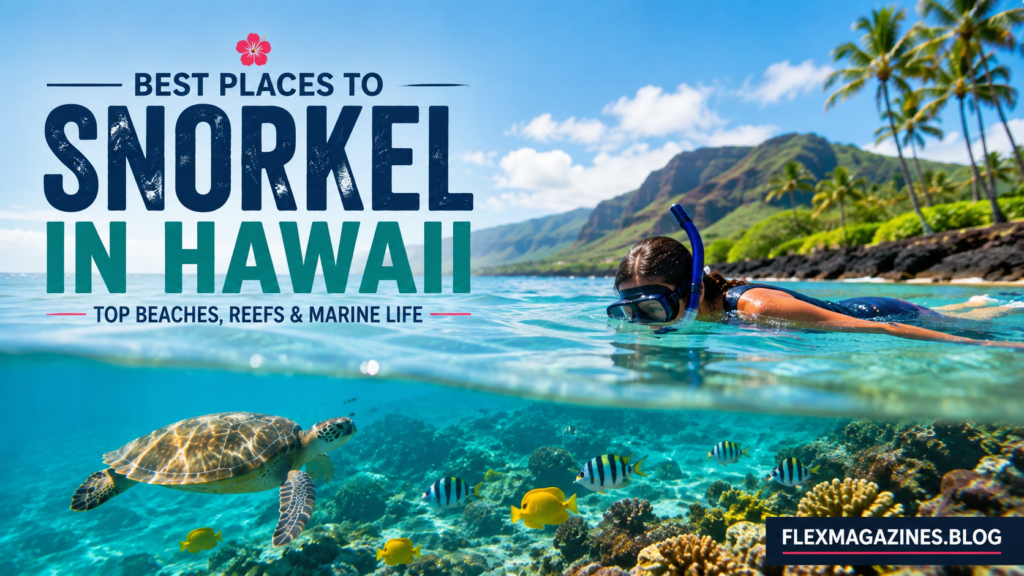

Best Places to Snorkel in Hawaii, hawaii offers snorkeling across several major islands, but the experience varies considerably. Oʻahu is convenient for visitors staying in Honolulu, Maui is particularly strong for boat based snorkeling and protected reefs, the Island of Hawaii offers excellent Kona Coast snorkeling, and Kauaʻi combines reefs with spectacular natural scenery.
Some locations are better for beginners, while others are most rewarding when conditions are calm and the swimmer is comfortable in open ocean. Hawaiis official tourism information highlights places such as Hanauma Bay, Sharks Cove, Molokini, Honolua Bay, Kealakekua Bay, Hōnaunau Bay, Kahaluʻu Beach, Anini Beach, Lydgate Beach, and Poʻipū Beach as snorkeling options across the islands.
| Snorkeling Spot | Island | Best For |
| Hanauma Bay | Oʻahu | Beginners, fish, families |
| Sharks Cove | Oʻahu | Summer snorkeling, rocky reefs |
| Molokini Crater | Maui | Boat tours, clear water, reef life |
| Honolua Bay | Maui | Coral, fish, experienced snorkelers |
| Kahaluʻu Beach | Hawaiʻi Island | Beginners, turtles, calm water |
| Kealakekua Bay | Hawaiʻi Island | Fish, coral, boat snorkeling |
| Hōnaunau Bay | Hawaiʻi Island | Clear water, reef scenery |
| Tunnels Beach | Kauaʻi | Experienced snorkelers, reef |
| Anini Beach | Kauaʻi | Beginners, protected lagoon |
| Poʻipū Beach | Kauaʻi | Families, snorkeling, facilities |
| Hulopoʻe Bay | Lānaʻi | Beginners, protected marine area |
What Makes Hawaii Great for Snorkeling?
Hawaiʻis volcanic islands create a remarkable variety of underwater habitats. Reefs, lava formations, protected bays, sandy bottoms, rocky shorelines, and offshore volcanic structures provide homes for a wide range of marine species.
The states Division of Aquatic Resources notes that Hawaiis nearshore waters contain more than 1,500 species of fish, invertebrates, and algae, while coral reefs provide important habitat for marine life. Marine Life Conservation Districts are specifically designed to protect these ecosystems and encourage non consumptive activities such as snorkeling and diving.
Hawaiian Marine Life You May See
Depending on where you snorkel, you may encounter colorful reef fish, butterflyfish, wrasses, sea turtles, rays, and other marine species. The Hawaiian green sea turtle, known locally as honu, is one of the most memorable animals visitors hope to see.
There is never a guarantee that you will see a particular animal. Marine life is wild and constantly moving, so the best approach is to explore patiently without chasing or feeding animals.
Hawaiʻis official tourism resources also emphasize that visitors should never touch coral or marine animals. This is especially important around honu, which are protected animals.
Hanauma Bay Is One of the Best Snorkeling Spots on Oʻahu
Hanauma Bay Nature Preserve is one of the most famous places to snorkel in Hawaii and is particularly attractive to first time visitors. The volcanic bay provides shallow reef areas, abundant fish, and a relatively protected setting compared with exposed ocean beaches.
The area is also a Marine Life Conservation District. Hawaiʻis Division of Aquatic Resources describes an inner reef beginning just offshore, with shallow areas and sandy patches, while the outer reef contains coral beds, schooling fish, and common honu sightings. Visibility can often be better early in the day before sediment is stirred up.
Why Hanauma Bay Is Popular
Hanauma Bays appeal comes from its combination of accessibility and underwater scenery. Visitors can snorkel in a famous protected environment without needing a boat trip, making it especially convenient for travelers based in Honolulu or Waikīkī.
The bay also has a conservation focused visitor experience. Because it is a protected environment, visitors need to follow preserve rules and learn about the areas ecological importance before entering.
What to Know Before Visiting Hanauma Bay
Hanauma Bay is not a completely spontaneous beach stop. Current official information indicates that the preserve is generally open Wednesday through Sunday, with entry permitted from 645 a.m. to 130 p.m., and visitors must leave the preserve by 4 p.m. schedules can change, so travelers should verify current details before visiting.
Non Hawaiʻi residents should also pay close attention to the current reservation process and entry requirements. Honolulus Parks and Recreation Department announced an upgraded reservation website in 2025 and noted that residents with valid Hawaiʻi identification have different entry rules from non residents.
Sharks Cove Is a North Shore Favorite
Sharks Cove on Oʻahus North Shore is a completely different snorkeling experience from Hanauma Bay. Rather than a classic sandy crescent shaped beach, it is a rocky shoreline with clear, shallow water and interesting underwater formations.
Despite its intimidating name, the location is well known for snorkeling and shore diving. Go Hawaiʻi describes Sharks Cove as one of Oʻahus leading snorkeling and shore diving areas and notes that it is best explored during summer because winter brings major North Shore swells.
Why Sharks Cove Stands Out
The rocky environment creates an interesting habitat for reef fish and provides underwater scenery that feels more rugged than a conventional beach. On calm days, snorkelers can explore shallow areas and observe marine life relatively close to shore.
It is especially appealing to travelers who are already visiting the North Shore and want to combine snorkeling with other Oʻahu experiences rather than spending an entire day at a single resort beach.
When to Visit Sharks Cove
Summer is generally the more favorable season for snorkeling at Sharks Cove. Winters famous North Shore surf can make the area dangerous and unsuitable for casual snorkeling.
Never assume that a historically good snorkeling location is safe on a particular day. Hawaiʻi Ocean Safety specifically warns snorkelers to check conditions, avoid high surf, strong currents, heavy shorebreak, and high winds, and consult lifeguards when available.
Molokini Crater Is a Top Maui Snorkeling Experience
Molokini Crater is one of the most recognizable snorkeling destinations in Hawaiʻi. The crescent shaped volcanic islet sits about three miles off Mauis southwestern coast and is surrounded by reef filled waters.
Go Hawaiʻi describes Molokini as a major snorkeling and diving destination with coral and more than 250 species of tropical fish. The area is a State Marine Life and Bird Conservation District, and Molokini can only be accessed by boat tour.
Why Molokini Is Special
The offshore setting makes Molokini feel like a true excursion rather than simply a beach activity. The surrounding water and reef formations offer a different perspective on Mauis underwater environment.
Because Molokini is protected, visitors are there primarily for non consumptive recreation such as snorkeling and diving. State regulations restrict taking marine life and altering coral, sand, or geological features within the conservation district.
Should You Take a Molokini Snorkel Tour?
For travelers staying on Maui, a boat tour can be a convenient way to experience Molokini. Tours generally depart from harbors such as Māʻalaea and may combine Molokini with another snorkeling location.
Morning trips are often attractive because ocean conditions can be more favorable earlier in the day. Hawaii Ocean Safety specifically recommends morning snorkeling because it can provide better conditions, visibility, and marine life activity.
Honolua Bay Is a Beautiful Maui Reef
Honolua Bay is another standout Maui destination, particularly for travelers who want a scenic natural setting combined with reef snorkeling. The bay lies on Mauis northwest coast and forms part of the Mokulēʻia Marine Life Conservation District.
During calmer summer conditions, Honolua Bay is known for snorkeling and diving among fish and coral formations. During winter, however, the area can experience powerful surf and is popular with experienced surfers, making seasonal ocean conditions particularly important.
Why Snorkel at Honolua Bay?
The protected marine environment supports abundant underwater life, while the surrounding cliffs and vegetation make the approach visually impressive. It feels more natural and less developed than some resort centered snorkeling locations.
This can be a great option for travelers who enjoy combining snorkeling with a scenic drive and nature focused day rather than looking only for a highly structured tourist attraction.
Is Honolua Bay Good for Beginners?
It can be excellent when conditions are calm, but it should not be treated as a guaranteed beginner beach. Seasonal surf and changing conditions can significantly alter the experience.
Visitors should check conditions before entering and be especially cautious during periods of high surf. Go Hawaiʻi explicitly warns that winter conditions at Honolua can become extremely dangerous.
Kahaluʻu Beach Is Excellent for Beginners on the Big Island
Kahaluʻu Beach Park on Hawaiʻi Islands Kona Coast is one of the strongest choices for travelers searching for the best snorkeling in Hawaii for beginners. Its calm conditions and shallow areas make it easier for newer snorkelers to become comfortable in the water.
The beach is also known for Hawaiian green sea turtles and has the Kahaluʻu Education Center, which promotes reef etiquette and protection of the bays fragile ecosystem. Go Hawaiʻi lists the beachs calm water as a major reason it is popular for snorkeling.
What Can You See at Kahaluʻu Beach?
The bay provides opportunities to see tropical reef fish and, with luck, honu. Because marine animals are wild, sightings vary from day to day.
The most rewarding approach is to move slowly and avoid disturbing the reef. Snorkelers should float rather than walk across shallow reef areas and should never touch coral or chase turtles.
Why Families Like Kahaluʻu
Kahaluʻus relatively calm environment can make it a useful introduction to snorkeling for families and less experienced swimmers, although everyone still needs to evaluate their own ability and the days conditions.
It also has a lifeguard and parking, according to Go Hawaiʻi, which can make the location more convenient for a family beach outing.
Kealakekua Bay Offers Exceptional Big Island Snorkeling
Kealakekua Bay is one of the most celebrated snorkeling locations on the Island of Hawaiʻi. Its clear waters, coral formations, schools of tropical fish, and protected marine environment make it a favorite for visitors interested in underwater scenery.
Go Hawaiʻi identifies Kealakekua Bay as a Marine Life Conservation District and highlights its coral, schools of tropical fish, and occasional spinner dolphin sightings.
What Makes Kealakekua Bay Different?
The bay combines exceptional snorkeling with a significant historical and cultural landscape. The surrounding area includes the Captain Cook Monument and the historic Hikiau heiau, making the destination more than simply an underwater attraction.
The bay can be reached through different forms of recreation, including guided boat trips and kayaking options subject to applicable regulations. Travelers should check current access rules before planning a particular route.
Is Kealakekua Bay Worth the Trip?
For travelers staying around Kona who prioritize snorkeling, it can absolutely be worth adding to an itinerary. The combination of clear water and reef habitat makes it one of the most compelling snorkeling experiences on the Big Island.
A guided excursion can also be useful for visitors unfamiliar with the coastline. Guides can explain local marine life and help guests focus on safe, respectful exploration rather than navigating unfamiliar waters alone.
Hōnaunau Bay Is Famous for Clear Calm Water
Hōnaunau Bay, near Puʻuhonua o Hōnaunau National Historical Park, is another excellent Kona Coast option. The area is known for clear water and lava rock surroundings, giving snorkelers a distinctive Hawaiian underwater experience.
Go Hawaiʻi describes Hōnaunau Bay as an example of the calm and clear waters found along South Kona and points to a naturally worn lava rock entry area known as a convenient two step entry for snorkelers and divers.
Why Snorkel at Hōnaunau Bay?
The combination of visibility, reef habitat, and volcanic shoreline makes this an especially memorable spot for experienced visitors who appreciate natural rather than highly developed surroundings.
The bay also sits near an important cultural site, so a visit can be combined with learning about Hawaiʻis history and cultural landscape. That combination makes the area particularly valuable for travelers who want more depth from their vacation.
What Should You Watch For?
The lava rock shoreline can be uneven, and entering or exiting the water requires care. Conditions can also change, so visitors should not confuse calm looking water with automatically safe water.
Use appropriate footwear when necessary, enter carefully, and avoid standing on coral or marine habitat. The goal is to observe the ecosystem without damaging it.
Tunnels Beach Is a Kauaʻi Snorkeling Classic
Tunnels Beach, also called Mākua Beach, is one of Kauaʻis most visually impressive snorkeling locations. The North Shore setting combines reef habitat with mountains and lush scenery, making it as attractive above the surface as it is underwater.
Go Hawaiʻi identifies Tunnels among Kauaʻis major shoreline snorkeling areas and describes its broad reef area as a rewarding environment for exploring.
Why Tunnels Beach Is Popular
The reef structure creates an interesting underwater environment with coral formations and opportunities to observe tropical marine life. The surrounding North Shore scenery adds another layer to the experience.
For photographers, the location is particularly appealing because the landscape can provide dramatic compositions before and after snorkeling. The combination of reef, volcanic coastline, greenery, and mountain backdrop is distinctly Kauaʻi.
When Should You Snorkel at Tunnels?
Conditions matter enormously on Kauaʻis North Shore. Go Hawaiʻi specifically advises visitors to check ocean conditions and currents, particularly during the large North Shore swells of winter.
For less experienced swimmers, it is better to choose a more protected snorkeling location when conditions are questionable. A famous reef is never worth entering dangerous water.
Anini Beach Is a Strong Choice for Beginners
Anini Beach on Kauaʻis North Shore is particularly attractive for beginners because its large reef helps create a protected lagoon environment. Go Hawaiʻi describes the calm waters as suitable for beginning snorkelers.
The beach provides a gentler alternative to some of Kauaʻis more exposed North Shore snorkeling areas. That makes it useful for families or visitors who want to practice snorkeling without immediately taking on more challenging ocean conditions.
Why Beginners Like Anini Beach
Calmer water can make learning to use a mask and snorkel much less stressful. Beginners can focus on breathing comfortably, floating, and observing fish rather than constantly managing waves.
Even so, beginners should not assume the lagoon is risk free. Conditions can change, and swimmers should still evaluate wind, current, surf, and their own ability before entering.
What Makes Anini Good for Families?
The beachs spacious setting and protected water can make it an appealing family destination. Parents can focus on keeping children close and teaching them how to interact responsibly with the reef.
It is also important to teach children that coral is living habitat. Avoiding contact with the bottom protects both the reef and the swimmer.
Poʻipū Beach Is One of Kauaʻis Best Family Options
Poʻipū Beach Park on Kauaʻis South Shore is a particularly convenient choice for families. It combines snorkeling with facilities, lifeguards, showers, picnic areas, and a natural wading pool for young swimmers.
Go Hawaiʻi describes Poʻipū as having protected snorkeling areas and notes that the beachs facilities make it a strong destination for a family beach day.
What Makes Poʻipū Family Friendly?
The combination of amenities and different water areas means families do not need to rely entirely on snorkeling to enjoy the day. Younger children can use the natural wading area while older children and adults explore appropriate snorkeling areas.
The beach is also known for occasional Hawaiian monk seal appearances. If one is present, visitors must give it significant space and avoid disturbing it.
When Is Poʻipū a Good Choice?
Poʻipū can be a versatile choice when your itinerary includes other South Shore attractions. Its location makes it easier to combine snorkeling with sightseeing, dining, and other Kauaʻi activities.
As with every Hawaiian beach, however, conditions should be checked before entering. The official tourism site specifically directs visitors to Hawaii Ocean Safety for current surf, wind, and public safety information.
Lānaʻi Offers a Quieter Snorkeling Experience
For travelers looking beyond the four most frequently visited Hawaiian islands, Lānaʻi can offer a more intimate snorkeling experience. Hulopoʻe Bay is the islands standout option for beginners and is located within a protected marine environment.
Go Hawaiʻi describes Hulopoʻe Bay as a good starting point for beginning snorkelers because of its calm waters and colorful fish close to shore. Other northern Lānaʻi beaches can have stronger currents and are not recommended for casual swimming.
Why Choose Hulopoʻe Bay?
Hulopoʻe combines snorkeling with beautiful scenery and a quieter atmosphere. The bays clear water, tide pools, beach, and nearby coastal landscape make it possible to spend a relaxed day without relying on a long list of attractions.
The destination is especially appealing to travelers who prefer nature and slower paced island experiences rather than crowded tourist centers.
Who Should Consider Lānaʻi?
Lānaʻi can work well for couples, nature focused travelers, and experienced Hawaii visitors who want to explore beyond the most obvious destinations.
It can also be combined with Maui depending on transportation and itinerary plans. Because travel logistics differ from the larger islands, check ferry, flight, and tour availability before building your schedule.
Best Snorkeling Spots by Island
Choosing the right island can be more important than choosing an individual beach. If snorkeling is one of your primary reasons for visiting Hawaii, selecting an island with several strong options can reduce travel time and increase your chances of finding good conditions.
Oʻahu offers excellent convenience, Maui is strong for both shore and boat snorkeling, the Big Island is especially impressive around the Kona Coast, and Kauaʻi offers a mix of protected lagoons and dramatic reefs. Lānaʻi and Molokaʻi can provide quieter experiences for travelers willing to explore beyond the most heavily visited islands.
Best Snorkeling on Oʻahu
For Oʻahu, Hanauma Bay is a leading choice for beginners and visitors who want a structured snorkeling experience. Sharks Cove is better suited to favorable summer conditions and travelers comfortable with rocky shorelines.
Other options include Sans Souci near Waikīkī and the Ko Olina lagoons, which Go Hawaiʻi describes as calmer options for children and beginning snorkelers.
Best Snorkeling on Maui
Mauis strongest snorkeling choices include Molokini Crater, Honolua Bay, and the waters around Kāʻanapali. Molokini is ideal for travelers interested in a boat excursion and offshore reef environment.
Honolua Bay can be excellent during calmer summer conditions, while Kāʻanapali provides a more convenient resort area snorkeling option.
Best Snorkeling on the Big Island
The Kona Coast is particularly strong for snorkeling. Kahaluʻu Beach, Kealakekua Bay, and Hōnaunau Bay are among the most attractive options.
Kahaluʻu is particularly useful for beginners, while Kealakekua and Hōnaunau are compelling for travelers seeking clear water and richer reef environments.
Best Snorkeling on Kauaʻi
Kauaʻi offers Anini Beach, Tunnels Beach, Lydgate Beach Park, and Poʻipū Beach. Anini and Lydgate are especially useful for beginners and children because of protected water areas.
Tunnels can offer a more dramatic reef experience, but North Shore conditions must be taken seriously, particularly during winter swells. Poʻipū is an excellent all around choice for families because of its protected areas, lifeguard, facilities, and natural wading pool.
Best Places to See Sea Turtles While Snorkeling
Hawaiian green sea turtles, or honu, are among the most exciting animals to encounter while snorkeling. They can be seen around multiple Hawaiian islands, particularly in areas with shallow reefs and suitable feeding habitat.
Kahaluʻu Beach, Hanauma Bay, Kona Coast locations, Kauaʻi beaches, and various Maui snorkeling sites can all provide opportunities. However, turtle sightings are never guaranteed because these are wild animals.
How to Watch Honu Responsibly
The most important rule is simple look, but do not touch, feed, chase, or approach a turtle. Hawaiʻis Division of Aquatic Resources recommends maintaining at least 10 feet of distance from sea turtles.
If a turtle swims toward you, remain calm and allow it to pass. Do not follow it or position yourself directly in its path. Responsible wildlife viewing protects the animal and makes the experience safer for everyone.
Why You Should Never Touch Coral
Coral may look like rock, but coral reef ecosystems are living communities. Touching, standing on, or breaking coral can cause damage that takes years to recover.
Hawaiʻis official ocean safety guidance specifically tells snorkelers not to touch coral or marine life and never to stand on the reef.
Best Time to Snorkel in Hawaii
There is no single perfect snorkeling season for every Hawaiian island. Ocean conditions depend on swell direction, wind, currents, weather, and the particular beachs exposure.
In general, visitors should focus on the conditions on the day of their planned snorkeling session rather than relying solely on a seasonal calendar. A beach that was calm yesterday can become unsuitable when winds or surf change.
Why Morning Is Often Better
Hawaiʻi Ocean Safety recommends morning snorkeling because conditions are often more favorable earlier in the day, with better visibility and potentially more active marine life.
Morning trips can also be more comfortable because wind activity can increase later in the day. This is particularly useful for shore snorkelers who want calmer water and clearer visibility.
Summer Versus Winter Snorkeling
Summer can be especially favorable for some North Shore locations such as Sharks Cove and Honolua Bay because winter swells can make those areas dangerous.
However, this does not mean summer is automatically safe everywhere or winter automatically bad everywhere. Different shores face different swell directions, so the best approach is to check the specific locations conditions before entering the water.
Snorkeling Safety Tips for Hawaii
Snorkeling looks easy, but Hawaiis ocean environment can be powerful. Hawaiʻi Ocean Safety warns that snorkeling is one of the states popular ocean activities but also one of the most dangerous, and advises snorkelers to be experienced ocean swimmers who understand risks such as strong currents, high surf, and shallow water breaking waves.
This means beginners should choose appropriate conditions rather than simply following a list of famous snorkeling beaches. If the ocean looks rough, murky, windy, or unusually powerful, it is better to skip the session.
Check Conditions Before Entering
Always check current surf, wind, weather, and beach safety information before snorkeling. Hawaiʻi Ocean Safety recommends consulting lifeguards and avoiding high surf, strong currents, heavy shorebreak, and high winds.
It is also wise to snorkel with a buddy. If something goes wrong, another person can help or call for assistance. Staying close enough to shore to exit easily is another important precaution.
Use Proper Equipment
A properly fitting mask is essential. If your mask leaks or fogs constantly, the experience becomes frustrating and can distract you from your surroundings.
Fins should fit securely, and snorkel equipment should be checked before entering the water. Hawaii Ocean Safety recommends using equipment from licensed vendors and ensuring you know how to use it correctly.
Be Careful With Full Face Masks
Full face snorkel masks require additional consideration. Hawaiʻi Ocean Safety says questions have been raised about their safety and advises users to make sure the mask fits correctly, understand how to use it, and practice with it before entering the water.
The states 2026 snorkeling guidance also notes that the U.S. Consumer Product Safety Commission issued a warning concerning a specific OUSPT full face snorkel mask in March 2026 after complaints including breathing difficulties, light headedness, and loss of consciousness. Travelers should check current safety notices before using any snorkeling equipment.
How to Protect Hawaiis Reefs While Snorkeling
Good snorkeling is not simply about seeing marine life it is also about leaving the ecosystem healthy for future visitors and residents. Hawaiʻis Marine Life Conservation Districts exist partly because reefs and nearshore habitats are vulnerable to human pressure.
Visitors can help by floating over reefs instead of standing on them, keeping equipment away from coral, avoiding touching animals, and never feeding fish or turtles. These simple actions reduce unnecessary stress and physical damage.
Practice Responsible Wildlife Viewing
Wild animals should always be given space. For sea turtles, Hawaiʻis Division of Aquatic Resources recommends a minimum distance of 10 feet.
Other protected species require different viewing distances. Hawaiian monk seals, dolphins, and whales have their own protection guidelines, so visitors should never assume that a marine animal approaching a snorkeler means it wants interaction.
Respect the Reef
Avoid collecting coral, shells, rocks, or other natural materials from protected areas. Marine Life Conservation Districts generally restrict taking living material and habitat material.
The best souvenir from a reef is a photograph and a memory. Leaving the environment intact allows the next generation of visitors to experience the same underwater world.
Latest Update on Snorkeling in Hawaii
As of August 2026, travelers should pay particular attention to current beach conditions and updated access rules rather than relying on older travel guides. Hawaiʻi Ocean Safetys current snorkeling guidance emphasizes checking conditions before entering, snorkeling with a buddy, choosing appropriate conditions, and understanding personal swimming ability.
Hanauma Bay is a particularly important example of why current information matters. The preserve has a managed entry system, and Honolulu updated its online reservation platform in 2025. Current hours, entry rules, and reservation requirements should be checked through the City and County of Honolulu before traveling.
Current safety guidance also highlights the importance of morning snorkeling, appropriate equipment, and caution around full face masks. These details can change as authorities issue new safety information, so visitors should review official guidance close to their trip.
Reviews and Traveler Considerations
Travelers looking for the best snorkeling in Hawaii often make the mistake of choosing a destination solely because it appears beautiful in photographs. Underwater conditions can change dramatically, and the most famous beach may not be the best option on the day you plan to swim.
Hanauma Bay is particularly convenient for first time visitors, Molokini is excellent for those who enjoy boat excursions, the Big Islands Kona Coast is strong for clear water reef experiences, and Kauaʻi offers a broad range of protected and scenic locations.
The best snorkeling trip is therefore one that combines good location selection with good ocean judgment. A less famous beach with calm water can easily produce a better snorkeling experience than a world famous reef visited during poor conditions.
Conclusion
The best places to snorkel in Hawaii offer far more than clear tropical water. From Hanauma Bays protected volcanic crater to Molokinis offshore reefs, the Kona Coasts clear waters, and Kaua is dramatic shoreline, every island provides a different way to experience Hawaiis underwater world. For beginners and families, Hanauma Bay, Kahaluu Beach, Anini Beach, Lydgate Beach Park, and Hulopoʻe Bay can be excellent choices when conditions are appropriate. Travelers seeking a boat adventure may prefer Molokini Crater, while those looking for natural reef scenery can consider Honolua Bay, Kealakekua Bay, Hōnaunau Bay, or Tunnels Beach.The most important factor, however, is not the popularity of the beach. It is the condition of the ocean on the day you visit. Check current surf and weather information, listen to lifeguards, snorkel with a buddy, and know your own swimming ability.
You may also read more blogs
best places to travel with kids
FAQs
What are the best places to snorkel in Hawaii?
Some of the strongest snorkeling destinations include Hanauma Bay and Sharks Cove on Oʻahu, Molokini Crater and Honolua Bay on Maui, Kahaluʻu Beach and Kealakekua Bay on the Island of Hawaiʻi, and Anini Beach, Tunnels Beach, and Poʻipū Beach on Kauaʻi.
Which Hawaiian island has the best snorkeling?
There is no single winner for every traveler. Maui is particularly strong for boat snorkeling and destinations such as Molokini, while the Island of Hawaiʻi has excellent Kona Coast reefs and calm water options.
Where is the best snorkeling in Hawaii for beginners?
Hanauma Bay on Oʻahu, Kahaluʻu Beach on the Big Island, Anini Beach and Lydgate Beach Park on Kauaʻi, and Hulopoʻe Bay on Lānaʻi are among the more beginner friendly options when conditions are suitable.
Where can I see sea turtles while snorkeling in Hawaii?
Hawaiian green sea turtles can be encountered around many Hawaiian snorkeling locations, including Hanauma Bay, Kahaluʻu Beach, parts of the Kona Coast, Maui snorkeling sites, and Kauaʻi.
What is the best time of day to snorkel in Hawaii?
Morning is generally a strong choice. Hawaiʻi Ocean Safety states that morning hours usually offer better ocean conditions and visibility and may provide more active marine life.
Is snorkeling in Hawaii safe for children?
Children can snorkel in Hawaii when the location and conditions are appropriate and they are supervised closely. Protected areas such as Lydgate Beach Park and calmer locations such as Kahaluʻu can be more suitable for younger snorkelers.
Do you need to book snorkeling tours in Hawaii?
Not always. Many Hawaiian beaches offer shore snorkeling without a tour, but some of the best experiences require or benefit from boat transportation. Molokini, for example, is an offshore destination accessible by boat tour.
What should you never do while snorkeling in Hawaii?
Never touch or stand on coral, feed marine animals, chase turtles, or enter the ocean when conditions are unsafe. Snorkelers should also avoid going alone and should pay attention to warnings, currents, waves, wind, and their own physical limits.