
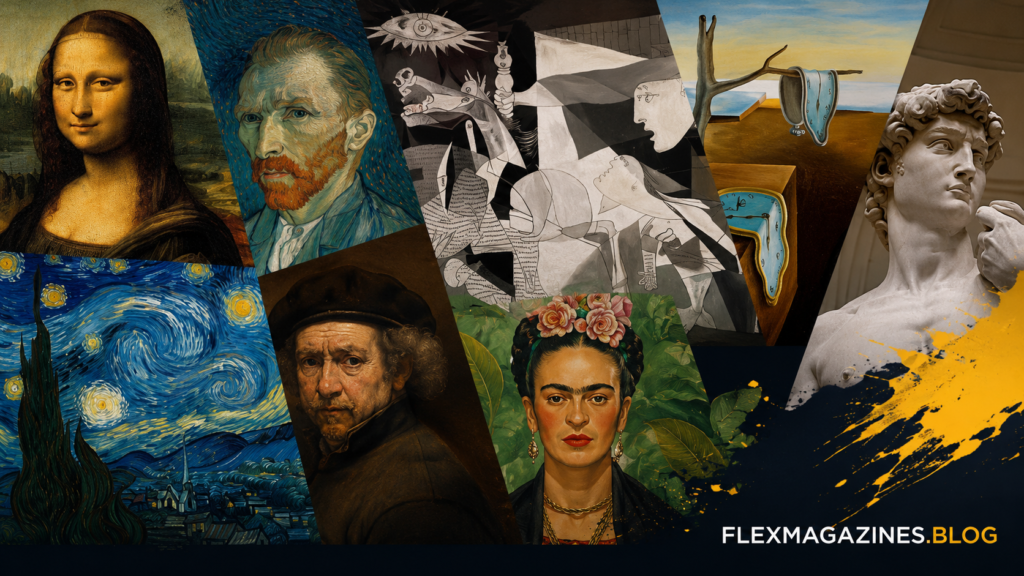

Art has shaped civilizations for thousands of years. Throughout history, certain painters have achieved worldwide recognition because of their creativity, innovation, and lasting influence on culture. These famous artists produced masterpieces that continue to inspire students, collectors, historians, museums, and millions of visitors every year.
Whether youre exploring art history for education, decorating your home, studying for school, or simply looking for artistic inspiration, understanding the lives and works of historys greatest painters provides valuable insight into human creativity. Their paintings tell stories of love, religion, politics, science, beauty, and emotion that remain relevant centuries later.
What Are Famous Artists?
Famous artists are painters, sculptors, illustrators, and visual creators whose work has significantly influenced art history and culture. Their masterpieces are displayed in renowned museums and galleries worldwide, attracting millions of visitors every year.
These artists are remembered because they introduced new techniques, inspired future generations, challenged traditional thinking, or created iconic works recognized across the globe. Their influence extends beyond galleries into fashion, architecture, literature, film, advertising, and digital design.
Many famous artists were not appreciated during their lifetime. Their work gained recognition years or even centuries later, proving that true artistic genius often transcends its own era.
Why Famous Artists Continue to Inspire the World
Art connects people regardless of language or nationality. Famous artists capture emotions and experiences that remain timeless, making their work meaningful across generations.
Museums, universities, and collectors continue to study their paintings because these works reveal historical events, technological progress, cultural values, and human psychology. Every brushstroke reflects the society in which it was created while continuing to inspire modern audiences.
Their influence is also visible in todays creative industries, including graphic design, animation, photography, interior design, gaming, and digital illustration.
Characteristics That Make an Artist Famous
Exceptional artists usually share several important qualities that separate them from others.
They develop unique artistic styles that become instantly recognizable. Rather than copying existing techniques, they introduce fresh ideas and creative approaches.
Innovation is another defining characteristic. Artists like Pablo Picasso revolutionized visual expression through Cubism, while Claude Monet transformed landscape painting through Impressionism.
Emotional storytelling also contributes to lasting fame. Great paintings communicate joy, sadness, hope, fear, spirituality, or mystery without requiring words.
Historical influence is equally important. Artists who inspire future generations become permanent figures in art history.
Renaissance Masters
Leonardo da Vinci
Leonardo da Vinci is widely considered one of historys greatest artists and inventors. His masterpiece, the Mona Lisa, remains the worlds most famous painting because of its mysterious smile and extraordinary realism.
His scientific observations helped improve painting techniques through accurate anatomy, perspective, and lighting. Leonardo combined science with creativity unlike any artist before him.
Besides the Mona Lisa, The Last Supper remains one of Christianitys most celebrated artworks.
Michelangelo
Michelangelo excelled as both painter and sculptor. His breathtaking ceiling inside the Sistine Chapel demonstrates unmatched artistic skill.
His sculptures, including David and Pietà, showcase extraordinary understanding of human anatomy and movement.
Michelangelo believed every sculpture already existed inside the stone, and his job was simply to reveal it.
Raphael
Raphael became famous for harmonious compositions and graceful figures.
His masterpiece The School of Athens celebrates philosophy and intellectual achievement by bringing together historys greatest thinkers in one remarkable fresco.
Raphaels balanced style influenced European painting for centuries.
Baroque Legends
Caravaggio
Caravaggio transformed European painting through dramatic lighting known as chiaroscuro.
His realistic figures departed from idealized religious art, making biblical stories feel deeply human and emotionally powerful.
Many filmmakers and photographers still borrow his dramatic lighting techniques today.
Rembrandt
Rembrandt became one of historys greatest portrait painters.
His self portraits reveal emotional depth rarely seen in earlier European art.
Masterpieces like The Night Watch continue attracting visitors from around the world because of their remarkable storytelling and innovative composition.
Impressionist Innovators
The Impressionist movement changed how artists viewed light, color, and everyday life.
Rather than producing perfect details, Impressionists captured fleeting moments using visible brushstrokes and vibrant colors.
Their revolutionary approach initially shocked critics but eventually transformed modern painting forever.
Claude Monet
Claude Monet became famous for painting changing light conditions.
His Water Lilies series remains among the worlds most admired landscape paintings.
Monet often painted the same subject repeatedly under different weather conditions to capture natures constantly changing beauty.
Edgar Degas
Degas focused on dancers, musicians, and everyday Parisian life.
His unusual compositions were inspired by photography and Japanese prints.
His paintings continue influencing fashion illustration and contemporary figurative art.
Post Impressionist Visionaries
Post Impressionists expanded upon Impressionism while introducing stronger emotion and symbolism.
Their work laid the foundation for many modern artistic movements.
Vincent van Gogh
Vincent van Gogh became one of historys most beloved painters despite selling very few paintings during his lifetime.
His masterpieces include
- Starry Night
- Sunflowers
- Café Terrace at Night
- The Bedroom
His energetic brushwork and emotional color choices continue inspiring artists worldwide.
Paul Cezanne
Cézanne simplified natural forms into geometric shapes.
His innovative approach directly influenced Cubism and modern abstract art.
Many historians consider him the father of modern painting.
Paul Gauguin
Gauguin explored symbolism using bold colors and simplified forms.
His paintings from Tahiti introduced entirely new visual languages that inspired twentieth century artists.
Modern Art Icons
Modern art challenged traditional representation and encouraged experimentation.
Artists increasingly focused on ideas rather than realistic appearances.
Pablo Picasso
Picasso transformed modern art through Cubism.
Masterpieces including Guernica challenged conventional perspective by presenting multiple viewpoints simultaneously.
His enormous creative output includes over 20,000 artworks across painting, sculpture, ceramics, and printmaking.
Salvador Dalí
Dalí became synonymous with Surrealism.
His dreamlike imagery, melting clocks, and imaginative symbolism continue fascinating audiences worldwide.
His masterpiece The Persistence of Memory remains one of the most recognizable paintings ever created.
Frida Kahlo
Frida Kahlo created deeply personal self portraits exploring identity, pain, and resilience.
Today, she represents artistic courage, cultural pride, and female empowerment.
Her influence extends into fashion, literature, and popular culture.
Contemporary Famous Artists
Modern artists continue pushing creative boundaries through new media and technologies.
Banksy has transformed street art into a globally respected artistic movement through anonymous public installations and political commentary.
Yayoi Kusama captivates audiences with immersive installations featuring mirrors and polka dots, creating unforgettable visitor experiences.
Damien Hirst became famous for conceptual art exploring life, death, medicine, and consumer culture.
David Hockney remains celebrated for colorful landscapes and digital experimentation, proving traditional painters can embrace new technologies.
Famous Artists and Their Most Iconic Works
| Artist | Famous Artwork | Style |
| Leonardo da Vinci | Mona Lisa | Renaissance |
| Michelangelo | Sistine Chapel Ceiling | Renaissance |
| Raphael | School of Athens | Renaissance |
| Caravaggio | Calling of Saint Matthew | Baroque |
| Rembrandt | Night Watch | Baroque |
| Claude Monet | Water Lilies | Impressionism |
| Vincent van Gogh | Starry Night | Post Impressionism |
| Paul Cézanne | Mont Sainte Victoire | Post Impressionism |
| Pablo Picasso | Guernica | Cubism |
| Salvador Dalí | Persistence of Memory | Surrealism |
| Frida Kahlo | The Two Fridas | Modern |
| Banksy | Girl with Balloon | Street Art |
Most Expensive Paintings by Famous Artists
The global art market regularly breaks auction records.
Works by Leonardo da Vinci, Picasso, Monet, and van Gogh sell for tens or even hundreds of millions of dollars.
Collectors value these masterpieces because of rarity, historical importance, artistic innovation, and cultural prestige.
Private collectors, museums, and investors view iconic paintings as both cultural treasures and valuable financial assets.
Artistic Styles That Changed History
Throughout history, famous artists introduced movements that reshaped visual culture.
These include
- Renaissance
- Baroque
- Rococo
- Romanticism
- Realism
- Impressionism
- Post Impressionism
- Cubism
- Surrealism
- Expressionism
- Abstract Art
- Pop Art
- Street Art
- Contemporary Art
Each movement reflected changing philosophies, technologies, politics, and cultural values.
Latest Update on Famous Artists
Interest in famous artists continues to grow through digital museum collections, virtual exhibitions, online art education, and AI powered restoration technologies.
Major museums are digitizing thousands of masterpieces, allowing visitors worldwide to explore artworks from home in extremely high resolution.
Social media platforms have also introduced younger audiences to classical paintings, making art history more accessible than ever before.
Reviews from Art Historians and Experts
Leading art historians consistently recognize Leonardo da Vinci, Michelangelo, Picasso, and van Gogh among historys greatest artistic innovators.
Museum curators praise these artists not only for technical excellence but also for transforming how humanity understands creativity and visual storytelling.
Educational institutions worldwide continue teaching their work because these masterpieces demonstrate timeless principles of composition, color, symbolism, and emotional communication.
How to Appreciate Great Art
Understanding famous art requires patience rather than specialized knowledge.
Spend time observing details such as color, composition, lighting, symbolism, and emotion before reading descriptions.
Learning about the artists historical context often reveals deeper meaning behind seemingly simple paintings.
Visiting museums, reading biographies, and comparing artistic movements gradually develops stronger visual appreciation.
Most importantly, allow yourself to form personal interpretations because art speaks differently to every viewer.
Conclusion
The worlds famous artists have transformed human history through imagination, innovation, and extraordinary craftsmanship. From Leonardo da Vincis timeless Renaissance masterpieces to Pablo Picassos revolutionary Cubism and Banksys thought provoking street art, these creators continue shaping modern culture in countless ways.Their paintings are more than beautiful images they are historical documents, emotional expressions, and lasting symbols of human creativity. Whether you are beginning your journey into art history or expanding your appreciation of world culture, studying these legendary artists offers endless inspiration and a deeper understanding of how art reflects the human experience.
You may also read more blogs
FAQs
Who is considered the most famous artist in history?
Leonardo da Vinci is generally considered the worlds most famous artist because of the Mona Lisa and The Last Supper.
Which famous artist painted Starry Night?
Vincent van Gogh created Starry Night in 1889.
Who invented Cubism?
Pablo Picasso and Georges Braque developed Cubism during the early twentieth century.
Which artist is famous for melting clocks?
Salvador Dalí created the famous melting clocks in The Persistence of Memory.
Why is the Mona Lisa so famous?
Its mysterious smile, remarkable realism, historical significance, and home in the Louvre Museum have made it one of the worlds most recognized paintings.
Which famous artist sold only one painting during his lifetime?
Although often repeated, the claim is debated. Vincent van Gogh sold very few confirmed works during his lifetime, but his paintings are now among the worlds most valuable.
Who is the most famous female artist?
Frida Kahlo is one of the most internationally recognized female artists because of her powerful self portraits and cultural influence.
Why are famous paintings worth millions?
Their rarity, historical importance, artistic innovation, cultural impact, and collector demand contribute to their extraordinary value.