
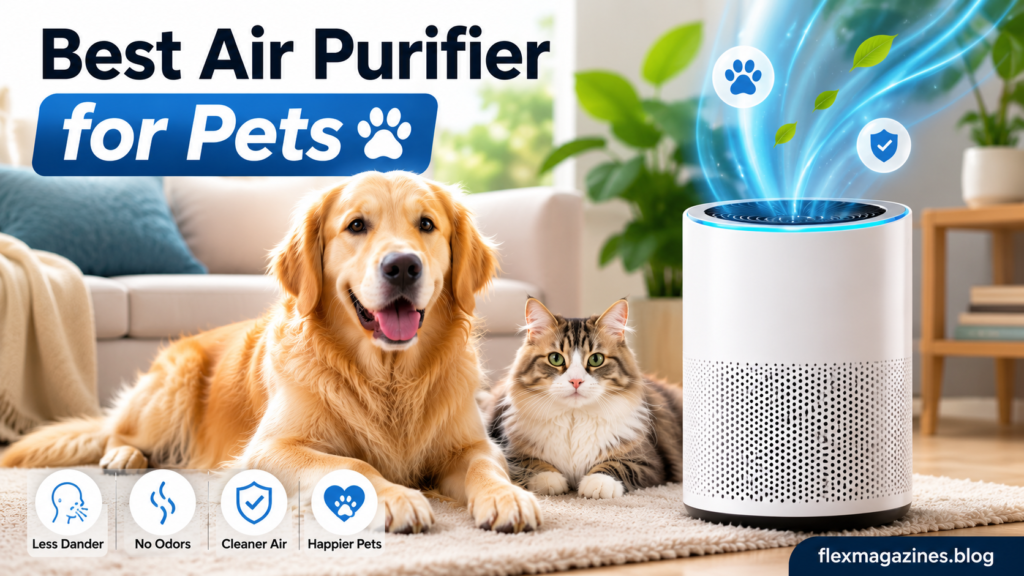

Pets bring joy, companionship, and unconditional love into our homes. Unfortunately, they also bring fur, dander, allergens, and odors that can affect indoor air quality. Whether you own one energetic Labrador, several rescue cats, or multiple small pets, maintaining clean indoor air is essential for both your familys health and your pets comfort.
This is where the best air purifier for pets becomes one of the smartest investments you can make.
Modern air purifiers do much more than remove dust. Todays premium models capture microscopic pet dander, trap hair before it circulates throughout your home, eliminate lingering odors, reduce airborne bacteria, and even filter pollen and smoke. For allergy sufferers, the difference can be life changing.
Choosing the right model, however, isnt always easy. Hundreds of air purifiers claim to be perfect for pets, yet only a handful truly excel at removing pet related pollutants.
This guide compares the best air purifiers available today while explaining exactly what features matter, helping you choose the ideal purifier for your home and budget.
Why Pet Owners Need an Air Purifier
Pet ownership naturally increases airborne particles inside the home. Every time your dog shakes its coat or your cat jumps onto the sofa, tiny particles become suspended in the air.
These particles include
- Pet dander
- Hair
- Skin flakes
- Saliva proteins
- Dust
- Outdoor pollen brought inside
- Pet litter dust
- Household odors
Unlike visible fur, pet dander is microscopic. It can remain airborne for hours before settling onto furniture, carpets, curtains, and bedding.
Even homes that are cleaned regularly cannot completely eliminate these particles. Vacuuming removes surface debris, but many allergens continue circulating through the air. This explains why many allergy sufferers continue experiencing symptoms even after thorough cleaning.
A quality air purifier continuously filters indoor air, capturing pollutants before they spread throughout the home.
Benefits of Using an Air Purifier Around Pets
The right air purifier offers several important advantages.
Cleaner Indoor Air
HEPA filtration removes particles as small as 0.3 microns with exceptional efficiency. This includes pet dander, dust mites, pollen, mold spores, and many airborne allergens.
Less Pet Hair
Although heavier pet hair eventually falls to the floor, circulating air can keep lighter strands suspended. Air purifiers help reduce floating fur that settles on furniture.
Odor Reduction
Activated carbon filters absorb odors from
- Cat litter
- Wet dogs
- Pet accidents
- Food bowls
- Pet bedding
This keeps rooms smelling fresher without relying heavily on air fresheners.
Better Allergy Control
People sensitive to pet allergens often notice
- Less sneezing
- Fewer itchy eyes
- Reduced congestion
- Improved sleep
- Easier breathing
Air purifiers cannot cure allergies, but they significantly reduce allergen exposure.
What Makes the Best Air Purifier for Pets?
Not every air purifier performs equally well. Several features distinguish excellent pet air purifiers from average models.
True HEPA Filter
A True HEPA filter is the single most important feature.
These filters capture
- Pet dander
- Fine dust
- Pollen
- Mold spores
- Smoke particles
Avoid vague marketing terms such as HEPA type or HEPA like, which often provide lower filtration efficiency.
Activated Carbon Filter
Pets create odors that particulate filters cannot remove.
Activated carbon absorbs gases responsible for unpleasant smells.
The larger the carbon filter, the better the odor control.
Premium models often include thick carbon pellets instead of thin carbon sheets.
High CADR Rating
CADR stands for Clean Air Delivery Rate.
Higher CADR means faster air cleaning.
For homes with multiple pets, choosing a higher CADR ensures allergens are removed more quickly.
Quiet Operation
Pets may become stressed by noisy appliances.
Modern premium air purifiers include sleep modes that operate quietly while maintaining excellent filtration.
Room Coverage
Always purchase an air purifier rated for a room slightly larger than your intended space.
Oversized units clean air faster and require less effort.
Best Air Purifier for Pets Reviews
After comparing filtration performance, reliability, customer satisfaction, noise levels, maintenance costs, and overall value, these models consistently rank among the best choices.
Coway Airmega
The Coway Airmega remains one of the highest rated air purifiers for homes with pets.
Its multi stage filtration system combines a washable pre filter, activated carbon filter, and True HEPA filter.
Advantages include
- Excellent odor removal
- Strong allergen reduction
- Energy efficient
- Smart air quality monitoring
- Quiet operation
It performs especially well in medium to large living rooms where pets spend most of their time.
Levoit Core Series
Levoit has become one of the most trusted names in home air purification.
The Core Series provides outstanding value while delivering impressive filtration performance.
Highlights include
- Compact design
- Quiet sleep mode
- High CADR
- Affordable replacement filters
- Strong customer reviews
Many pet owners choose Levoit because it balances performance with affordability.
Blueair Blue Pure Series
Blueair combines HEPA style particle removal with excellent airflow.
These purifiers are especially effective for households with multiple pets.
Benefits include
- Stylish appearance
- Low energy consumption
- Fast air cleaning
- Washable fabric pre filter
- Quiet fan speeds
Its modern Scandinavian design also blends easily into most homes.
Winix Air Purifier
Winix has earned an excellent reputation for allergy control.
Its advanced filtration removes
- Pet dander
- Smoke
- Dust
- Pollen
- Odors
Automatic sensors adjust fan speed according to indoor air quality, reducing energy consumption while maintaining clean air.
Honeywell Air Purifier
Honeywell continues to be one of the most recognised air quality brands.
Its larger units excel in homes with
- Multiple dogs
- Large living rooms
- Open floor plans
The powerful airflow allows contaminants to be captured quickly.
Best Budget Air Purifier for Pets
Not everyone needs an expensive premium purifier.
Several affordable models provide impressive results.
The best budget options typically include
- True HEPA filter
- Activated carbon filter
- Quiet operation
- Compact footprint
- Low replacement costs
For apartments, bedrooms, or small offices, these budget friendly models often deliver excellent value.
Best Premium Air Purifier for Pets
Premium air purifiers include advanced features such as
- Smart app control
- Air quality sensors
- Auto mode
- Voice assistant compatibility
- Larger carbon filters
- Higher airflow
- Longer filter life
Although the initial investment is higher, premium models often perform significantly better in homes with multiple pets or severe allergies.
Best Air Purifier for Cat Owners
Cats produce extremely fine allergens that remain airborne for long periods.
For cat owners, prioritize
- True HEPA filtration
- Thick activated carbon filters
- Quiet operation
- High air circulation
Homes with litter boxes particularly benefit from larger activated carbon filters that effectively reduce persistent odors.
Best Air Purifier for Dog Owners
Dogs generally shed more visible hair than cats.
Large breeds also produce significant amounts of dander.
Dog owners should choose air purifiers featuring
- Washable pre filters
- Strong airflow
- Large room coverage
- Durable motors
- Easy filter replacement
These features help capture pet hair before it reaches the HEPA filter, extending filter life and maintaining strong performance.
HEPA vs Carbon Filters
When shopping for the best air purifier for pets, youll often see references to True HEPA filters and activated carbon filters. While both are essential, they perform very different jobs. Understanding how they work together can help you choose a purifier that meets your needs.
A True HEPA filter is designed to trap microscopic airborne particles. It captures at least 99.97% of particles as small as 0.3 microns, including pet dander, pollen, dust mites, mould spores, and smoke particles. Since pet dander is one of the primary causes of allergies, HEPA filtration is considered a must have feature.
Activated carbon filters work differently. Instead of trapping particles, they absorb gases, volatile organic compounds (VOCs), and unpleasant odours. This makes them highly effective at removing smells from litter boxes, wet dogs, pet bedding, food bowls, and accidents.
For the best results, choose an air purifier that combines both technologies. HEPA filters keep the air free of allergens, while activated carbon ensures your home smells fresh.
Quick Comparison
| Feature | True HEPA Filter | Activated Carbon Filter |
| Pet Hair | ✅ Yes | ❌ No |
| Pet Dander | ✅ Excellent | ❌ No |
| Dust & Pollen | ✅ Excellent | ❌ No |
| Smoke Particles | ✅ Yes | ✅ Helps with odour |
| Pet Odours | ❌ Limited | ✅ Excellent |
| VOCs & Household Smells | ❌ No | ✅ Yes |
CADR Explained
CADR stands for Clean Air Delivery Rate. It measures how quickly an air purifier removes airborne particles from a room. The higher the CADR, the faster the purifier can clean the air.
If you have several pets or a large living space, choosing a purifier with a high CADR is especially important. A powerful airflow allows the purifier to cycle room air more frequently, reducing allergens before they have a chance to accumulate.
When comparing models, always match the CADR and room coverage to the size of your space. Buying a unit rated for a larger room than your own is often a smart choice because it can operate more efficiently at lower fan speeds.
Smart Features Worth Paying For
Modern air purifiers include a variety of smart features that improve convenience and efficiency. While not essential, many are worthwhile especially if you use your purifier throughout the day.
Air Quality Sensors
Built in sensors detect particles in the air and automatically adjust fan speed. When air quality improves, the purifier slows down to save energy.
Auto Mode
Auto mode continuously monitors indoor air quality and adjusts performance without requiring manual changes.
Wi Fi and App Control
Some models allow you to
- Check air quality remotely.
- Adjust fan speed.
- Set schedules.
- Receive filter replacement reminders.
- Monitor filter life.
Sleep Mode
Sleep mode reduces noise and dims display lights while maintaining filtration. This feature is particularly useful in bedrooms where both people and pets sleep.
Filter Replacement Indicator
Replacing filters on time is crucial for maintaining performance. A filter indicator removes the guesswork by notifying you when its time for a replacement.
How to Choose the Best Air Purifier for Pets
The ideal air purifier depends on your home, the number of pets you own, and whether anyone suffers from allergies.
Consider Room Size
Always buy a purifier designed for a room slightly larger than your actual space. This allows the unit to clean the air more quickly while operating more quietly.
Think About Your Pets
A single indoor cat produces different air quality challenges than three large dogs. Homes with multiple pets generally require higher airflow and larger filters.
Check Replacement Filter Costs
An affordable purifier can become expensive if replacement filters cost a lot. Before purchasing, compare annual maintenance costs as well as the initial price.
Look for Certified Filters
Choose models with certified True HEPA filters from reputable manufacturers. Avoid vague marketing terms such as HEPA like or HEPA style.
Noise Level Matters
If you plan to run the purifier continuously, choose a model known for quiet operation, especially for bedrooms or home offices.
Maintenance Tips
Even the best air purifier requires regular maintenance to perform effectively.
Clean the Pre Filter
Many air purifiers include a washable pre filter that captures larger particles such as pet hair. Cleaning it every few weeks improves airflow and extends the life of the HEPA filter.
Replace Filters on Schedule
Follow the manufacturers recommendations for replacing HEPA and carbon filters. Delaying replacements reduces filtration efficiency and may allow allergens to circulate.
Position the Unit Correctly
Place the purifier in an open area where air can circulate freely. Avoid blocking the intake or placing it directly against walls or furniture.
Run It Continuously
Air purifiers work best when operated consistently. Turning the unit off for long periods allows allergens and odours to build up again.
Common Buying Mistakes
Many buyers focus only on price, but several factors can affect long term satisfaction.
One common mistake is purchasing a purifier that is too small for the room. Undersized units struggle to keep up with pet hair and allergens.
Another mistake is assuming all HEPA filters are the same. Some products use lower quality filters that dont meet True HEPA standards.
Many shoppers also overlook replacement filter costs. A slightly more expensive purifier with affordable filters can offer better long term value than a cheaper unit with costly maintenance.
Finally, avoid expecting an air purifier to replace regular cleaning. Vacuuming, grooming pets, washing bedding, and maintaining litter boxes remain essential for healthy indoor air.
Latest Update
Air purifier technology continues to improve, and recent models focus on smarter automation, quieter performance, and better energy efficiency.
Many leading brands now include
- Real time air quality monitoring.
- Improved activated carbon filters for stronger odour control.
- More efficient motors with lower electricity consumption.
- Smartphone integration.
- Longer lasting filter systems.
- Better designs for larger homes with pets.
These improvements make todays air purifiers more effective than ever for reducing pet related allergens and maintaining fresh indoor air.
Conclusion
Choosing the best air purifier for pets is one of the most effective ways to improve indoor air quality for both your family and your animals. While no air purifier can completely eliminate pet hair or replace regular cleaning, a high quality model equipped with a True HEPA filter and activated carbon filtration can dramatically reduce airborne dander, unpleasant odours, dust, pollen, and other allergens.Before making a purchase, consider your room size, the number of pets in your home, filter replacement costs, noise levels, and overall value. Investing in the right air purifier not only creates a fresher smelling home but also supports better respiratory health and a more comfortable living environment.
You may also read more blogs
FAQs
What is the best air purifier for pets?
The best air purifier for pets combines a True HEPA filter, activated carbon filter, high CADR, quiet operation, and room coverage appropriate for your home.
Do air purifiers remove pet hair?
Yes. Air purifiers capture airborne hair before it settles on furniture, although regular vacuuming is still necessary.
Can an air purifier reduce pet allergies?
Yes. A quality HEPA filter significantly reduces airborne pet dander, helping many allergy sufferers breathe more comfortably.
Is an air purifier safe for dogs and cats?
Yes. Standard residential air purifiers are safe for pets when used according to the manufacturers instructions.
How often should I replace the filters?
Most HEPA filters last between 6 and 12 months, while carbon filters may require more frequent replacement depending on usage.
Can one air purifier clean an entire house?
Generally, no. Most models are designed for individual rooms. Large homes often benefit from multiple units.
Should I leave my air purifier running all day?
Yes. Continuous operation provides the most consistent air quality and helps prevent allergens from building up.
Are expensive air purifiers worth it?
Premium models usually offer stronger filtration, better odour removal, larger room coverage, quieter operation, and advanced smart features. Whether they are worth the extra cost depends on your needs and budget.