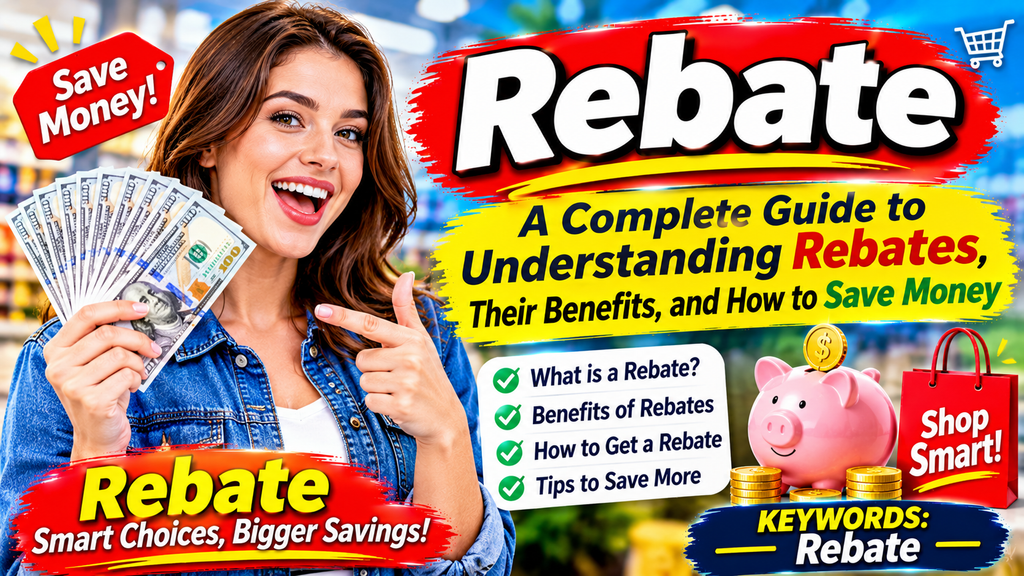

Introduction to Rebate
A Rebate is a popular way for businesses and manufacturers to encourage customers to purchase their products or services by offering money back after a purchase. It is a financial incentive that allows consumers to save money while enjoying their favorite products. Rebates are commonly available on electronics, home appliances, vehicles, groceries, insurance policies, and many other products.
In simple words, a rebate means getting a portion of the money you spent back after buying something. Unlike an instant discount, which reduces the purchase price immediately, a rebate usually requires customers to complete a few steps before receiving their money.
Today, rebates have become an important marketing strategy for businesses. They help companies attract new customers, increase sales, and build customer loyalty. At the same time, consumers benefit by purchasing quality products at a lower overall cost.
Understanding how rebates work can help you make smarter purchasing decisions and take advantage of available savings opportunities.
What Is a Rebate?
A rebate is a partial refund or cashback offered to customers after they purchase a particular product or service. Companies use rebates to encourage people to choose their products over competitors.
For example, imagine purchasing a washing machine for $500. The manufacturer offers a $50 rebate on that product. After completing the required process, you receive $50 back, making the effective cost of the washing machine $450.
Rebates can be offered in different forms, including:
- Cash rebates.
- Mail-in rebates.
- Online rebates.
- Instant rebates.
- Manufacturer rebates.
- Seasonal promotional rebates.
- Loyalty-based rebates.
- Business rebates.
Each type has its own conditions and requirements. Therefore, customers should always read the rebate terms before making a purchase.
How Does a Rebate Work?
The rebate process is generally straightforward, although the exact steps depend on the company offering the promotion.
Most rebate programs follow these steps:
- Find a Rebate Offer: Search for products or services that include an active rebate promotion.
- Purchase the Product: Buy the eligible item from an authorized retailer or participating store.
- Keep Your Receipt: Save your purchase receipt as proof of payment.
- Submit Your Application: Complete the rebate form online or through the required submission method.
- Provide Required Documents: Upload or submit your receipt, product information, and other requested details.
- Wait for Approval: The company reviews your application to make sure it meets the requirements.
- Receive Your Money: Once approved, the rebate is delivered through the selected payment method.
Following these steps carefully can help you avoid delays and rejected applications.
Different Types of Rebates
There are several types of rebates available in the market. Understanding their differences can help consumers choose the best offers.
1. Cash Rebate
A cash rebate provides customers with a specific amount of money after purchasing an eligible product. The payment may be delivered through a bank transfer, cheque, or another payment method.
2. Mail-In Rebate
A mail-in rebate requires customers to complete a form and send it to the manufacturer along with proof of purchase. Although this method is traditional, some companies still use it.
3. Instant Rebate
An instant rebate reduces the purchase price immediately at checkout. Customers do not usually need to submit a separate application to receive the discount.
4. Manufacturer Rebate
A manufacturer rebate is offered directly by the company that produces the product. It is commonly available on electronics, vehicles, appliances, and other consumer goods.
5. Online Rebate
An online rebate allows customers to submit applications through a company’s website. This process is generally convenient because customers can upload documents and track their applications digitally.
6. Seasonal Rebate
Seasonal rebates are special promotional offers available during particular times of the year, such as holidays, summer sales, Black Friday, and end-of-year shopping events.
Benefits of Rebates for Customers
Rebates offer several advantages to consumers. They provide opportunities to reduce expenses and make purchases more affordable.
Some major benefits include:
- Save Money: Customers receive a portion of their purchase price back.
- Affordable Shopping: Rebates make expensive products more budget-friendly.
- Better Purchasing Decisions: Consumers can compare different offers before buying.
- Access to Premium Products: Rebates may make higher-quality products more affordable.
- Extra Financial Benefits: Customers can use their rebate money for other expenses.
- More Shopping Opportunities: Promotional rebates encourage consumers to explore different brands and products.
By understanding rebate offers, shoppers can reduce their overall spending without compromising product quality.
Why Do Businesses Offer Rebates?
Businesses use rebates as an effective marketing strategy to attract customers and increase product sales.
When customers see an opportunity to receive money back, they may become more interested in purchasing a particular product.
Here are some important reasons businesses offer rebates:
- Increase Sales: Rebates encourage customers to purchase products.
- Attract New Customers: Special offers help businesses reach new audiences.
- Clear Old Inventory: Companies can use rebates to sell older product models.
- Build Brand Loyalty: Customers may return to businesses that offer valuable promotions.
- Compete in the Market: Rebates help brands compete with similar products.
- Promote New Products: Manufacturers can encourage customers to try newly launched products.
A well-planned rebate program can benefit both businesses and consumers.
Rebate vs. Discount: What Is the Difference?
Many people confuse rebates with discounts because both help customers save money. However, they work differently.
A discount reduces the original price immediately when a customer purchases a product. A rebate generally provides money back after the purchase has been completed and the required conditions have been satisfied.
For example:
- Original product price: $200.
- Instant discount: $20.
- Final checkout price: $180.
With a $20 rebate, the customer initially pays $200 and receives $20 back after completing the rebate process.
Therefore, discounts offer immediate savings, while rebates often require additional steps.
How to Find the Best Rebate Offers
Finding valuable rebate offers does not have to be difficult. With proper research, consumers can discover promotions that help them save money.
Consider these useful tips:
- Visit official manufacturer websites.
- Check promotional offers from trusted retailers.
- Compare rebate amounts before purchasing.
- Subscribe to company newsletters for promotional updates.
- Look for seasonal shopping campaigns.
- Read customer reviews about rebate programs.
- Check the expiration date of every offer.
- Confirm that the product is eligible for the rebate.
Always make sure that the rebate offer comes from a legitimate source before sharing personal or payment information.
Common Mistakes to Avoid When Applying for Rebates
Although rebate programs are generally simple, customers sometimes make mistakes that prevent them from receiving their money.
Here are some common mistakes to avoid:
Missing the Submission Deadline
Most rebate offers have specific deadlines. Submitting an application after the deadline may result in rejection.
Providing Incorrect Information
Incorrect names, addresses, purchase dates, or product details can delay the approval process.
Losing the Purchase Receipt
A receipt is often essential for proving that you purchased an eligible product.
Ignoring Terms and Conditions
Some rebates apply only to selected products, retailers, or purchase dates. Always review the eligibility requirements.
Submitting Duplicate Applications
Submitting multiple applications for the same purchase may violate the rebate program’s rules.
Avoiding these mistakes can make the rebate process easier and more successful.
Are Rebates Worth It?
Yes, rebates can be worthwhile when customers understand the requirements and calculate their actual savings.
However, it is important not to purchase something simply because it includes a rebate. Consider the original price, the final cost, the application process, and the likelihood of receiving the promised refund.
For example, a product with a $30 rebate may still be more expensive than a similar product without a rebate.
The best approach is to compare the total cost rather than focusing only on the advertised rebate amount.
The Future of Rebate Programs
Technology is changing the way businesses manage rebate programs. Traditional paper applications are increasingly being replaced by digital platforms that allow customers to submit documents, receive updates, and track payments online.
Mobile applications, automated verification systems, and digital payment methods are making rebate programs more convenient.
In the future, businesses may use personalized rebate offers based on customer preferences and shopping habits. These developments could make rebates faster, easier, and more accessible.
As digital shopping continues to grow, rebates are likely to remain an important part of modern marketing strategies.
Conclusion
A rebate is an effective way for consumers to save money while helping businesses increase sales and attract new customers. From cash rebates and manufacturer rebates to online and seasonal promotions, there are many opportunities to benefit from these financial incentives.
However, customers should always understand the terms and conditions, keep their purchase receipts, and submit applications before the deadline.
By comparing offers and choosing legitimate rebate programs, shoppers can enjoy valuable savings and make smarter purchasing decisions. Whether you are buying electronics, household appliances, vehicles, or everyday products, understanding rebates can help you get more value for your money.