
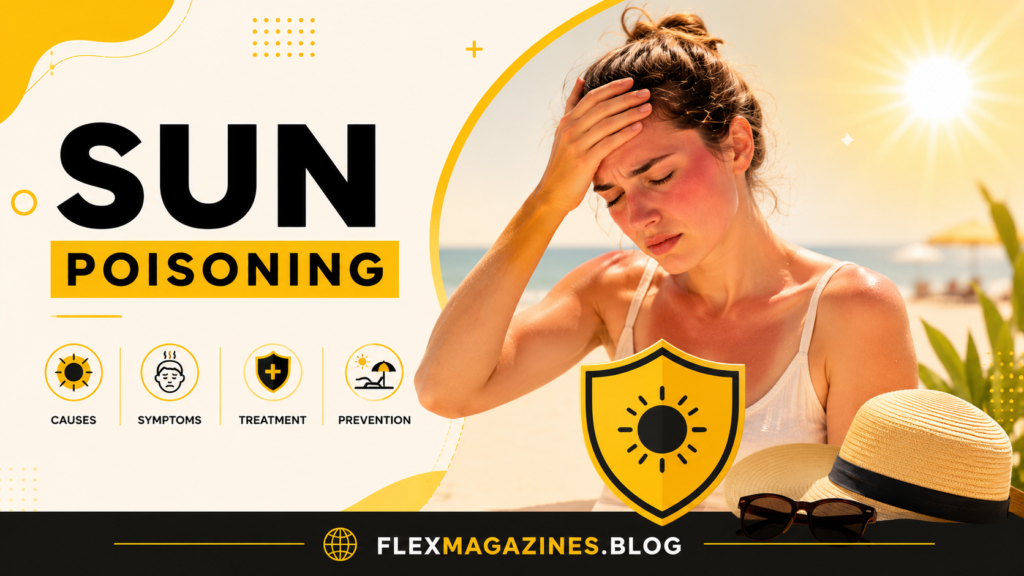

Sun poisoning is a common term for a severe sunburn or intense reaction to ultraviolet (UV) exposure. Despite its name, it does not mean that a person has been poisoned by the sun. Sun poisoning is not a formal medical diagnosis, but the term is often used when sun exposure causes much more than ordinary redness and tenderness. Severe cases can involve blistering, significant pain, dehydration, nausea, dizziness, headache, chills, or other symptoms affecting the whole body.
A typical sunburn primarily affects the skin, while what people call sun poisoning can involve both severe skin damage and symptoms that make them feel generally unwell. This distinction is important because severe sunburn can contribute to fluid loss and heat related illness. If someone develops confusion, fainting, severe dehydration, difficulty breathing, or other serious symptoms after prolonged sun exposure, medical evaluation may be necessary rather than relying solely on home remedies.
What Causes Sun Poisoning?
Sun poisoning usually follows too much ultraviolet radiation exposure, especially after spending prolonged time outdoors without adequate protection. UV radiation damages skin cells, producing inflammation that causes the familiar redness, warmth, tenderness, and pain of sunburn. More intense exposure can produce blistering and more extensive skin injury. UV rays can damage skin even when the weather does not feel extremely hot.
The intensity of UV exposure depends on several factors, including the time of day, geographic location, altitude, cloud conditions, and duration of exposure. Tanning beds can also expose the skin to UV radiation and contribute to sun damage. Certain medications and topical products can increase photosensitivity, making a person more vulnerable to sunlight than they might expect.
UV Exposure and Skin Damage
Ultraviolet radiation is invisible, which makes it easy to underestimate how much exposure the skin is receiving. A person may feel comfortable outdoors for hours and only notice the severity of the burn later. Sunburn symptoms can become more noticeable several hours after the exposure, with pain and redness potentially becoming worse before the skin begins to recover.
Repeated UV exposure matters beyond a single painful episode. Sunburn is evidence of skin damage, and repeated sunburns contribute to cumulative skin injury. Long term UV exposure is associated with premature skin aging and an increased risk of skin cancer, making prevention important even after a previous burn has healed.
Sun Poisoning Symptoms
Sun poisoning symptoms can range from severe skin irritation to whole body symptoms. Common signs include intense redness, burning or pain, swelling, itching, blistering, and peeling. Some people may also experience headache, nausea, dizziness, dehydration, fatigue, fever, chills, or a feeling of being generally sick.
One important clue is the combination of significant skin damage and systemic symptoms. For example, someone with a severely sunburned back who also develops nausea, dizziness, extreme thirst, headache, or chills may have more than a routine mild sunburn. These symptoms can overlap with heat related illness, so severity and the persons overall condition matter.
Skin Symptoms
The skin may become intensely red, hot, painful, swollen, or unusually sensitive. Severe burns can cause fluid filled blisters, and the skin may later peel as damaged cells are shed. Blisters should not be intentionally popped because intact blistered skin can help protect the underlying tissue while it heals and can reduce the risk of infection.
Sunburn can be harder to visually recognize on darker skin tones. Skin can still sustain UV injury even when obvious redness is less noticeable. Pain, warmth, tenderness, swelling, peeling, blistering, or changes in the skin can provide important clues that significant sun damage has occurred.
Whole Body Symptoms
More serious sun exposure can be associated with symptoms such as nausea, vomiting, dizziness, headache, dehydration, chills, fatigue, rapid heartbeat, or confusion. These symptoms should not automatically be dismissed as just a sunburn, especially if they are intense, worsening, or accompanied by extensive blistering.
Some symptoms may result from fluid loss or heat related illness rather than a direct poisoning effect. A severe sunburn can draw fluid toward the damaged skin, contributing to dehydration. If someone is very thirsty, dizzy, weak, confused, faint, or unable to maintain hydration, professional medical assessment may be appropriate.
Sun Poisoning vs. Sunburn
The biggest difference between sun poisoning and an ordinary sunburn is severity and the presence of additional symptoms. A typical sunburn may cause redness, warmth, tenderness, swelling, itching, and eventually peeling. A more severe reaction commonly called sun poisoning can involve blistering, intense pain, nausea, dizziness, dehydration, headache, fever, chills, or fatigue.
There is also no strict medical boundary that officially separates sun poisoning from sunburn because sun poisoning is a popular term rather than a formal diagnosis. Healthcare professionals generally evaluate the extent of the burn, the symptoms affecting the rest of the body, hydration status, and whether heat illness or another condition may also be involved.
Is Sun Poisoning an Allergy?
Not necessarily. Severe sunburn can sometimes look or feel like an allergic reaction, which is one reason the term sun poisoning can be confusing. However, intense UV exposure and resulting skin inflammation are often responsible for the symptoms. True sun allergies are separate conditions in which the immune system reacts abnormally to sunlight and may produce characteristic rashes or other reactions.
A recurring rash after relatively limited sunlight exposure may deserve a different evaluation than a painful, blistering burn after prolonged sun exposure. People who repeatedly develop unusual rashes in sunlight should discuss the pattern with a healthcare professional or dermatologist rather than assuming every reaction is sun poisoning.
Who Is More Likely to Develop Sun Poisoning?
Anyone can experience sunburn, regardless of skin tone, when UV exposure exceeds the skins ability to protect itself. Risk increases when someone spends a long time in intense sunlight, does not use adequate protection, or fails to reapply sunscreen after sweating or swimming. People with fair skin may burn more easily, but darker skin can also be damaged by UV radiation.
Some medications, medical conditions, and topical products can increase sensitivity to sunlight. Examples can include certain antibiotics, retinoids, diuretics, some anti inflammatory medications, and other photosensitizing substances. Because the list of potentially photosensitizing medicines is broad, people should check medication instructions or ask a pharmacist or clinician if they are unsure.
Medication and Photosensitivity
Photosensitivity means the skin can react more strongly to light than expected. Someone taking a photosensitizing medication may develop a sunburn or rash after exposure that previously would not have caused an obvious reaction. This is one reason sunscreen alone should not be viewed as the only form of protection.
If you recently started a medication and suddenly experience an unusual sun reaction, review its safety information and contact your healthcare provider or pharmacist. Do not stop a prescribed medication on your own simply because you suspect photosensitivity the appropriate response depends on the medication and the underlying condition being treated.
How Sun Poisoning Develops
Sun poisoning does not always appear immediately. A person may leave the beach, pool, sports field, or outdoor event feeling relatively normal before pain, redness, or other symptoms become obvious. Sunburn commonly becomes more noticeable after exposure, and severe reactions can continue to worsen before they begin improving.
The bodys response can involve inflammation and fluid loss. When a large area of skin is burned, the resulting inflammation may be accompanied by dehydration and discomfort. If blistering or extensive skin damage develops, the recovery period can be considerably longer than it would be for a mild sunburn.
Why Symptoms Can Feel So Severe
The skin is an active protective barrier, and extensive burns can affect the bodys fluid balance and comfort. Pain, heat, swelling, itching, and tenderness can make normal activities difficult. When dehydration or heat related symptoms occur at the same time, a person may feel weak, dizzy, nauseated, or exhausted.
The severity of symptoms also depends on how much skin was exposed, how intense the UV exposure was, whether the person became dehydrated, and whether other heat related problems developed. This is why two people who spend the same amount of time outside may have very different reactions.
What to Do When Sun Poisoning Happens
The first step is to get out of direct sunlight immediately. Move indoors or into substantial shade and prevent additional UV exposure while the skin is healing. Continuing to stay in the sun can worsen the injury and prolong recovery.
Cooling the skin can provide comfort. A cool bath, cool shower, or cool damp cloth may help reduce discomfort. Avoid extremely cold treatments that can further irritate damaged skin. Once the skin has been gently cooled, a moisturizer containing aloe vera or soy may help soothe a mild sunburn.
Hydration and Rest
Drink additional fluids while recovering, particularly if you have been sweating heavily or have signs of dehydration. Sunburn can contribute to fluid loss, so maintaining hydration is an important part of recovery. If you are vomiting, confused, severely dizzy, fainting, or unable to drink enough to stay hydrated, do not rely solely on home care.
Rest is also important. Avoid strenuous outdoor activity while the skin is severely burned and while symptoms such as weakness, headache, dizziness, or nausea are present. Keep affected skin protected from additional sunlight until it has healed.
Sun Poisoning Treatment
Treatment depends on the severity of the reaction. For a mild case, supportive care can include getting out of the sun, cooling the skin, moisturizing, drinking fluids, and using appropriate over the counter pain relief when safe for the individual. The American Academy of Dermatology recommends cool baths or showers, aloe vera or soy containing moisturizer, extra water, and avoiding popping blisters for sunburn care.
More serious cases may require professional treatment. Depending on the symptoms and severity, healthcare providers may address dehydration, significant inflammation, pain, blistering, or infection. Cleveland Clinic notes that treatment for severe reactions may include medical fluids and prescription therapies when clinically appropriate.
What About Aloe Vera and Pain Relief?
Aloe vera or a gentle moisturizer may soothe sunburned skin. Cool compresses can also provide temporary comfort. Some people may use over the counter pain relievers such as ibuprofen or acetaminophen, but the safest choice depends on individual medical history, allergies, other medicines, age, and health conditions.
Be cautious about topical anesthetics containing ingredients such as benzocaine or lidocaine. Some people can experience irritation or allergic contact dermatitis from these products, potentially making an already irritated skin reaction worse.
What Should You Avoid?
Do not deliberately pop sunburn blisters. Blisters can protect damaged skin while it repairs itself, and opening them can increase the risk of infection. Avoid picking or peeling damaged skin as it naturally sheds.
It is also wise to avoid additional sun exposure until the skin has recovered. If you must go outdoors, cover affected skin with protective clothing and seek shade. Do not assume that a little more tanning will even out a burn additional UV exposure causes more damage rather than helping the skin recover.
How Long Does Sun Poisoning Last?
There is no single recovery time because sun poisoning can describe reactions of different severity. A mild sunburn may improve over several days, while more severe burns involving blistering or extensive skin damage can take substantially longer. Cleveland Clinic notes that pain and skin healing from severe cases can continue for weeks.
Sunburn symptoms may become more painful during the first day before gradually improving. Peeling can occur later as damaged skin is shed. Severe blistering, widespread burns, dehydration, infection, or ongoing systemic symptoms can extend recovery and may require medical attention.
Why Recovery Times Differ
The amount of UV exposure, size of the affected area, depth of the burn, hydration status, and individual healing response can all influence recovery. A small area of mild redness is very different from widespread blistering accompanied by nausea and dizziness.
Recovery may also take longer if a person continues exposing the damaged skin to sunlight or picks at blisters and peeling skin. Protecting the area, staying hydrated, and following appropriate skin care measures can support healing.
When to See a Doctor
Medical advice is especially important when a sunburn is severe, widespread, blistering extensively, or accompanied by symptoms affecting the whole body. High fever, chills, nausea, worsening symptoms, significant swelling, or signs of infection such as pus should prompt professional evaluation.
Emergency care may be appropriate for severe dehydration, confusion, fainting, serious dizziness, difficulty breathing, or other potentially dangerous symptoms. These symptoms can indicate heat related illness or another serious complication rather than a simple sunburn.
Signs That Need Urgent Attention
Confusion, fainting, severe dehydration, persistent vomiting, difficulty breathing, or a rapidly worsening condition should be treated seriously. Do not wait for the skin to heal on its own if the persons overall condition is deteriorating.
A healthcare professional can evaluate the burn and determine whether additional treatment is necessary. In severe cases, clinical treatment may be required to manage hydration, pain, inflammation, infection risk, or other complications.
How to Prevent Sun Poisoning
The most effective approach is preventing severe sunburn in the first place. The American Academy of Dermatology recommends seeking shade, wearing sun protective clothing, using sunglasses with UV protection, and applying a broad spectrum, water resistant sunscreen with an SPF of 30 or higher to exposed skin.
Sunscreen works best as part of a broader sun protection strategy. Reapply sunscreen approximately every two hours when outdoors and after swimming or sweating, following the products directions. Protective clothing, a wide brimmed hat, shade, and reducing prolonged exposure during intense sunlight can provide additional protection.
Sunscreen and Protective Clothing
Choose a broad spectrum sunscreen that protects against both UVA and UVB radiation. Apply enough to cover exposed areas and remember commonly missed locations such as ears, neck, hands, and the tops of feet.
Clothing can provide another physical barrier between UV radiation and skin. Long sleeves, pants, a wide brimmed hat, and UV protective sunglasses can be particularly useful when spending extended periods outdoors.
Shade and Timing Matter
Seeking shade can reduce direct UV exposure, but shade does not necessarily eliminate all UV radiation. A combination of shade, clothing, sunscreen, and limiting unnecessary exposure provides stronger protection than relying on a single method.
It is also sensible to reduce prolonged exposure when UV levels are high. Cleveland Clinic recommends avoiding extended periods outdoors during the strongest part of the day, particularly around the late morning and afternoon hours in summer.
Latest Update on Sun Protection
Current dermatology guidance continues to emphasize that sunburn is preventable skin damage, not a healthy form of tanning. The American Academy of Dermatology recommends broad spectrum, water resistant sunscreen with SPF 30 or higher, protective clothing, shade, and other sun safety habits.
Another important point is that UV exposure can damage skin regardless of season or temperature. MedlinePlus explains that ultraviolet radiation can cause skin damage even when it is not particularly hot outside. This means people should not judge UV risk simply by how warm the weather feels.
Common Mistakes to Avoid
One common mistake is waiting until the skin hurts before taking sun protection seriously. Sunburn can develop after exposure has already caused significant UV damage. Another mistake is assuming sunscreen provides unlimited protection sunscreen needs to be used correctly and reapplied, especially after water exposure or sweating.
Another mistake is treating severe symptoms as an ordinary sunburn. Blistering may occur with significant burns, but symptoms such as confusion, fainting, severe dehydration, persistent vomiting, or serious dizziness deserve greater attention. When symptoms extend beyond the skin, professional assessment may be the safer option.
Conclusion
Sun poisoning is not literal poisoning. It is a commonly used term for a severe sunburn or intense reaction to UV exposure, particularly when the skin damage is accompanied by symptoms such as blistering, nausea, dizziness, dehydration, headache, chills, or significant fatigue.The best response is to get out of the sun, cool and protect the affected skin, maintain hydration, and avoid further UV exposure while healing. Mild sunburn can often be managed with supportive care, but severe or worsening symptoms should not be ignored.Prevention remains the strongest strategy. Use broad spectrum, water resistant SPF 30 or higher sunscreen, reapply it as directed, seek shade, wear protective clothing and UV protective sunglasses, and limit prolonged exposure when UV levels are intense.If symptoms include confusion, fainting, severe dehydration, persistent vomiting, difficulty breathing, or another serious change in health, seek urgent medical attention. When in doubt about the severity of a severe sunburn or reaction, professional medical evaluation is the safest choice.
You may also read more blogs
FAQs
Is sun poisoning actually poisoning?
No. Sun poisoning is a popular term rather than a formal medical diagnosis. It generally refers to a severe sunburn or intense reaction to UV exposure that may involve significant skin symptoms and whole body symptoms such as nausea, dizziness, dehydration, headache, chills, or fatigue.
What does sun poisoning look like?
It can look like a severe sunburn with intense redness, pain, swelling, blistering, itching, and later peeling. Unlike a mild sunburn, it may also be accompanied by symptoms such as nausea, dizziness, headache, chills, dehydration, fatigue, or fever.
How do you treat sun poisoning at home?
For a mild reaction, get out of the sun, cool the affected skin with a cool bath, shower, or damp cloth, drink extra fluids, and use a gentle moisturizer such as one containing aloe vera or soy. Do not pop blisters or pick peeling skin.
How long does sun poisoning last?
Recovery varies according to the severity of the burn. Mild sunburn can improve within several days, while severe sunburn with extensive blistering or deeper skin injury can take weeks to heal.
Can sun poisoning cause nausea and dizziness?
Yes. Nausea and dizziness can occur with severe reactions commonly described as sun poisoning. They can also be signs of dehydration or heat related illness, which is why they should not be ignored after substantial sun exposure.
Should you pop sun poisoning blisters?
No. Sunburn blisters should generally be left intact rather than deliberately popped. Blisters can help protect damaged tissue while the skin heals, and opening them can increase the risk of infection.
Can you get sun poisoning through clouds?
Yes. Clouds do not eliminate UV exposure, and UV radiation can still damage skin even when the weather does not feel hot. MedlinePlus notes that UV rays can cause skin damage during any season and at any temperature.
Can sun poisoning increase skin cancer risk?
Severe sunburn represents UV related skin damage, and repeated sunburns contribute to cumulative skin damage and increased skin cancer risk. Preventing sunburn through shade, protective clothing, sunscreen, and other sun safety measures is therefore important for long term skin health.