
Podcast Equipment, Podcasting has become one of the fastest growing forms of digital content. From business owners and educators to gamers and entertainers, millions of creators are launching podcasts to connect with audiences worldwide. While creating engaging content is essential, the quality of your recording depends heavily on the podcast equipment you choose.
Good podcast equipment doesnt necessarily mean buying the most expensive products. Instead, it means selecting tools that fit your recording style, budget, and long term goals. Whether youre recording from a home office, a professional studio, or while traveling, the right gear can dramatically improve your audio quality and listener experience.
This guide explains everything you need to know about podcast equipment, helping beginners and experienced creators build a reliable recording setup.
What Is Podcast Equipment?
Podcast equipment refers to the hardware and accessories used to record, edit, and publish podcast episodes. Depending on your recording style, your setup may be simple or highly advanced.
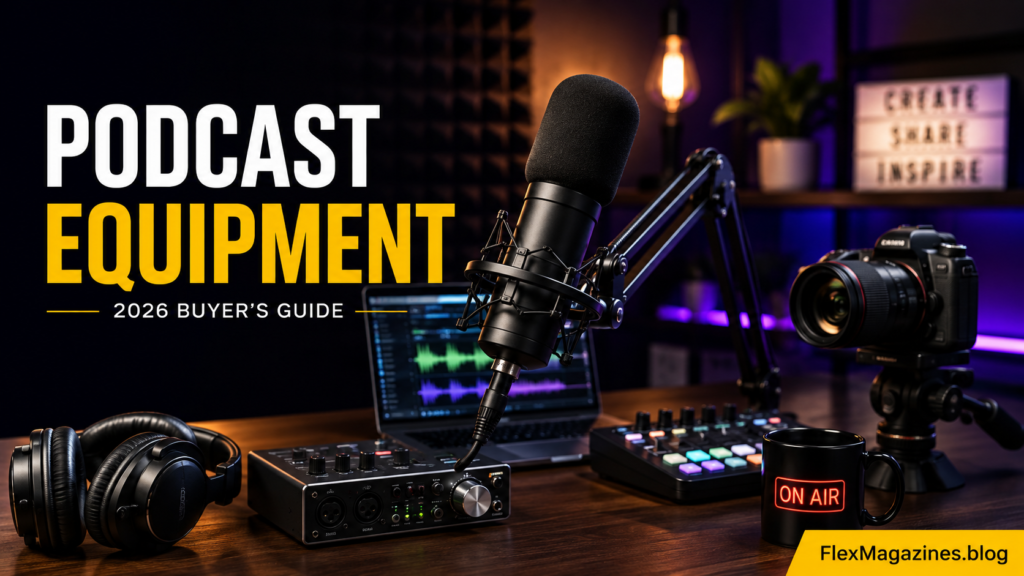
Basic podcast equipment often includes a microphone, headphones, recording software, and a computer. Professional podcasters usually expand their setup with audio interfaces, mixers, boom arms, acoustic treatment, cameras, and dedicated lighting for video podcasts.
Investing in the right equipment improves sound clarity, reduces background noise, and creates a more enjoyable listening experience for your audience.
Essential Podcast Equipment
Every successful podcast starts with a few core pieces of equipment.
Microphone
The microphone is the most important part of any podcast setup. A quality microphone captures clear vocals while minimizing unwanted background sounds.
Dynamic microphones are ideal for untreated rooms because they reject ambient noise better than condenser microphones. Condenser microphones provide greater detail but require a quieter recording environment.
Computer
A reliable desktop or laptop is necessary for recording and editing episodes. Modern computers with sufficient RAM and storage can easily handle podcast production software.
Recording Software
Recording software allows you to capture, edit, and export your podcast episodes. Many beginner friendly options are available, while professionals often use advanced digital audio workstations with multitrack editing capabilities.
Headphones
Closed back headphones help monitor audio while preventing sound leakage into the microphone. They allow hosts to hear background noise, microphone levels, and guest audio during recordings.
Choosing the Right Podcast Microphone
Selecting the right microphone depends on your recording environment, budget, and production goals.
USB microphones connect directly to a computer, making them ideal for beginners. They require minimal setup and are easy to use for solo podcasts.
XLR microphones require an audio interface or mixer but provide better flexibility, improved sound quality, and easier upgrades as your podcast grows.
When shopping for microphones, consider build quality, pickup pattern, frequency response, and durability rather than focusing solely on price.
USB vs XLR Microphones
USB microphones remain the most popular choice for new podcasters because they are affordable and simple to install.
Advantages include
- Easy setup
- Lower cost
- Portable
- Perfect for beginners
XLR microphones are preferred by professional podcasters and recording studios.
Benefits include
- Superior audio quality
- Better control over sound
- Expandable recording systems
- Professional broadcasting capability
If you plan to grow your podcast over time, an XLR setup offers greater flexibility.
Audio Interfaces and Mixers
An audio interface converts analog microphone signals into digital audio that your computer can process. It also powers professional XLR microphones using phantom power when necessary.
Mixers provide additional controls, allowing hosts to adjust microphone levels, add sound effects, connect multiple microphones, and manage live recordings.
Solo podcasters often choose an audio interface, while multiple host podcasts frequently benefit from dedicated podcast mixers.
Headphones for Podcasting
Professional headphones help podcasters identify background noise, distortion, and microphone issues before publishing episodes.
Closed back headphones are generally preferred because they isolate sound and prevent audio leakage.
Comfort is equally important. Long recording sessions require lightweight headphones with soft ear cushions and adjustable headbands.
Many experienced podcasters also keep a backup pair available for guests.
Recording Software
Podcast recording software has improved significantly in recent years.
Beginner software focuses on simplicity, allowing creators to record and edit without technical knowledge.
Professional editing software includes advanced features like
- Noise reduction
- Equalization
- Compression
- Multitrack editing
- Remote guest recording
- AI powered audio enhancement
Choosing software depends on your workflow rather than popularity alone.
Cameras for Video Podcasts
Video podcasting continues to grow across platforms like YouTube and Spotify.
A quality camera enhances your production value and attracts viewers who prefer watching conversations instead of listening only.
Many creators begin with webcams before upgrading to mirrorless or DSLR cameras for improved image quality.
Good lighting is just as important as the camera itself.
Podcast Studio Accessories
Accessories improve both comfort and recording quality.
Common podcast accessories include
Boom Arms
Boom arms position microphones correctly while reducing desk vibrations.
Pop Filters
Pop filters minimize harsh sounds caused by letters like P and B.
Shock Mounts
Shock mounts reduce vibrations from desks and microphone stands.
Acoustic Panels
Acoustic treatment minimizes echo and room reflections, creating cleaner recordings.
Ring Lights
For video podcasts, ring lights provide even facial lighting without expensive studio equipment.
Portable Podcast Equipment
Many creators record podcasts while traveling.
Portable podcast equipment usually includes lightweight microphones, compact audio interfaces, foldable headphones, and portable recorders.
Battery powered recorders allow interviews to be captured almost anywhere, making them valuable for journalists, travelers, and documentary creators.
Compact equipment also simplifies remote recording sessions.
Budget vs Professional Podcast Setup
Not everyone needs an expensive recording studio.
A beginner setup usually includes
- USB microphone
- Laptop
- Free recording software
- Closed back headphones
This setup is capable of producing excellent podcast episodes.
Professional setups typically include
- XLR microphones
- Audio interface
- Mixer
- Acoustic treatment
- Studio headphones
- Professional lighting
- Multiple cameras
These additions improve production quality but should only be purchased when necessary.
Latest Update
Podcast equipment continues to evolve rapidly.
Many manufacturers now offer AI powered microphones with built in noise reduction, automatic gain adjustment, and voice enhancement features. USB microphones have also improved dramatically, narrowing the gap between entry level and professional recording quality.
Remote podcasting tools now integrate directly with editing software, making collaboration easier than ever. Video podcasting has also encouraged creators to invest in better lighting and cameras alongside traditional audio equipment.
Reviews
Most experienced podcasters agree that microphone quality has the biggest impact on listener satisfaction.
USB microphones receive praise for affordability and convenience, while XLR systems remain the preferred choice for creators producing professional shows.
Users also appreciate modern recording software that automates editing tasks, reducing production time without sacrificing quality.
Portable podcast recorders continue receiving positive reviews for reliability during interviews and field recordings.
Common Mistakes When Buying Podcast Equipment
Many beginners spend too much money on equipment before creating consistent content.
A common mistake is purchasing expensive microphones without improving room acoustics. Even premium microphones cannot compensate for excessive echo or background noise.
Another mistake is ignoring microphone placement. Proper positioning often improves audio quality more than upgrading hardware.
Finally, creators should avoid buying unnecessary accessories until they understand their production needs.
Conclusion
Choosing the right podcast equipment is one of the most important decisions for anyone starting or improving a podcast. While its tempting to invest in expensive gear immediately, great podcasts are built on clear audio, engaging content, and consistency rather than price alone.Beginners can produce professional sounding episodes with a quality USB microphone, reliable headphones, and user friendly recording software. As your audience grows, upgrading to XLR microphones, audio interfaces, acoustic treatment, and professional accessories can further enhance your production quality.Whether youre creating a solo show, interviewing guests, or producing a video podcast, selecting equipment that matches your goals and budget will help you deliver a better listening experience. Focus on building a setup that is reliable, scalable, and easy to use, and your podcast will be well positioned for long term success.
You may also read more blogs
FAQs
What equipment do I need to start a podcast?
A microphone, computer, headphones, and recording software are enough to launch a basic podcast.
Is a USB microphone good enough?
Yes. Modern USB microphones provide excellent sound quality for beginners and even many professional creators.
Do I need a mixer?
Only if youre managing multiple microphones, live audio sources, or advanced sound controls.
What type of microphone is best?
Dynamic microphones are ideal for untreated rooms, while condenser microphones perform best in quiet studios.
Can I record podcasts on a laptop?
Yes. Most modern laptops can easily handle podcast recording and editing software.
Is video podcast equipment different?
Video podcasts require cameras, lighting, and tripods in addition to standard podcast audio equipment.
Should beginners buy professional equipment?
Not necessarily. Start with essential gear and upgrade gradually as your podcast grows.
How important is room treatment?
Very important. Reducing echo and outside noise significantly improves audio quality regardless of your microphone.