
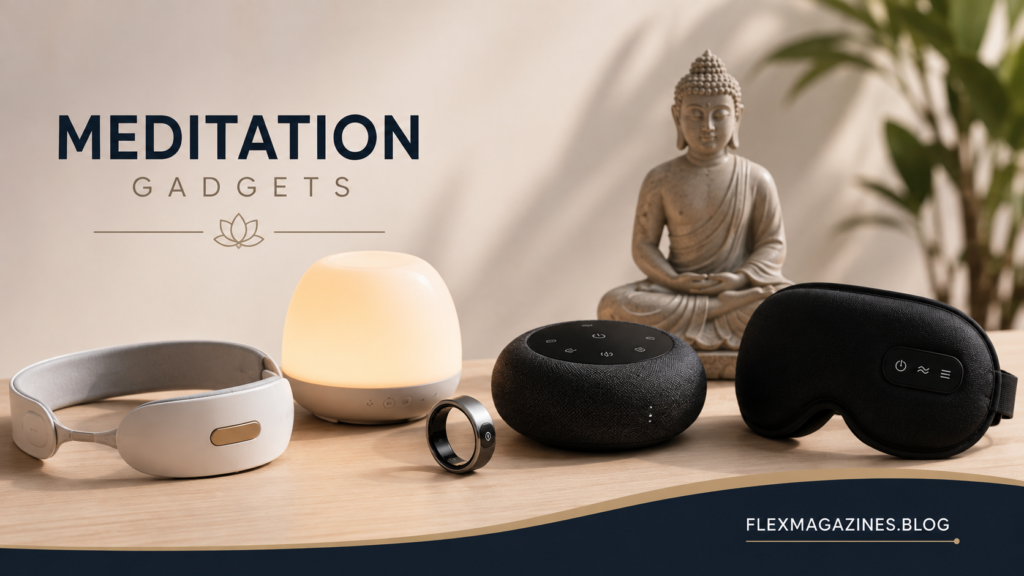

Meditation gadgets are physical devices and technology based tools designed to support mindfulness, relaxation, breathing exercises, concentration, sleep routines, or other forms of meditation. They range from simple meditation timers and sound machines to sophisticated wearable devices that monitor physiological signals.
The goal isnt necessarily to make meditation more complicated. In many cases, a good gadget simply removes distractions or provides structure. A timer can prevent you from repeatedly checking the clock, while a breathing device can give you a physical or visual rhythm to follow.
How Meditation Gadgets Work
Different gadgets work in different ways. Some provide external cues, such as sounds, vibrations, lights, or guided breathing patterns. Others monitor information such as heart rate or movement and use that information to provide feedback.
Wearable technology may help users notice changes in their physical state during relaxation. Audio devices can create an environment that feels more suitable for meditation. Meanwhile, smart lighting can reduce harsh environmental stimulation and help establish a consistent evening routine.
The most useful gadget is therefore not necessarily the most technologically advanced one. A simple device that you actually use regularly may be more valuable than an expensive product filled with features you dont need.
Who Can Benefit From Meditation Gadgets?
Meditation gadgets can be useful for beginners who struggle to establish a consistent practice, experienced meditators who want additional structure, and people who simply want a dedicated relaxation routine.
They can also appeal to people who prefer measurable feedback. Some users enjoy seeing information about breathing, heart rate, or session duration because it gives them a tangible way to track their routine.
However, technology should remain a tool rather than becoming the focus of meditation itself.
Why Are Meditation Gadgets Trending?
The growing interest in meditation gadgets reflects the broader popularity of mindfulness, wellness technology, sleep optimization, and digital health. People increasingly use connected devices to understand their habits and build routines around physical and mental well being.
Meditation technology also fits naturally into modern lifestyles. Someone with only a few minutes available during a busy day can use a timer, headphones, breathing tool, or guided session without needing a complicated setup.
The Rise of Mindfulness Technology
Traditional meditation requires very little equipment. In fact, you can meditate almost anywhere without purchasing anything.
Yet technology can make the practice more accessible. Beginners may find it easier to sit quietly when a device provides instructions, a timer, gentle sounds, or breathing cues.
This is particularly useful for people who find it difficult to know whether they are doing meditation correctly. A structured session can provide a starting point without requiring extensive knowledge.
Why People Want More Than Meditation Apps
Meditation apps are convenient, but physical devices can create a stronger psychological separation between everyday technology and intentional relaxation.
For example, putting on a dedicated wearable or turning on a specific sound device may become a ritual. Over time, the action itself can serve as a cue that it is time to slow down.
This doesnt mean physical gadgets are automatically more effective than apps. Their value depends on the users preferences, routine, and ability to use them consistently.
Best Types of Meditation Gadgets
The market for meditation gadgets includes everything from basic accessories to advanced wellness technology. Choosing between them becomes easier when you first identify the problem youre trying to solve.
Someone who constantly checks the time needs something different from someone who struggles with controlled breathing or wants to create a peaceful bedroom environment.
Meditation Timers
A meditation timer is one of the simplest and most practical tools available. Instead of worrying about how long you have been sitting, you can set a predetermined session and focus entirely on the practice.
Many timers allow users to select gentle sounds at the beginning and end of a session. Some also provide interval bells, which can be useful for longer meditation practices.
For beginners, a timer can eliminate one of the most common distractions wondering when the session will finish.
Mindfulness Wearables
Wearable meditation technology can include smartwatches, fitness trackers, specialized headbands, and other devices designed to provide information about physiological or behavioral signals.
Depending on the product, measurements may include heart rate, movement, breathing patterns, or other indicators. The purpose is generally to help users recognize changes associated with relaxation or concentration.
The biggest advantage is feedback. Instead of relying entirely on subjective impressions, users may receive information that helps them understand how different meditation techniques affect their body.
Breathing Devices
Controlled breathing is central to many relaxation and mindfulness practices. Breathing gadgets attempt to make the process easier by providing visual, audio, or tactile cues.
A device may slowly illuminate, vibrate, or otherwise signal when to inhale and exhale. This can help beginners maintain a consistent rhythm without repeatedly thinking about what to do next.
Breathing devices can be particularly useful for people who find guided meditation too distracting but still want some structure during their sessions.
Sound Machines
Sound machines can create a consistent auditory environment for meditation. White noise, nature sounds, ambient tones, and other soundscapes may help mask distracting background noise.
They can be particularly useful for people living in busy neighborhoods, shared homes, or environments where complete silence is difficult to achieve.
A good sound machine doesnt necessarily need dozens of features. Consistent volume, easy controls, quality audio and a suitable selection of sounds may be more important than an enormous sound library.
Light and Ambient Lighting Devices
Lighting can influence the atmosphere of a meditation space. Bright, harsh lighting may feel distracting when youre trying to relax, while softer ambient illumination can create a more intentional environment.
Smart lighting systems can allow users to create a repeatable meditation setting. For example, a particular lighting scene could become associated with an evening mindfulness routine.
The important point is that lighting is primarily an environmental aid. It shouldnt be treated as a replacement for meditation itself.
Biofeedback and Heart Rate Devices
Biofeedback technology provides information about physiological signals that can change during relaxation. Depending on the device, this might include heart rate information or other measurements.
The concept is straightforward users receive feedback and learn how their body responds to different techniques.
Over time, this may encourage greater awareness. Instead of simply hoping that a meditation session is relaxing, a user can compare different approaches and observe patterns.
Still, these measurements should be treated as feedback rather than definitive proof of mental or emotional states.
Smart Meditation Cushions
A meditation cushion may appear basic compared with wearable technology, but comfort can have a significant practical impact on meditation.
Smart or sensor equipped cushions can potentially add features such as session tracking, posture information, or connected guidance. Traditional cushions, meanwhile, can simply provide better positioning and support.
For someone who struggles with discomfort while sitting, a supportive cushion may be more useful than a sophisticated electronic gadget.
Best Meditation Gadgets for Beginners
Beginners should generally avoid buying too much technology at once. Meditation is already a new habit, and adding multiple devices can create unnecessary complexity.
A simple timer, comfortable cushion, headphones, or basic sound machine may be enough to establish a consistent routine.
Why Simple Gadgets Often Work Better
A beginners primary challenge is usually consistency rather than technology. The goal is to make meditation easy enough that you can repeat it regularly.
If a gadget requires complicated setup, frequent charging, multiple accounts, or extensive configuration, it may become another source of friction.
The best meditation gadget for a beginner is therefore often the one that requires the least effort.
A Simple Starter Setup
A basic meditation environment might include a comfortable place to sit, a timer, optional headphones, and a quiet or pleasant room.
If background noise is a problem, add a sound machine. If breathing is difficult to regulate, consider a breathing cue device.
There is no requirement to purchase every type of meditation technology. Build your setup around the specific obstacle that prevents you from meditating consistently.
Meditation Gadgets for Stress Relief
People searching for meditation gadgets for stress relief often want technology that helps them transition from a busy state into a calmer routine.
Breathing devices, audio systems, wearables and simple timers can all serve this purpose, but the mechanism is different for each.
Breathing Tools for Relaxation
Breathing focused gadgets can provide external cues that help users slow down and pay attention to their breathing.
This can be particularly helpful when your mind feels busy. Rather than attempting to force yourself to stop thinking, you have a specific physical process to observe.
The device itself doesnt create relaxation. It simply provides a structure that may make a breathing practice easier to follow.
Sound Based Relaxation
Sound machines and headphones can help establish a consistent meditation environment. Nature sounds, ambient audio, or guided sessions may make it easier to disengage from everyday distractions.
For some people, the most important benefit is simply reducing unpredictable background noise.
If you live somewhere noisy, environmental control can make a bigger practical difference than advanced biometric tracking.
Meditation Gadgets for Better Sleep
Sleep is another major reason consumers explore meditation technology. Many people use calming audio, breathing exercises, gentle lighting, or guided mindfulness before bedtime.
The ideal setup should encourage relaxation rather than keep you engaged with a screen.
Sleep Friendly Sound
A sound machine can create a predictable auditory environment. Instead of hearing sudden traffic, conversations, or household sounds, you hear a consistent background.
Some people prefer natural sounds, while others prefer neutral noise. The best option depends on individual preference.
Evening Lighting
Smart lights can help create a consistent bedtime ritual. Lower intensity lighting can make a room feel less stimulating, while a repeatable setting can signal that the day is winding down.
The important factor is consistency. A device is most valuable when it becomes part of a regular routine rather than something you use occasionally.
Meditation Gadgets for Focus
Meditation isnt only about relaxation. Many mindfulness practices are designed around attention and awareness, making meditation gadgets potentially useful for people who want a more structured concentration routine.
Timers and biofeedback devices can be particularly relevant here.
Timers Encourage Focus
A timer creates a defined period during which you dont need to make decisions about the session.
You can sit down, begin the practice, and know that an alert will indicate when the session is complete.
That small reduction in decision making can make meditation feel more manageable, especially for people who are easily distracted.
Feedback Can Increase Awareness
Biofeedback tools can potentially help users identify patterns. You might discover, for example, that certain environments or meditation techniques correspond with a calmer physical state.
However, the numbers should not become another distraction. The goal is awareness, not obsessively monitoring every metric.
How to Choose the Right Meditation Gadget
Choosing the right device begins with identifying your biggest challenge. Buying based purely on popularity or the number of features can result in a gadget that doesnt actually improve your routine.
Ask yourself what currently prevents you from meditating.
Consider Your Main Goal
If your biggest problem is forgetting to meditate, a timer or routine reminder may be useful.
If noise is your main obstacle, consider a sound machine or headphones. If you have trouble controlling your breathing, a breathing cue device may make more sense.
If you enjoy data and experimentation, a wearable or biofeedback tool could be more appealing.
Consider Ease of Use
A meditation device should ideally make your routine easier, not more complicated.
Look for intuitive controls, reliable battery life when applicable, comfortable materials, and features you will actually use.
A simple device used every day is generally more valuable than an advanced product that stays in a drawer.
Consider Privacy
Connected wellness devices may collect information about activity, physiological signals, or usage patterns. Before buying, examine what information the device collects and how the manufacturer handles it.
Privacy policies and account settings are worth reviewing, particularly when a device connects to your phone or cloud services.
Reviews What Users Should Look For
When reading meditation gadget reviews, dont focus only on star ratings. Look for patterns in what users consistently praise or criticize.
A product can have an impressive feature list but still be inconvenient to use. Conversely, a simple gadget may receive strong feedback because it performs one job reliably.
What Makes a Good Meditation Gadget?
Useful characteristics can include
- Simple controls
- Comfortable design
- Reliable performance
- Good battery life for rechargeable products
- Clear instructions
- Useful sound or feedback options
- Easy cleaning and maintenance
- Strong privacy controls for connected devices
- Reasonable ongoing costs
- Minimal distractions
The ideal combination depends on the device category.
What Should You Be Careful About?
Be cautious about products making exaggerated claims. A gadget can support meditation, but marketing language shouldnt be confused with medical evidence.
Also watch for subscription requirements. A device may appear affordable initially but require recurring payments to access its most important features.
Benefits of Using Meditation Gadgets
One major benefit of meditation gadgets is structure. A timer, breathing cue, or guided audio track can make it easier to begin and finish a session without worrying about what comes next.
Another advantage is environmental consistency. A particular sound, light setting, cushion or wearable can become part of a repeatable ritual.
Technology Can Improve Consistency
Consistency is one of the most important elements of building a meditation habit.
When a gadget makes your routine more convenient, youre less likely to spend time deciding how to meditate each day.
The device becomes a cue turn on the light, start the timer, put on the headphones, and begin.
Technology Can Make Meditation More Accessible
Not everyone finds silent meditation easy. Some people need external cues to understand breathing, maintain attention, or create a calm environment.
Technology can provide those cues without requiring a person to attend an in person class.
This makes meditation potentially more approachable for people who are completely new to mindfulness.
Limitations of Meditation Gadgets
Despite their advantages, meditation gadgets arent essential. You dont need a wearable, smart cushion, sound machine, or breathing device to meditate effectively.
Meditation can be practiced with little or no equipment.
Gadgets Can Become Distractions
A device that constantly displays statistics can encourage you to focus more on performance than awareness.
Instead of noticing your thoughts and sensations, you might begin worrying about whether your score is improving.
This defeats part of the purpose of mindfulness.
Expensive Doesnt Mean Better
Advanced technology can be interesting, but price alone doesnt determine usefulness.
A basic timer can solve the same problem for someone who simply wants to meditate for a specific period.
Before purchasing an expensive device, identify exactly what feature youre paying for and whether it solves a genuine problem.
How to Build a Meditation Routine With Technology
The easiest way to use meditation gadgets successfully is to connect them with an existing daily habit.
For example, you could meditate after waking up, before going to bed, after exercise, or during a regular afternoon break.
Create a Dedicated Meditation Space
You dont need an entire room. A small, comfortable area can be enough.
Keep the space relatively uncluttered and place your meditation accessories somewhere accessible. If the equipment is difficult to reach, youre less likely to use it.
A dedicated space can also strengthen the psychological association between the location and relaxation.
Keep Sessions Manageable
Long sessions arent necessarily required for building a habit. Beginners can start with a short, realistic period and gradually adjust as they become more comfortable.
The important thing is to establish a routine you can maintain.
Using a timer removes the need to repeatedly check the clock, allowing you to concentrate on the experience.
Common Mistakes When Using Meditation Gadgets
One of the most common mistakes is purchasing technology before identifying the actual problem. People sometimes buy sophisticated gadgets because they look interesting rather than because they address a specific need.
Another mistake is trying to track everything. Meditation isnt necessarily improved by collecting more data.
Dont Turn Meditation Into a Competition
A meditation session doesnt have to produce a perfect score.
If a wearable says your physiological measurements changed, that can be interesting information, but it shouldnt determine whether your meditation was successful.
Mindfulness is about paying attention rather than achieving a particular numerical result.
Dont Depend Completely on Technology
Technology should support your ability to meditate, not make meditation impossible without it.
Its useful to occasionally practice without gadgets so that your mindfulness skills dont become dependent on a particular device.
A good meditation gadget should eventually feel like an optional aid rather than a requirement.\
Conclusion
The growing market for meditation gadgets demonstrates how technology is becoming increasingly connected to mindfulness and everyday wellness routines. From basic meditation timers to sophisticated wearables, these tools can make meditation more structured, accessible and convenient.However, the most effective gadget isnt necessarily the most advanced or expensive. The right choice depends on what you want to accomplish. Someone struggling with distractions may benefit from a timer, while another person may need a sound machine, breathing cues, comfortable seating or a more relaxing environment.The most important factor is consistency. A simple gadget that encourages you to meditate regularly can be more valuable than a feature packed device that you rarely use.Ultimately, technology should support mindfulness rather than replace it. Use meditation gadgets as tools to create better habits, reduce distractions and make your practice easier to maintain but remember that the core of meditation is still your attention, awareness and willingness to slow down.
You may also read more blogs
FAQs
What are meditation gadgets?
Meditation gadgets are devices designed to support mindfulness, breathing, relaxation, focus, or meditation routines. Examples include timers, wearables, breathing devices, sound machines, smart lights and biofeedback tools.
Do meditation gadgets actually work?
They can be useful as support tools, particularly when they address a specific problem such as distractions, inconsistent timing, environmental noise, or difficulty maintaining a breathing rhythm. They dont replace meditation practice itself.
What is the best meditation gadget for beginners?
A simple meditation timer is often an excellent starting point because it provides structure without adding unnecessary complexity. A comfortable cushion or headphones can also be useful depending on the users environment.
Are meditation gadgets worth the money?
They can be worth purchasing if they solve a specific problem and encourage consistent practice. Expensive technology isnt automatically better than a simple timer or comfortable meditation setup.
Can meditation gadgets help with sleep?
Some devices can support a relaxing bedtime environment through calming audio, breathing guidance, or gentle lighting. However, they should be viewed as relaxation aids rather than guaranteed solutions for sleep problems.
What is a meditation wearable?
A meditation wearable is a device worn on the body that may provide feedback related to meditation, relaxation, movement, heart rate, breathing, or other physiological signals, depending on the product.
Do I need a meditation gadget to meditate?
No. Meditation can be practiced without any equipment. Gadgets are optional tools that can provide structure, environmental support or feedback.
How should I choose a meditation gadget?
Start by identifying your biggest obstacle. Choose a timer for time management, a sound machine for environmental noise, a breathing device for breathing cues, or a wearable if you specifically want physiological feedback.