
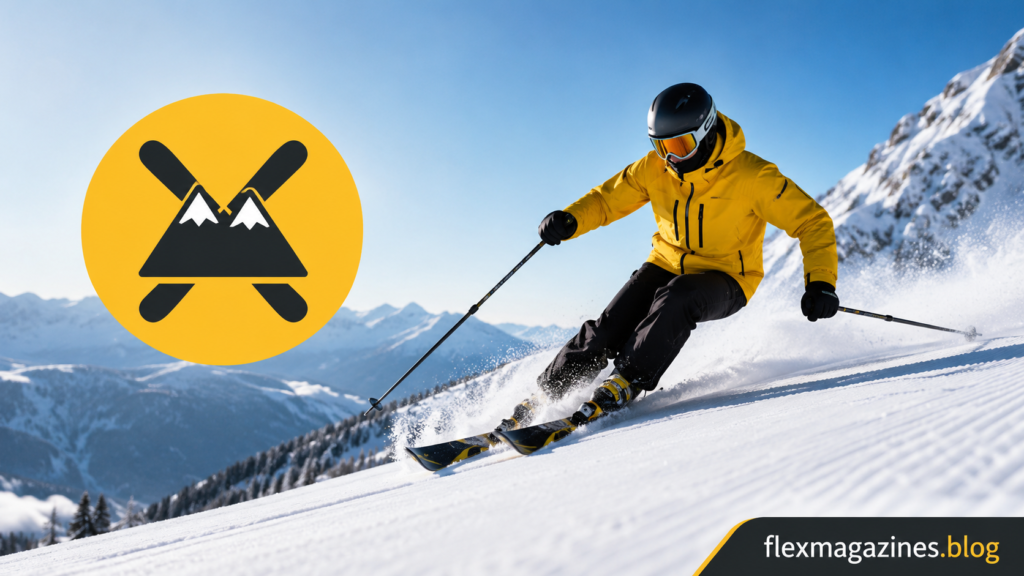

Skiing is the skill of moving across snow on skis while controlling your direction, speed, balance, and stopping. For a first time skier, the goal isnt to race down a mountain or immediately tackle steep terrain. Its to learn enough control that you can move confidently and safely on easy slopes.
If youre wondering how to ski for the first time, start with four basic skills
- Find a balanced athletic stance.
- Learn to glide slowly.
- Learn how to stop.
- Learn how to turn and control your speed.
Those skills form the foundation for everything that comes later.
The good news is that skiing doesnt require you to master everything in one day. A beginner lesson, correctly fitted rental equipment, gentle terrain, and repeated practice can make the learning process much less intimidating.
For most first timers, the smartest approach is to learn on beginner terrain under the guidance of a qualified instructor rather than trying to copy an experienced friend.
How to Prepare for Your First Day of Skiing
Your first ski day begins before you reach the mountain.
Choose a ski resort with beginner friendly terrain, rental equipment, and a ski school. Check the resorts lesson options and determine whether your package includes equipment rental or a lift ticket. REI recommends considering factors such as lesson quality, cost, distance, and resort amenities when choosing where to learn.
Its also worth arriving early. Rental lines, parking, lockers, changing clothes, and finding the ski school can take longer than expected. REI suggests arriving at least an hour before a lesson so beginners have enough time to get organized.
Before leaving home
- Check the weather forecast.
- Check road and mountain conditions.
- Confirm your lesson time.
- Confirm rental arrangements.
- Pack appropriate layers.
- Bring water.
- Make sure you know where the ski school meeting area is.
- Leave enough time for parking and equipment fitting.
Your first objective is not simply getting onto the snow. Its starting the day relaxed enough to concentrate on learning.
What Equipment Do You Need to Ski?
You dont need to purchase a complete ski setup for your first day. Renting is usually a practical way to test skiing before spending money on your own equipment. REI specifically recommends renting for beginners because rental shops can provide appropriately fitted equipment without the upfront cost of buying a complete setup.
Essential Ski Equipment
| Equipment | Purpose |
| Skis | Help you glide over snow and turn |
| Ski boots | Transfer movement from your feet to the skis |
| Bindings | Connect ski boots to skis and release when appropriate |
| Poles | Help with rhythm and balance as skills develop |
| Helmet | Helps protect your head |
| Goggles | Protect your eyes from snow, wind and bright conditions |
| Ski jacket | Provides weather protection |
| Ski pants | Keep legs warm and dry |
| Base layers | Help manage warmth and moisture |
| Ski socks | Provide comfort inside boots |
| Gloves or mittens | Protect hands from cold and snow |
A beginner should pay particular attention to boot fit. A boot that is too loose can reduce control, while one that is painfully tight can make learning miserable.
Avoid assuming that thicker socks are automatically warmer or better. REI recommends a single medium weight sock rather than bulky socks or multiple pairs, and advises against cotton because wet cotton can take a long time to dry.
How to Choose the Right Ski Terrain
Ski resorts commonly use trail ratings to communicate difficulty. In North America, youll typically encounter
- Green circle easiest
- Blue square intermediate or more difficult
- Black diamond advanced
- Double black diamond expert
As a beginner, start on green terrain. However, dont assume every green run is identical. Trail ratings can vary between resorts, so a green trail at one mountain may feel different from a green trail elsewhere.
Your instructor can help determine which runs are appropriate for your ability.
One of the most common beginner mistakes is moving onto harder terrain simply because you can physically reach it. Being able to get down a slope doesnt necessarily mean you have enough control to ski it safely.
Progress based on control, not bravery.
Should You Take Ski Lessons?
If youve never skied before, a lesson is one of the best investments you can make.
A qualified instructor can teach you the mechanics of skiing while correcting mistakes before they become habits. Group lessons are generally a more affordable way to learn, while private lessons provide more individualized attention.
A good beginner lesson typically introduces skills such as
- Equipment basics
- Standing on skis
- Gliding
- Stopping
- Snowplow or wedge position
- Wedge turns
- Linking turns
- Basic mountain awareness
- Lift procedures
If youre nervous, tell your instructor. If youre progressing quickly, tell them that too. Communication helps the instructor adjust the pace to your ability.
A lesson also provides something that online videos cannot real time feedback based on what your body and skis are actually doing.
How to Put on Ski Boots and Skis
Ski equipment can feel complicated the first time you use it.
Start somewhere flat and away from heavy traffic.
When putting on ski boots, open the buckles and power strap, open the tongue, slide your foot into the boot, and settle your heel into place. REIs beginner equipment guidance recommends practicing getting in and out of boots and clicking into bindings before heading onto more challenging terrain.
Once your boots are properly fitted, your rental technician or instructor should show you how the bindings work.
Dont guess at binding settings. Proper adjustment is a job for qualified ski technicians.
Before moving downhill, practice
- Standing still.
- Clicking in and out of your bindings.
- Walking or shuffling on skis.
- Turning around on flat snow.
- Moving a short distance.
- Stopping safely.
These simple exercises make the first actual run much easier.
How to Ski Learn the Basic Stance
Your stance affects almost every other skiing skill.
A useful beginner stance is athletic and balanced rather than stiff. Keep your feet roughly shoulder width apart, flex your ankles, and allow your shins to contact the fronts of your boots.
Keep your weight centered rather than sitting backward.
Your upper body should remain relaxed, while your arms stay comfortably in front of you. Look where you want to go rather than staring directly at your skis. REIs beginner skiing instruction emphasizes a balanced stance with flexed ankles, centered weight, arms forward, and eyes directed toward the intended path.
Think
Balanced → relaxed → knees and ankles flexed → eyes forward.
Avoid locking your knees or leaning dramatically backward.
Why Leaning Back Is a Problem
New skiers often become frightened when their skis accelerate and instinctively sit back.
That can make controlling the skis harder.
Instead, maintain an athletic stance and work on controlling speed through your turns and snowplow rather than trying to fight the slope by leaning backward.
How to Glide on Skis
Gliding is one of the first skills youll practice.
On a very gentle slope
- Point both skis generally downhill.
- Keep them parallel.
- Bend your ankles and knees slightly.
- Keep your weight centered.
- Let the skis move slowly.
- Keep looking ahead.
- Practice maintaining balance.
You dont need to travel far.
A few controlled feet of gliding is more valuable than an uncontrolled run down a longer slope.
Once you can glide comfortably, youll begin learning how to control that movement.
How to Stop on Skis
For beginners, one of the most important skills is learning a snowplow, also called a wedge.
The basic idea is to point the tips of the skis toward one another while keeping the tails farther apart. This creates a wedge shape.
As the skis form the wedge, their edges interact with the snow and help reduce speed.
Your instructor should teach you the precise movement and pressure appropriate for your equipment and terrain.
Practice the snowplow on a very gentle beginner slope
- Start moving slowly.
- Create the wedge.
- Keep your knees flexed.
- Maintain balance.
- Increase the wedge gradually to reduce speed.
- Practice stopping completely.
Do not wait until youre traveling too fast before trying to stop.
The goal is to always ski at a speed where you can stop or avoid an obstacle.
That principle is central to the National Ski Areas Associations Responsibility Code.
How to Turn on Skis
Once you can glide and stop, the next major skill is turning.
Beginner skiers commonly learn wedge turns.
Instead of simply pointing downhill, youll use the skis and your body position to change direction.
A basic progression is
- Begin on gentle terrain.
- Establish a controlled wedge.
- Glide a short distance.
- Initiate a gradual turn.
- Continue turning until youre traveling across the slope.
- Slow down or stop.
- Repeat in the opposite direction.
The important concept is that turns arent only about steering the skis with your upper body.
Your feet, ankles, knees, and hips work together.
As you become more comfortable, your instructor can help you reduce the wedge and develop more parallel skiing.
REIs beginner progression specifically includes stance, gliding, walking uphill, skiing in a wedge, wedge turns, and linking wedge turns.
How to Control Your Speed While Skiing
Many beginners think speed control means constantly braking.
A better long term strategy is learning to control your speed through turn shape and direction.
When your skis point more directly downhill, gravity accelerates you.
When you turn across the slope, your direction changes and your speed can decrease.
This is why linking turns is so important.
Instead of making one huge straight run, think about skiing from one controlled turn into another.
Your goal isnt
Fast → panic → brake.
It is
Glide → turn → control → turn → control.
This approach builds confidence and creates a foundation for more advanced skiing.
How to Link Your First Turns
Once you can make an individual turn, practice connecting turns together.
Imagine making gentle curves across the slope.
Your first linked turns may feel awkward. Thats normal.
Focus on
- Maintaining a balanced stance.
- Looking toward your intended direction.
- Keeping movements smooth.
- Avoiding sudden body rotations.
- Controlling speed before you feel uncomfortable.
- Finishing turns with control.
Dont worry about looking elegant.
Early skiing is about developing reliable movement patterns.
With practice, the wedge gradually becomes smaller, your skis become more parallel, and your turns become smoother.
How to Ride a Ski Lift for the First Time
Ski lifts can be one of the most intimidating parts of a first ski day.
Dont worry about knowing everything immediately. Ski areas have lift attendants specifically to help guests.
Before using a lift, your instructor should explain
- How to approach the loading area.
- Where to wait.
- How to position your skis.
- How to sit down on the chair.
- When to lower the safety bar if applicable.
- How to prepare for unloading.
- Where to move after getting off.
The National Ski Areas Association specifically advises skiers to know how to load, ride, and unload lifts safely and to ask a lift attendant for assistance when needed.
If youre nervous, tell the attendant.
There is no prize for pretending youre comfortable when youre not.
What Should You Wear Skiing?
Dressing correctly can make a huge difference to your first experience.
A useful system is
Base layer → insulating layer → outer layer
Your base layer helps manage moisture. The middle layer provides warmth, while the outer layer protects against snow, wind, and moisture.
Consider bringing
- Moisture managing base layers
- Warm mid layer
- Waterproof or weather resistant ski jacket
- Ski pants
- Ski socks
- Waterproof gloves or mittens
- Helmet
- Goggles
- Neck warmer
- Sunscreen
Avoid overdressing to the point that you become sweaty. Skiing involves physical activity, while lift rides can be cold.
Your clothing needs to work for both.
Ski Safety What Every Beginner Should Know
Skiing is enjoyable, but it carries real risk. Good technique and responsible behavior can reduce unnecessary hazards.
The National Ski Areas Associations current Responsibility Code emphasizes staying in control, yielding appropriately, stopping where youre visible, looking uphill before entering or starting downhill, preventing runaway equipment, following signs and closures, and using lifts safely.
Stay in Control
You should always be able to stop or avoid another skier, snowboarder, object, or changing condition.
If you cant, youre going too fast for your current ability or the terrain.
Yield to People Ahead of You
People below or ahead of you generally have the right of way.
You are responsible for avoiding them.
Stop in a Visible Location
Dont stop in the middle of a trail or behind a blind spot where other skiers cannot easily see you.
Move to a safe location where you dont obstruct traffic.
Look Uphill Before Starting
Before merging onto a trail or beginning downhill, check uphill for approaching skiers.
This is particularly important near trail intersections and crowded areas.
Obey Signs and Closures
Dont enter closed trails or restricted areas simply because they look attractive.
Follow resort signage, warnings, boundaries, and instructions.
Dont Ski Under the Influence
Alcohol and drugs can impair judgment, reaction time, balance, and decision making. The NSAA Responsibility Code explicitly advises against using lifts or terrain while impaired.
Take Breaks
Fatigue can affect technique and decision making.
The NSAA recommends knowing your limits and stopping when youre tired.
How to Avoid Collisions
Collision prevention is particularly important for beginners.
The NSAAs collision safety guidance summarizes the approach as Be Ready, Stay Alert, and Plan Ahead. Skiers should be prepared to slow down or avoid obstacles, remain aware of others, and be especially cautious around blind spots, merges, and unfamiliar terrain.
Before every run, consider
- How crowded is the slope?
- Is the terrain appropriate for me?
- Can I stop comfortably?
- Are there blind corners?
- Where are other skiers?
- What happens if I lose balance?
Dont follow another skier blindly.
A person ahead of you may be much more experienced and capable of handling speed that isnt appropriate for you.
Common Beginner Skiing Mistakes
Trying to Ski Too Fast
Speed can feel exciting, but speed without control is dangerous.
Build confidence gradually.
Leaning Back
Fear can cause beginners to sit backward.
Work on maintaining a balanced athletic stance instead.
Looking at Your Skis
Your skis are important, but your eyes should generally look toward where youre going.
Looking ahead helps you anticipate terrain and other people.
Choosing Difficult Terrain Too Soon
Being able to complete one green run doesnt mean youre ready for a black diamond.
Progress gradually.
Using Poles Too Much
Beginners sometimes think poles should be used to push themselves around constantly.
Learn your balance and basic ski movements first. Your instructor can explain when and how poles should become part of your technique.
Skipping Lessons
Watching a few videos isnt the same as receiving feedback.
A lesson can help you identify problems you may not notice yourself.
Skiing Until Exhaustion
Your technique can deteriorate when youre tired.
Stopping early is better than turning the final run into your worst run.
How Long Does It Take to Learn to Ski?
There is no universal number of days required to learn skiing.
Your progress depends on factors such as
- Previous athletic experience
- Balance and coordination
- Fitness
- Quality of instruction
- Frequency of practice
- Terrain
- Weather and snow conditions
- Confidence
- How much time you spend practicing
Many beginners can learn basic gliding, stopping, and turning during their first lessons, but becoming genuinely comfortable on different terrain takes longer.
Think of skiing as a progression rather than a one day achievement.
Your first goal is control.
Your next goal is consistency.
Then comes efficiency, confidence, and adapting your technique to different terrain and snow conditions.
What to Practice After Your First Ski Lesson
After a lesson, dont immediately chase harder terrain.
Instead, repeat the skills your instructor taught.
A productive practice session might include
Practice 1 Balanced Stance
Spend a few easy runs focusing only on your stance.
Practice 2 Controlled Stops
Practice stopping before you actually need to stop.
Practice 3 Consistent Turns
Make repeated turns with similar shape and speed.
Practice 4 Linking Turns
Connect one turn smoothly into the next.
Practice 5 Terrain Awareness
Practice identifying where youll turn, slow down, stop, or merge before you reach that point.
Ask your instructor what you should work on next. A good lesson should leave you with a clear idea of which terrain is appropriate and which skills deserve more practice.
Skiing for Adults vs. Skiing for Kids
Adults sometimes assume that learning to ski is only easy when youre young.
Thats not true.
Adults can learn to ski, although fear and self consciousness can sometimes make the process feel more difficult.
Kids may naturally experiment with movement and recover from mistakes quickly, while adults often bring better communication and the ability to understand technique.
For children, instruction should remain age appropriate and fun. Equipment must also be correctly fitted. REI notes that ski areas commonly offer programs for young children and emphasizes proper equipment fitting and appropriate instruction.
For either age group, the fundamentals remain similar
Balance → glide → stop → turn → link turns → progress.
Skiing vs. Snowboarding for Beginners
If youre deciding between skiing and snowboarding, there is no universal winner.
Skiing gives each leg an independent ski and allows beginners to learn a basic wedge for speed control. Snowboarding uses both feet on one board and has a different learning curve.
Choose based on what interests you.
If youre specifically searching how to ski, start with skiing rather than trying to learn both sports at the same time.
Once youve developed basic skills, you can always experiment with snowboarding later.
How Much Does It Cost to Learn to Ski?
The cost of learning to ski varies significantly depending on the mountain, location, season, lesson type, rental package, transportation, and lodging.
A first time skier may need to budget for
- Lift ticket
- Lesson
- Ski rental
- Helmet rental
- Clothing
- Transportation
- Food
- Parking or resort fees
- Accommodation, if necessary
Dont assume buying equipment will automatically save money. For a first day, renting is often more practical because you can determine whether you enjoy skiing before investing in your own skis and boots.
Look for beginner packages that combine lessons, rentals, and lift access. These can simplify planning and may be less expensive than purchasing every component separately.
What to Do If You Fall
Falling is part of learning.
The important thing is knowing how to respond safely.
If you fall
- Stay calm.
- Check yourself for pain or injury.
- Move to a safe location when it is appropriate.
- Keep your equipment from becoming a hazard.
- Ask for assistance if you need it.
Dont immediately stand up in a crowded traffic lane.
If you suspect an injury, dont try to push through it just because you want to finish the run.
If a collision occurs, the NSAA Responsibility Code advises involved parties to share contact information with one another and a ski area employee.
A Simple First Day Skiing Plan
If youre completely new, your first day can follow a simple progression
Before skiing
Arrive early, collect your rental equipment, dress appropriately, and meet your instructor.
First practice
Learn how your boots, bindings, and skis work.
Next
Practice standing, walking, gliding, and stopping on gentle terrain.
Then
Learn wedge turns.
After that
Practice linking turns.
Later
If your instructor believes youre ready, use an appropriate beginner lift and continue on easy terrain.
End of day
Stop before youre exhausted, review what you learned, and identify what you should practice next.
Theres no need to complete an entire mountain on your first visit.
A successful first day is one where you learn the fundamentals and finish wanting to ski again.
Beginner Skiing Checklist
Before heading onto the mountain, make sure you understand
- Your equipment fits correctly.
- You know how to click into and release your bindings.
- You can glide slowly.
- You can stop.
- You can make basic turns.
- You know your appropriate trail rating.
- You understand lift procedures.
- You know the basic slope safety rules.
- You have appropriate clothing.
- You know when to take a break.
If any of these arent clear, ask an instructor or ski area employee.
Conclusion The Best Way to Learn How to Ski
Learning how to ski doesnt mean becoming an expert in one weekend.Your first objective should be simple learn to control your skis.Start with a beginner friendly resort, rent properly fitted equipment, dress for the conditions, and take a lesson. Learn your stance, practice gliding, master the snowplow, and gradually develop your turns. Stay on terrain appropriate for your ability and follow the resorts safety rules.Most importantly, dont measure progress by how fast you can go or how difficult a trail you can survive.Measure it by how comfortably you can control your speed, direction, and decisions.Once those fundamentals become natural, skiing becomes much more enjoyable and the mountain opens up one skill at a time.
You may also read more blogs
FAQs
Is skiing hard to learn for a complete beginner?
Skiing can feel awkward at first because youre learning to balance while sliding on snow. However, beginners can break the process into manageable skills stance, gliding, stopping, turning, and linking turns. Professional instruction and gentle terrain can make the learning process considerably easier.
Can I teach myself how to ski?
You can learn some basic concepts independently, but a beginner lesson is strongly recommended. An instructor can provide immediate feedback and teach you how to use equipment and terrain safely. No online article can replace hands on instruction and experience.
What should I learn first when skiing?
Start with balance and a proper stance. Then learn to glide slowly, stop using a snowplow or wedge, and make controlled turns. You should be able to stop and control your direction before progressing to more difficult terrain.
How do you stop when skiing?
Beginners commonly learn to stop using a snowplow or wedge. The skis form a wedge shape that helps create resistance against the snow and reduce speed. Practice this first on gentle terrain with an instructor.
How do you turn on skis?
Beginners commonly start with wedge turns. Youll use your lower body and ski edges to change direction while maintaining a controlled stance. As you improve, you can gradually progress toward more parallel turns.
What should I wear skiing for the first time?
Wear moisture managing base layers, a warm middle layer, weather resistant outerwear, ski socks, gloves or mittens, a helmet, and goggles. Avoid bulky cotton socks inside ski boots.
Do I need ski poles as a beginner?
Poles are part of standard alpine skiing equipment, but the exact timing and technique for using them can vary with the learner. Beginners should follow their instructors guidance rather than relying on poles for balance or speed control.
How many ski lessons do I need?
There isnt a fixed number. One lesson can introduce the fundamentals, but multiple lessons and regular practice can help build consistency and confidence. Your instructor can recommend the appropriate next step based on your progress.