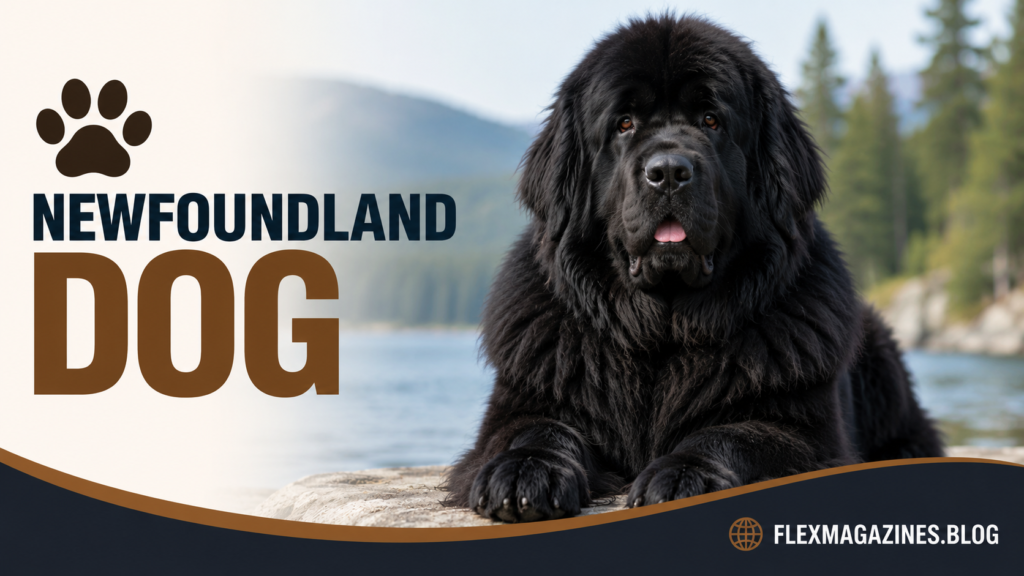

The Newfoundland dog is one of the most recognizable giant dog breeds in the world. Known for its enormous size, thick double coat, swimming ability, strength, and famously gentle temperament, the Newfoundland combines the presence of a working dog with the personality of a devoted family companion.
Often called a Newfie, this breed was developed in Newfoundland and Labrador, Canada, where dogs were used by fishermen for demanding work around water and on land. Their history includes hauling, retrieving, swimming, and water rescue work. Today, Newfoundlands are primarily companion dogs, but their intelligence, strength, love of water, and willingness to work remain important parts of the breed.
The breed can be an excellent choice for families that have enough space, time, and resources for a giant dog. However, owning a Newfoundland is not simply like owning a larger version of an ordinary dog. Their size affects everything from food and grooming to transportation, veterinary care, exercise, and household space.
According to the American Kennel Club (AKC), adult male Newfoundlands average about 28 inches at the shoulder and weigh around 130 150 pounds, while females average about 26 inches and typically weigh 100 120 pounds. The AKC lists an average life expectancy of approximately 9 10 years.
What Is a Newfoundland Dog?
The Newfoundland is a large working dog originating from the Canadian island of Newfoundland.
The breed belongs to the AKC Working Group and was developed for practical work alongside fishermen and other workers. Its physical structure reflects that history Newfoundlands have substantial bone, powerful muscles, a broad body, a heavy coat, and strong swimming ability.
Despite their intimidating size, Newfoundlands are particularly famous for their calm and sweet disposition.
The AKC describes the breed using qualities including devoted, sweet, and patient. The official breed standard emphasizes temperament as an especially important characteristic.
That combination of strength and gentleness is what makes the Newfoundland so distinctive.
Newfoundland Dog Size and Appearance
The first thing most people notice about a Newfoundland is its size.
| Characteristic | Newfoundland |
| Breed group | Working Group |
| Average male height | About 28 inches |
| Average female height | About 26 inches |
| Typical male weight | About 130 150 pounds |
| Typical female weight | About 100 120 pounds |
| Life expectancy | About 9 10 years |
| Coat | Heavy double coat |
| Activity | Moderate, with regular exercise needed |
| Known for | Water work, strength, swimming, gentle temperament |
These figures are breed averages rather than guarantees. Individual dogs can fall outside typical ranges.
Newfoundlands are heavily built rather than simply tall. Their large head, deep body, powerful limbs, broad chest, and substantial bone give them the distinctive appearance of a true giant working dog.
Newfoundland Coat Colors
Newfoundlands are commonly associated with a solid black coat, but the breed has several recognized colors.
The AKC lists
- Black
- Brown
- Gray
- White and black
The famous black and white Newfoundland is often associated with the Landseer pattern, named after the artist Sir Edwin Landseer, whose paintings helped popularize the look.
Newfoundland Dog Temperament
Temperament is one of the breeds biggest attractions.
A well bred and properly socialized Newfoundland is generally known for being
- Gentle
- Patient
- Affectionate
- Devoted
- Intelligent
- Social
- Generally calm
- Willing to please
- Protective without necessarily being aggressive
The breeds official standard places substantial importance on its sweet disposition.
However, gentle giant does not mean every Newfoundland has exactly the same personality.
Individual dogs differ according to genetics, early socialization, training, environment, age, and life experiences.
A Newfoundland puppy can be energetic, curious, messy, and surprisingly strong. The calm adult dog people picture when they think of the breed doesnt eliminate the need for appropriate puppy training.
Are Newfoundland Dogs Good Family Dogs?
For the right household, a Newfoundland can be an exceptional family companion.
The breed has a long standing reputation for being patient with children, and the AKC describes Newfoundlands as affectionate family dogs with a particular affinity for children.
However, families should understand an important distinction
A gentle dog can still accidentally hurt a small child simply because of its size.
A giant Newfoundland moving quickly through a room can knock over a toddler without intending to. A playful dog can also unintentionally cause injury with its body or tail.
Children should therefore always be supervised around dogs, especially around a dog this large.
Children should also be taught to
- Respect the dogs sleeping space
- Avoid pulling ears or tails
- Leave the dog alone while eating
- Avoid climbing on the dog
- Recognize signs that the dog wants space
- Never tease or corner the dog
A Newfoundland should be treated as a living animal with boundaries rather than as a giant stuffed toy.
Are Newfoundland Dogs Good With Other Pets?
Newfoundlands can live successfully with other dogs and household animals when properly introduced and socialized.
Their generally friendly disposition can make them adaptable companions, but compatibility depends on the individual animals involved.
When introducing a Newfoundland to another pet
- Start gradually.
- Use controlled interactions.
- Give each animal its own safe space.
- Avoid forcing interaction.
- Supervise early encounters.
- Watch for fear, stress, guarding, or aggressive behavior.
The goal isnt necessarily to make every animal best friends. Peaceful coexistence can be an excellent outcome.
The History of the Newfoundland Dog
The Newfoundlands history is closely connected to working life around Canadas Atlantic coast.
Fishermen relied on these dogs for demanding tasks, including helping with fishing nets and hauling loads. Their strength and endurance made them useful on land, while their natural swimming ability made them especially valuable around water.
The breed developed physical traits that suited this environment.
Newfoundlands have
- Strong bodies
- Broad chests
- Powerful swimming strokes
- A thick, water resistant double coat
- Partially webbed feet
- Significant lung capacity
These characteristics helped them work in cold water and challenging conditions.
Newfoundland Water Rescue History
The breeds reputation for water rescue is not simply a modern marketing story.
Newfoundlands were historically valued for their ability to swim and assist people in distress.
Their size and strength made them capable of pulling substantial loads, while their swimming ability allowed them to work in water.
Today, some Newfoundlands continue to participate in water rescue training and related activities, although the breeds primary role for most owners is companionship.
Why Are Newfoundland Dogs Such Good Swimmers?
The Newfoundlands body is unusually well suited to water.
Its physical characteristics include
- Partially webbed feet
- Powerful limbs
- A broad chest
- Strong musculature
- A thick, water resistant double coat
- Large overall body capacity
These traits developed alongside the breeds historical working role around water.
A Newfoundland may naturally show an interest in swimming, but owners shouldnt assume every individual dog is automatically safe in every body of water.
Even strong swimming dogs can become exhausted, disoriented, trapped, or overwhelmed by currents.
Water access should always be managed responsibly.
Newfoundland Dog Exercise Needs
A common misconception is that giant dogs dont need much exercise.
Newfoundlands are not typically high energy athletes in the same way as some herding breeds, but they still need regular physical activity.
The AKC recommends at least 30 minutes of moderate exercise daily for the breed, while also noting that Newfoundlands enjoy activities such as swimming, long walks, hiking, carting, drafting, obedience, tracking, and other canine activities.
Exercise can include
- Daily walks
- Gentle hikes
- Swimming
- Controlled play
- Training exercises
- Obedience work
- Drafting or carting activities
- Mental enrichment
Exercise for Newfoundland Puppies
Puppies require special consideration.
Their skeletons are still developing, and their huge bodies place substantial mechanical demands on growing joints.
Instead of pushing a young Newfoundland through intense endurance exercise, focus on age appropriate movement, socialization, basic training, and controlled play.
Ask your veterinarian about appropriate exercise for your puppys age and development.
Newfoundland Grooming Requirements
If you love the Newfoundlands fluffy appearance but dislike dog hair, this may not be the breed for you.
The Newfoundland has a heavy double coat and sheds significantly.
The AKC recommends thorough brushing at least weekly. During shedding periods, grooming may need to become a daily task.
Regular grooming helps
- Remove dead hair
- Reduce mats
- Keep the coat manageable
- Inspect the skin
- Remove debris
- Improve overall coat condition
How Often Should You Brush a Newfoundland?
A practical baseline is at least once a week, with more frequent brushing during heavy shedding periods.
Dogs with coats that mat easily may need even more attention.
Useful grooming equipment can include
- Slicker brush
- Long toothed comb
- Undercoat grooming tools
- Dog safe shampoo
- Towels
- Nail clippers or grinder
Because a Newfoundland is so large, grooming sessions can take significantly longer than they would with a small dog.
Newfoundland Shedding
Newfoundlands shed heavily.
Owners should expect hair on
- Furniture
- Floors
- Clothing
- Bedding
- Vehicles
- Dog beds
A good vacuum cleaner and consistent grooming routine are practical necessities for many Newfoundland households.
Do Newfoundland Dogs Drool?
Yes.
Drooling is one of the practical realities of living with many Newfoundlands.
The amount can vary from dog to dog, but the breed is known for significant drooling. The AKC specifically highlights drooling as one of the breeds characteristics.
This means owners may want towels available around
- Water bowls
- Feeding areas
- Doors
- Favorite resting places
- Vehicles
If youre highly sensitive to slobber, this is an important factor to consider before choosing the breed.
Training a Newfoundland Dog
Newfoundlands are intelligent and generally eager to please.
That combination can make training rewarding.
The AKC recommends early socialization and puppy training classes and notes that Newfoundlands respond well to gentle guidance. Harsh correction methods are not appropriate for the breed.
Start Training Early
A giant dog that jumps on people at 130 pounds is a very different situation from a small dog doing the same thing.
Teaching manners early is therefore particularly important.
Useful skills include
- Sit
- Down
- Stay
- Come
- Leave it
- Loose leash walking
- Place
- Wait
- Drop it
- Polite greetings
Socialization
Early socialization helps a puppy learn how to behave around
- People
- Dogs
- Different surfaces
- Sounds
- Cars
- Veterinary clinics
- Grooming
- New environments
Socialization isnt about forcing a puppy to meet everyone.
Instead, it should involve positive, controlled exposure that helps the dog develop confidence.
Newfoundland Dog Nutrition
Feeding a giant breed requires careful attention.
A Newfoundland needs a nutritionally complete diet appropriate for its life stage, but simply giving a puppy as much food as possible isnt a good strategy for controlled growth.
The AKC recommends high quality dog food appropriate for the dogs age and advises owners to monitor calories and weight.
Important considerations include
- Puppy growth
- Adult body condition
- Activity level
- Weight management
- Treat calories
- Food quality
- Veterinary recommendations
Avoid Overfeeding
A Newfoundlands size can make it difficult to notice gradual weight gain.
Excess body weight can put additional stress on joints and make movement harder.
Your veterinarian can help assess body condition and determine whether your dogs diet needs adjustment.
Newfoundland Dogs and Bloat
Newfoundlands can be susceptible to bloat, also known as gastric dilatation volvulus (GDV), a potentially life threatening condition in dogs.
The exact causes are complex and not fully understood.
The AKC notes that multiple smaller meals and avoiding vigorous exercise around mealtimes may help reduce risk, while emphasizing that bloat remains a serious condition.
Possible warning signs can include
- Distended abdomen
- Restlessness
- Repeated attempts to vomit without producing much
- Excessive discomfort
- Weakness or collapse
If you suspect bloat, seek emergency veterinary care immediately.
Dont wait to see whether the symptoms disappear.
Newfoundland Dog Health Concerns
Like other giant breeds, Newfoundlands can be affected by several health conditions.
The AKC identifies health screening for breeding dogs involving
- Hips
- Elbows
- Cardiac health
- Newfoundland specific cystinuria DNA testing
Hip and Elbow Dysplasia
These orthopedic conditions involve abnormal development of joints.
They can contribute to
- Pain
- Stiffness
- Reduced mobility
- Difficulty rising
- Exercise intolerance
Responsible breeding programs use appropriate health testing to reduce inherited risk.
Cardiac Health
Heart disease can occur in dogs, including Newfoundlands.
Regular veterinary examinations can help identify potential concerns earlier.
Cystinuria
Cystinuria is a genetic condition associated with cystine stone formation in the urinary system.
Because a Newfoundland specific DNA test is available, responsible breeders can use genetic screening as part of health focused breeding programs.
Newfoundland Dog Lifespan
The AKC lists a typical Newfoundland life expectancy of 9 10 years.
Individual dogs may live shorter or longer lives depending on genetics, overall health, nutrition, weight, preventive care, and other factors.
Because giant breeds have different health considerations from small dogs, owners should prioritize preventive veterinary care throughout the dogs life.
Living With a Newfoundland Dog
Before bringing a Newfoundland home, think beyond the dogs personality.
You need to plan for its physical size.
Your Home
A Newfoundland doesnt necessarily require a huge mansion, but it does need enough space to move safely and comfortably.
Think about
- Doorways
- Hallways
- Stairs
- Furniture
- Sleeping areas
- Yard access
- Flooring
- Storage
- Grooming space
Your Vehicle
Transportation can be challenging.
A Newfoundland takes up considerable space, especially when fully grown.
Before adopting, think about how youll handle
- Veterinary appointments
- Grooming visits
- Road trips
- Emergency transportation
- Boarding
- Moving
Your Furniture
Some Newfoundlands love furniture.
A 10 pound puppy climbing onto the couch is one thing.
A 140 pound adult doing the same thing is another.
Establish household rules early and consistently.
Newfoundland Dog Costs
The cost of owning a Newfoundland extends well beyond the purchase or adoption fee.
Potential expenses include
- Food
- Veterinary examinations
- Vaccinations
- Preventive medications
- Grooming supplies
- Professional grooming
- Training
- Bedding
- Crates
- Leashes and collars
- Toys
- Cleaning supplies
- Emergency veterinary care
Because Newfoundlands are giant dogs, some expenses can be higher than they are for smaller breeds.
Food consumption can be significant, grooming takes more time, and veterinary procedures may involve larger medication doses or specialized handling.
A realistic ownership budget should therefore account for both routine and unexpected expenses.
Newfoundland Dog vs. Other Giant Breeds
If youre considering a Newfoundland, you may also be looking at other giant breeds.
| Breed | Common Characteristic | Consideration |
| Newfoundland | Gentle, water loving working dog | Heavy coat and significant grooming |
| Great Dane | Very tall companion | Large body with comparatively shorter coat |
| Saint Bernard | Giant working companion | Heavy size and substantial care needs |
| Bernese Mountain Dog | Affectionate working breed | Large coat and regular grooming |
| Mastiff | Massive guardian type breed | Size and strength require responsible handling |
Breed comparisons should never be based only on appearance.
Temperament, exercise needs, grooming, health considerations, training requirements, and your lifestyle all matter.
Is a Newfoundland Dog Right for You?
A Newfoundland may be an excellent match if you
- Want a large family companion
- Appreciate gentle, affectionate dogs
- Have time for daily interaction
- Dont mind shedding
- Can manage regular grooming
- Have enough space for a giant dog
- Are prepared for significant food and veterinary expenses
- Enjoy outdoor activities
- Like swimming or water related activities
- Are willing to train consistently
It may be a poor match if you
- Want a low maintenance dog
- Dislike shedding
- Cannot tolerate drool
- Have limited space
- Dont have time for grooming
- Want a very small or highly portable dog
- Cannot financially manage giant breed ownership
The right breed isnt simply the breed you find attractive. Its the breed whose needs match your lifestyle.
Newfoundland Dog Pros and Cons
Advantages
- Exceptionally gentle reputation
- Affectionate family companion
- Intelligent and trainable
- Strong working heritage
- Excellent swimming ability
- Often good with children when properly socialized
- Can enjoy many outdoor activities
- Distinctive and impressive appearance
Challenges
- Very large
- Heavy shedding
- Significant grooming requirements
- Can drool considerably
- Food costs can be substantial
- Veterinary care can be expensive
- Requires appropriate exercise
- Giant size creates transportation challenges
- Health risks need responsible management
- Shorter lifespan than many smaller breeds
How to Find a Responsible Newfoundland Breeder
If youre purchasing a Newfoundland puppy rather than adopting, breeder selection deserves careful attention.
A responsible breeder should be willing to discuss health testing, temperament, socialization, pedigree, veterinary care, and the puppys living environment.
Ask about health testing relevant to the breed, including hip, elbow, cardiac, and cystinuria screening. These are among the tests recommended by the AKCs national breed club guidance.
Be cautious when a seller
- Refuses to provide health information
- Wont let you ask questions
- Wants to rush the sale
- Has many breeds and constant litters
- Wont explain veterinary care
- Avoids discussing the parents
- Offers unusually little information about socialization
A good breeder should care about where their puppies go and whether the buyer is prepared for the breed.
Newfoundland Adoption and Rescue
Adoption can also be an excellent option.
Adult Newfoundlands in rescue may already have established personalities, making it easier to understand their temperament before adoption.
Rescue organizations can often provide information about
- Age
- Health
- Behavior
- Training
- Compatibility with children
- Compatibility with other pets
- Previous living arrangements
If youre open to adoption, consider breed specific rescue organizations as well as general animal shelters.
Conclusion
The Newfoundland dog is much more than a giant, fluffy companion.Its history as a working dog around Newfoundland and Labrador shaped a breed with remarkable strength, swimming ability, endurance, intelligence, and a natural willingness to work. At the same time, its famously gentle temperament has made the Newfoundland a beloved family companion.But the qualities that make the breed impressive also create responsibilities.A Newfoundland needs appropriate nutrition, consistent training, regular exercise, frequent grooming, preventive veterinary care, and enough space to live comfortably. Owners must also be prepared for substantial shedding, drooling, giant breed expenses, and the practical challenges of transporting and caring for a very large dog.For families prepared for those realities, a Newfoundland can be an extraordinarily loyal and affectionate companion.The best way to approach the breed is to look beyond its adorable puppy face and impressive adult appearance. Understand its needs first, choose carefully, prioritize responsible breeding or adoption, and commit to providing the care required throughout its life.That is what turns a Newfoundland from simply a beautiful giant dog into a healthy, well mannered and genuinely happy family member.
You may also read more blogs
FAQs
Is a Newfoundland dog a good family dog?
Yes, a well socialized Newfoundland can be an excellent family companion. The breed is widely known for its gentle, patient and affectionate temperament. However, its enormous size means children should always be supervised around the dog.
How big does a Newfoundland dog get?
Adult males average around 28 inches at the shoulder and typically weigh about 130 150 pounds. Females average around 26 inches and commonly weigh about 100 120 pounds. Individual dogs can vary.
Do Newfoundland dogs shed a lot?
Yes. Newfoundlands have heavy coats and can shed significantly. The AKC recommends thorough weekly brushing, with more frequent grooming during heavy shedding periods.
Are Newfoundland dogs easy to train?
They can be relatively responsive to training because they are intelligent and generally eager to please. Early socialization and puppy training are recommended, and the breed responds better to gentle, consistent guidance than harsh correction.
Do Newfoundland dogs like to swim?
Many Newfoundlands have a strong natural affinity for water, and the breed was historically developed for work around water. Their physical structure including partially webbed feet and a water resistant coat supports their swimming ability.
Is a Newfoundland dog a good family dog?
The AKC recommends at least about 30 minutes of moderate exercise each day. Newfoundlands can enjoy walks, hikes, swimming, training, and other activities, but exercise should be appropriate for the dogs age and health.
How long do Newfoundland dogs live?
The AKC lists an average life expectancy of approximately 9 10 years. Individual lifespan varies based on genetics, health, nutrition, preventive care and other factors.
Are Newfoundland dogs expensive to own?
They can be. Their giant size can increase food, grooming, equipment and veterinary expenses. Owners should budget for routine care as well as unexpected medical costs.