
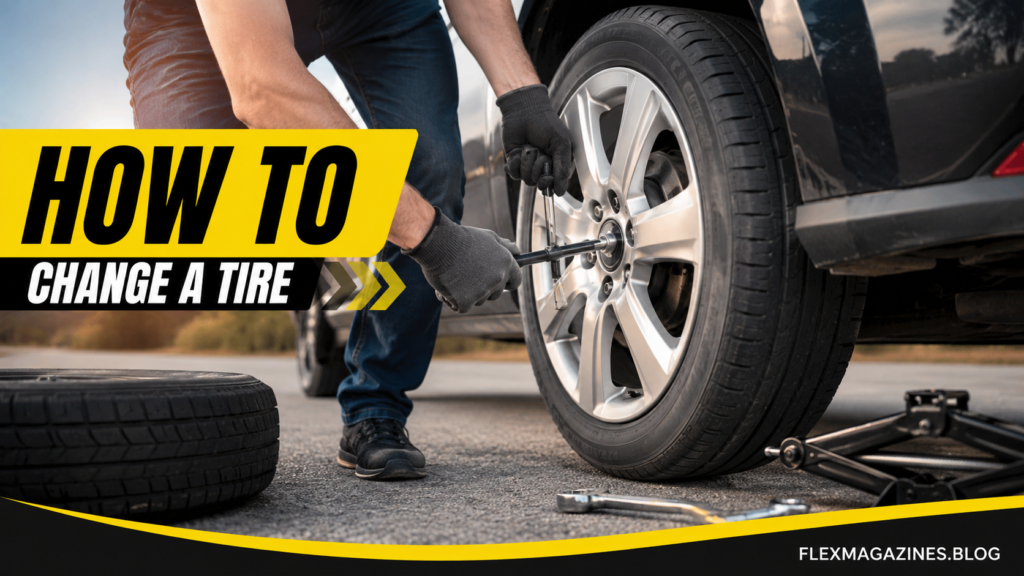

A flat tire can turn an ordinary drive into a stressful situation, but knowing how to change a tire can help you get back on the road when conditions are safe and your vehicle has a usable spare.
The basic process is straightforward pull over safely, secure the vehicle, loosen the lug nuts, raise the vehicle at the correct jack point, remove the flat tire, install the spare, lower the vehicle, and tighten the lug nuts properly.
However, changing a tire isnt simply about knowing where to put a jack. Your location, traffic, weather, vehicle design, spare tire condition, and the instructions in your owners manual all matter.
The National Highway Traffic Safety Administration (NHTSA) emphasizes proper tire maintenance because tire problems can contribute to crashes. NHTSA reported 511 traffic fatalities in 2024 involving tire related crashes.
So, before learning the mechanical steps, remember the most important rule
Never put yourself in danger just to change a tire yourself.
If youre stopped in an unsafe location, have no usable spare, cannot safely position the jack, or simply dont feel comfortable doing the job, call roadside assistance.
What Is a Flat Tire?
A flat tire is a tire that has lost enough air pressure that it can no longer safely support the vehicle or operate normally.
A tire may lose air because of
- A nail, screw, or other road debris
- A puncture
- A damaged valve stem
- A damaged wheel
- A tire sidewall failure
- A severe impact with a pothole or curb
- Normal air loss over time
- Tire deterioration or damage
A flat doesnt always happen suddenly. You might notice warning signs such as unusual vibration, pulling to one side, a flapping sound, or a tire pressure warning light.
If you suspect a tire is losing pressure while driving, dont continue driving normally just to reach your destination. Driving on a severely underinflated or flat tire can damage the tire and potentially other vehicle components.
What You Need to Change a Tire
Before attempting to change a flat, gather the equipment supplied with your vehicle.
At minimum, you generally need
| Tool | Purpose |
| Spare tire | Replaces the flat tire temporarily or permanently, depending on the type |
| Vehicle jack | Raises the vehicle |
| Lug wrench | Loosens and tightens lug nuts |
| Owners manual | Shows vehicle specific jack points and procedures |
| Tire pressure gauge | Checks spare tire pressure |
Helpful extras include
- Work gloves
- Flashlight or headlamp
- Reflective vest
- Emergency warning triangles
- Wheel chocks
- Small board for stabilizing a jack on suitable soft ground
- Emergency roadside kit
AAA recommends having a jack, lug nut wrench, and properly inflated spare available, while gloves, a tire gauge, and flashlight can make the job easier.
Check Your Spare Before You Need It
A spare tire is not useful if its flat, damaged, or missing.
Check your spare periodically, particularly before a long road trip. NHTSA advises checking tire pressure, including the spare, and following the vehicle manufacturers recommended pressure.
Also learn where your spare, jack, and lug wrench are stored.
Depending on the vehicle, the spare could be
- Under the trunk floor
- Beneath the vehicle
- Mounted on the rear
- Inside a cargo compartment
- Stored in another designated location
Some newer vehicles dont include a conventional spare at all. They may use a tire repair kit, sealant, compressor, or another system instead.
Before You Start Make Sure Its Safe
This is the most important part of learning how to change a tire.
Do not immediately get out and start working on the wheel after a flat.
First, find the safest possible location.
Pull Completely Away From Traffic
If the tire begins losing pressure while youre driving, stay calm and reduce your speed gradually.
Avoid sudden steering or braking.
If possible, move into
- A parking lot
- A rest area
- A driveway or other permitted safe area
- A wide shoulder well away from moving traffic
Solid, level ground is preferable.
AAA specifically recommends getting as far away from traffic as possible and choosing solid, flat ground when circumstances allow.
Turn On Your Hazard Lights
Activate your hazard warning lights so other drivers can see that your vehicle is stopped.
Put the transmission in Park if you have an automatic transmission. For a manual transmission, follow your owners manual and use the appropriate gear.
Apply the parking brake.
Turn the engine off.
Protect Your Passengers
Passengers should stay away from moving traffic and from the immediate working area.
Children and pets should not be near the vehicle while it is being lifted.
If you are on a highway shoulder and the location is unsafe, dont attempt a tire change simply because you have the tools.
Call for roadside assistance instead.
How to Change a Tire Step by Step
Once you have confirmed that the location is genuinely safe, you can begin.
Step 1 Read Your Owners Manual
Before touching the jack, check your owners manual.
This is important because vehicles differ in
- Jack point locations
- Spare tire storage
- Lug nut design
- Wheel lock systems
- Jack operation
- Spare tire requirements
- Maximum spare tire speed
- Torque specifications
The owners manual is the best source for your specific vehicle.
Michelin likewise recommends consulting the manual to identify the proper jack points and vehicle specific procedures.
Step 2 Take Out the Spare and Tools
Remove
- Spare tire
- Jack
- Lug wrench
- Any jack handle or extension
- Wheel lock key, if applicable
Put the spare somewhere stable where it wont roll into traffic.
If your vehicle has a wheel cover or hubcap, you may need to remove it to access the lug nuts.
Step 3 Loosen the Lug Nuts
Do this before lifting the vehicle.
Place the lug wrench over the first lug nut and turn it counterclockwise.
You may need significant force because lug nuts can be tight.
The objective at this stage is only to break them loose.
Do not completely remove them yet.
Why loosen them while the tire is still touching the ground?
The vehicles weight helps keep the wheel from turning while you apply force to the lug wrench.
AAA and Michelin both recommend loosening the lug nuts before raising the vehicle.
Step 4 Find the Correct Jack Point
This is one of the most important mechanical steps.
Look in the owners manual for the approved jack point.
Do not simply put the jack underneath any convenient piece of metal.
A jack placed incorrectly can damage the vehicle or create an unstable lifting situation.
Never rely on body panels, plastic trim, or other components that arent designed to support the vehicle.
Step 5 Position the Jack
Place the jack securely at the manufacturers designated lifting point.
Make sure the jack is positioned correctly and is stable.
If the ground is soft or unstable, stop and reassess the situation.
A jack can shift or sink when the surface doesnt provide adequate support.
A portable board may help stabilize a jack in certain situations, but it must be appropriate and used according to the vehicle and jack manufacturers instructions. Michelin lists a sturdy board as a potentially useful item when dealing with soft ground.
Step 6 Raise the Vehicle
Operate the jack slowly.
Raise the vehicle only as much as necessary for the flat tire to clear the ground.
Do not crawl underneath a vehicle supported only by a standard emergency jack.
The jacks purpose here is to lift the vehicle enough to change the wheel—not to create a working platform underneath the car.
If anything looks unstable, stop lowering or raising the vehicle and reassess.
Step 7 Remove the Lug Nuts
Once the flat tire is slightly off the ground, finish removing the loosened lug nuts.
Keep them together so none are lost.
If your vehicle uses special wheel locks, youll need the appropriate key.
Step 8 Remove the Flat Tire
Hold the tire firmly with both hands and pull it straight toward you.
Be prepared for its weight.
If the wheel is stuck against the hub because of corrosion, dont put yourself in danger by using excessive force or improvising dangerous methods.
If you cannot safely remove it, roadside assistance or a professional technician may be the better option.
Once removed, place the flat tire somewhere stable.
Step 9 Install the Spare Tire
Align the spare wheel with the wheel studs or mounting holes.
Push the spare into position.
Then install the lug nuts by hand.
Turn each lug nut several times by hand before using the wrench.
This helps prevent cross threading.
Do not immediately tighten one lug nut as hard as possible while leaving the others loose.
The wheel should seat evenly.
Step 10 Tighten the Lug Nuts in a Cross Pattern
Tighten the lug nuts gradually using a star or cross pattern when the wheel design permits.
For example, if the wheel has five lug nuts, dont simply go around the circle in order.
Instead, move across the wheel between opposing or appropriately spaced lug positions.
This helps seat the wheel evenly.
Michelin recommends tightening opposite lug nuts in sequence rather than tightening them in a circle.
Step 11 Lower the Vehicle Carefully
Lower the vehicle until the tire is firmly on the ground and the jack is no longer supporting the vehicle.
Remove the jack according to your owners manual.
Then perform the final tightening of the lug nuts.
Step 12 Tighten the Lug Nuts to the Correct Specification
This step matters.
The correct lug nut torque is vehicle specific.
If your vehicle manufacturer provides a torque specification, use it and a properly calibrated torque wrench when available.
Dont rely on the idea that as tight as possible is always better.
Over tightening can cause problems, while insufficient tightening can allow the wheel to loosen.
If you dont have the necessary equipment or arent confident about proper tightening, drive only as appropriate to reach professional assistance—or use roadside assistance instead of taking an unnecessary risk.
What to Do After Changing the Tire
Installing the spare isnt necessarily the end of the job.
Check the Spare Tire Pressure
Check the spares pressure as soon as practical.
The correct pressure depends on the vehicle and tire.
Dont automatically use the pressure printed on a regular tires sidewall as your vehicles recommended operating pressure. NHTSA says the vehicle manufacturers recommended inflation pressure is found on the Tire and Loading Information Label or in the owners manual.
Check the Spares Restrictions
Temporary spare tires may have restrictions on
- Maximum speed
- Maximum driving distance
- Vehicle handling
- Load
- Use on particular axles
The exact restrictions vary.
Read the markings on the spare and follow your vehicle owners manual.
AAA notes that temporary donut spares are generally intended for limited use, with common restrictions around speed and distance.
Get the Flat Tire Checked
A spare is generally a temporary solution unless your vehicle specifically uses a full size spare intended for normal service.
Take the damaged tire to a qualified tire professional.
They can determine whether it can be safely repaired or needs replacement.
Do not assume every punctured tire can be repaired.
Damage to the sidewall, severe impact damage, extensive tread damage, or other structural problems may make replacement necessary.
Temporary Spare vs. Full Size Spare
Not every spare tire works the same way.
| Feature | Temporary Donut Spare | Full Size Spare |
| Typical purpose | Emergency use | May be suitable for longer term use depending on specifications |
| Size | Often smaller | Usually closer to normal tire size |
| Driving restrictions | Usually more restrictive | Depends on tire and vehicle |
| Handling | Can differ noticeably | Often closer to normal |
| Best approach | Replace with proper tire quickly | Follow manufacturer guidance |
A temporary spare is not designed to become your permanent tire simply because it fits the wheel.
NHTSA also warns that spare tires can age because they are rarely replaced and recommends not using a full size spare as a replacement for worn tires except in an emergency such as a flat.
What If Your Car Doesnt Have a Spare Tire?
This is increasingly important for modern drivers.
Some vehicles dont include a traditional spare tire.
Instead, they may have
- Tire sealant
- Portable air compressor
- Tire mobility kit
- Run flat tires
- Roadside assistance coverage
If you discover a flat and have no spare, check your owners manual.
A repair kit may be appropriate for a small puncture depending on the manufacturers instructions and the location and severity of the damage.
However, a repair kit isnt a universal solution.
A serious sidewall failure or major tire damage may require professional service or towing.
When Should You Call Roadside Assistance?
There is no prize for changing a tire yourself when the conditions are dangerous.
Call roadside assistance if
- Your vehicle is stopped dangerously close to traffic.
- Youre on a narrow highway shoulder.
- You cant find a safe jack point.
- You dont have a usable spare.
- Your spare is flat or damaged.
- You dont have the correct tools.
- Lug nuts wont loosen safely.
- The wheel wont come off.
- The jack isnt stable.
- Weather makes the job dangerous.
- Youre uncomfortable doing the repair.
- You have a damaged tire that cannot safely be driven on.
AAAs current guidance similarly recommends roadside assistance when the location is unsafe, equipment is unavailable, lug nuts are stuck, or the driver isnt confident performing the change.
Your safety is more important than saving a roadside service fee.
How Long Does It Take to Change a Tire?
For someone familiar with their vehicle and working in a safe location, changing a flat tire can be relatively quick.
Michelin says the process can take about 20 minutes when practiced beforehand, while AAA notes that actual times can vary significantly depending on the vehicle, equipment, experience, and circumstances.
For a beginner, dont rush.
A careful 30 minute tire change is better than a rushed 10 minute job that leaves the wheel improperly secured.
Traffic, darkness, rain, snow, a stuck wheel, unfamiliar equipment, or an awkward jack point can also make the process much longer.
How Much Does It Cost to Change a Tire?
If youre changing a flat yourself using your existing spare and tools, there may be no direct roadside labor charge.
But that doesnt mean the overall incident is free.
You may eventually need to pay for
- Tire repair
- Replacement tire
- Wheel repair
- Roadside assistance
- Towing
- New tire installation
- Wheel balancing
- Related repairs
The actual price varies by vehicle, tire type, location, damage, and service provider.
If you have roadside assistance coverage, check your plan before assuming what is included.
Common Tire Changing Mistakes to Avoid
Knowing what not to do is just as important as knowing the correct procedure.
Driving Too Far on a Flat
Continuing to drive on a severely flat tire can damage the tire and potentially the wheel or other vehicle systems.
Pull over safely as soon as practical.
Jacking the Vehicle at the Wrong Location
Never guess where to position the jack.
Use the manufacturer designated jack point.
Removing Lug Nuts Before Loosening Them
If you remove them completely before the wheel is secured on the ground, the wheel can rotate while youre trying to loosen the remaining nuts.
Break them loose first.
Going Under the Vehicle
Never place your body underneath a vehicle supported only by an emergency jack.
Ignoring Spare Tire Restrictions
A donut spare isnt automatically equivalent to a normal tire.
Follow the speed and distance restrictions provided by the manufacturer.
Forgetting to Check Spare Pressure
A spare that has been sitting in the trunk for years may not be properly inflated.
Check it periodically.
Tightening Lug Nuts Randomly
Use the recommended tightening pattern and final torque specification.
Treating a Spare as a Permanent Fix
The spare gets you out of an emergency.
It doesnt necessarily solve the underlying tire problem.
Get the damaged tire inspected and repaired or replaced as soon as possible.
How to Prepare for a Flat Tire Before It Happens
The easiest tire change is the one youre prepared for.
Know Where Everything Is
Before a road trip, locate
- Spare tire
- Jack
- Lug wrench
- Jack handle
- Wheel lock key
- Owners manual
- Emergency kit
Dont wait until midnight on the side of a highway to discover that the jack is hidden beneath three layers of cargo.
Check Your Tires Regularly
NHTSA recommends regular tire pressure checks and inspections for damage and tread condition.
Look for
- Low tire pressure
- Cracks
- Bulges
- Cuts
- Uneven wear
- Embedded objects
- Excessive tread wear
If something looks unusual, have the tire inspected.
Check Tire Pressure
Use the recommended pressure listed by the vehicle manufacturer.
The correct number is usually on the drivers door jamb or door edge label and in the owners manual.
Check tires when they are cold for the most useful comparison with the manufacturers recommendation.
Dont forget the spare.
Understand Your TPMS
Many vehicles have a Tire Pressure Monitoring System.
If the warning light comes on, dont automatically assume it is safe to continue driving normally.
A TPMS warning means you should investigate the tire pressure as soon as it is safe to do so.
NHTSA notes that TPMS systems generally warn when a tire is significantly underinflated they do not replace routine tire pressure checks.
How to Reduce Your Risk of a Flat Tire
You cant prevent every puncture, but good maintenance can reduce tire related problems.
Maintain Correct Inflation
Underinflated tires can create additional heat and stress.
Check pressure regularly.
Inspect for Damage
Look for nails, screws, cuts, cracks, bulges, and other visible problems.
Monitor Tread Wear
Tread is essential for traction.
NHTSA says tires should be replaced when tread reaches 232 of an inch, while visible damage or other performance concerns can also require replacement.
Maintain the Vehicle
Proper tire rotation, wheel alignment, and balancing can help reduce irregular wear and extend tire life when recommended for your vehicle.
Always follow the vehicle manufacturers maintenance schedule.
Can You Change a Tire on the Highway Shoulder?
Technically, a driver may be able to change a tire on a shoulder, but the more important question is whether doing so is safe.
High speed traffic creates significant danger.
If you can safely move the vehicle farther away from traffic, do so.
If you cant, roadside assistance is often the safer choice.
Do not underestimate how quickly a passing vehicle can approach a disabled car.
If you must stop near traffic, use hazard lights and follow local laws and your roadside safety equipment instructions.
How to Change a Tire at Night
A nighttime flat can be especially challenging because visibility is reduced.
If you have to change the tire yourself in a genuinely safe location
- Turn on hazard lights.
- Use a flashlight or headlamp.
- Wear reflective clothing if available.
- Keep passengers away from traffic.
- Use warning equipment where appropriate and legal.
- Keep your tools organized.
- Dont rush the jack operation.
- Recheck the lug nuts before leaving.
If the location is not safe, dont attempt the repair merely because you have a flashlight.
How to Change a Tire in Rain or Bad Weather
Wet, icy, muddy, or uneven ground can make a tire change more dangerous.
A jack needs stable support.
Poor weather also reduces visibility for other drivers.
If conditions are hazardous, find a safer location or call roadside assistance.
A flat tire is frustrating, but getting injured while trying to fix it can turn a simple roadside problem into a serious emergency.
Conclusion
The most important preparation happens before you ever experience a flat.Know where your jack and spare are located. Read your owners manual. Check the spares condition and pressure. Keep basic roadside equipment in your vehicle.And remember you dont have to change a tire yourself. If youre near dangerous traffic, dont have the right equipment, cant safely operate the jack, or simply dont feel confident, call roadside assistance.A few minutes of preparation can make a major difference when a tire problem happens unexpectedly.Sources for accuracy NHTSA TireWise guidance, AAAs 2026 tire changing guidance, and Michelins updated tire changing instructions.
You may also read more blogs
FAQs
How do you change a tire for beginners?
First, move to a safe, level location away from traffic. Turn on your hazard lights, apply the parking brake, and consult the owners manual. Loosen the lug nuts before raising the vehicle, use the designated jack point, remove the flat tire, install the spare, lower the vehicle, and tighten the lug nuts according to the manufacturers instructions.
Do you loosen lug nuts before jacking up the car?
Yes. In general, loosen the lug nuts while the tire is still on the ground. This prevents the wheel from rotating while you apply force to the lug wrench. Dont completely remove the lug nuts until the vehicle has been safely raised.
How high should you jack up a car to change a tire?
Raise the vehicle only enough for the flat tire to clear the ground so you can remove it and install the spare. The exact amount varies by vehicle. Follow the owners manual and dont raise the car unnecessarily high.
Can you drive normally on a spare tire?
It depends on the type of spare. Temporary donut spares commonly have speed and distance restrictions and can change vehicle handling. Check the spares markings and owners manual before driving.
How far can you drive on a donut spare?
How do you change a tire for beginners?
First, move to a safe, level location away from traffic. Turn on your hazard lights, apply the parking brake, and consult the owners manual. Loosen the lug nuts before raising the vehicle, use the designated jack point, remove the flat tire, install the spare, lower the vehicle, and tighten the lug nuts according to the manufacturers instructions.
Do you loosen lug nuts before jacking up the car?
Yes. In general, loosen the lug nuts while the tire is still on the ground. This prevents the wheel from rotating while you apply force to the lug wrench. Dont completely remove the lug nuts until the vehicle has been safely raised.
How high should you jack up a car to change a tire?
Raise the vehicle only enough for the flat tire to clear the ground so you can remove it and install the spare. The exact amount varies by vehicle. Follow the owners manual and dont raise the car unnecessarily high.
Can you drive normally on a spare tire?
It depends on the type of spare. Temporary donut spares commonly have speed and distance restrictions and can change vehicle handling. Check the spares markings and owners manual before driving.
Can I change a tire without a spare?
Sometimes, but it depends on the vehicle and the type of tire damage. A vehicle may have a tire repair kit, sealant, compressor, or run flat tires instead of a spare. Check your owners manual. Major damage may require roadside assistance or towing.
How tight should lug nuts be?
Lug nuts should be tightened to the vehicle manufacturers specified torque. If possible, use a properly calibrated torque wrench. Avoid relying on as tight as possible, because both under tightening and over tightening can cause problems.
Should I repair the flat tire or replace it?
It depends on the damage. A qualified tire professional should inspect the tire. Some punctures may be repairable, while sidewall damage, severe impact damage, or other structural problems may require replacement.